
Introduction
India is rapidly expanding its off‑river pumped storage portfolio to enhance grid flexibility and support renewable energy integration. As of June 2026, several large‑scale projects are under construction, ranging from modest 500 MW installations to a massive 3 000 MW plant. This overview explains the significance of off‑river pumped storage capacity in India, highlights the individual project sizes, and shows how these developments influence the nation’s energy landscape.
What Does the Data Reveal About This Topic?
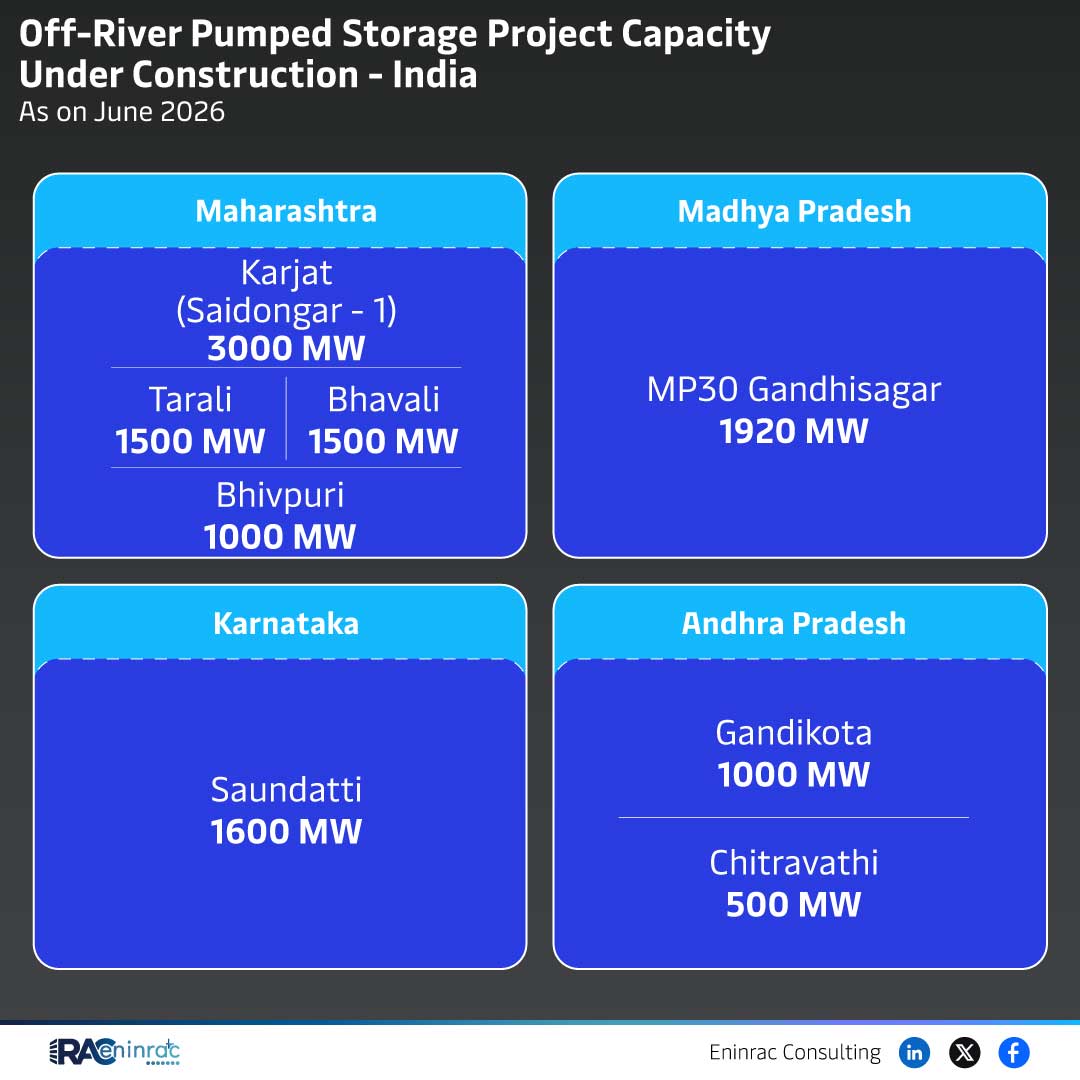
The data indicates a clear trend toward megawatt‑scale off‑river pumped storage facilities. The largest site, Karjat (Saidongar‑1), tops the list with 3 000 MW, while mid‑size projects such as Tarali Bhavali, Gandhisagar and Bhivpuri each contribute between 1 000 MW and 1 500 MW. Smaller stations like Chitravathi add 500 MW, demonstrating a diversified capacity mix that can meet regional demand peaks and provide ancillary services.
Capacity Distribution Across Indian Sites
When the numbers are compared, Karjat dominates the capacity distribution, accounting for roughly 30 % of the total announced off‑river pumped storage capacity. The combined output of Tarali Bhavali, Gandhisagar and Bhivpuri reaches about 4 000 MW, illustrating a strong cluster in western and central states. Saundatti’s 1 000 MW and the 1 600 MW plant (location unspecified) further diversify the geographical spread, while Chitravathi’s 500 MW adds a foothold in the southern region. This spread reduces transmission bottlenecks and improves regional energy security.
Impact on Sectors and Industries
Off‑river pumped storage capacity India enhances grid stability, allowing higher penetration of intermittent solar and wind power. Investors view these projects as low‑risk, long‑term assets, encouraging capital inflow into renewable infrastructure. Policymakers gain a flexible tool for meeting climate targets, and utilities benefit from peak‑shaving capabilities that lower operating costs. Additionally, the construction phase stimulates local manufacturing, engineering services, and job creation across multiple states.
Key Takeaways
- Karjat (Saidongar‑1) leads with 3 000 MW, the single largest off‑river pumped storage plant in India.
- Mid‑size projects collectively add over 4 000 MW, highlighting strong regional development.
- Geographic diversification reduces transmission constraints and supports local grids.
- Off‑river pumped storage capacity bolsters renewable integration and grid reliability.
- Large‑scale projects attract long‑term investment and lower financing costs.
- Construction drives ancillary industrial growth and creates skilled employment.
FAQs
What is off‑river pumped storage?
It is a hydro‑electric system that stores energy by moving water between two reservoirs at different elevations, generating power when water flows downhill.
Why is pumped storage important for India’s energy mix?
It provides large‑scale, dispatchable power that balances intermittent solar and wind generation, enhancing grid stability.
Which project has the highest capacity?
The Karjat (Saidongar‑1) project, slated for 3 000 MW, is currently the largest under construction.
How does pumped storage affect renewable energy targets?
By offering reliable storage, it enables higher adoption of renewables, helping India meet its 2030 climate goals.
When are these projects expected to become operational?
Most sites aim for commissioning between 2027 and 2030, aligning with national grid expansion plans.