
Introduction
The off‑river pumped storage sector in India is gaining attention as developers reveal new capacity figures for 2026. This data shows the rated megawatt output of three major projects – Shirwata Kandhaura, Pane Chichlik and Upper Indravati – and highlights how each plant contributes to the country’s renewable energy mix. Readers will learn the specific capacities, compare project sizes, understand the implications for grid reliability and see why off‑river pumped storage is an essential component of India’s clean‑energy transition.
What Does the Data Reveal About This Topic?
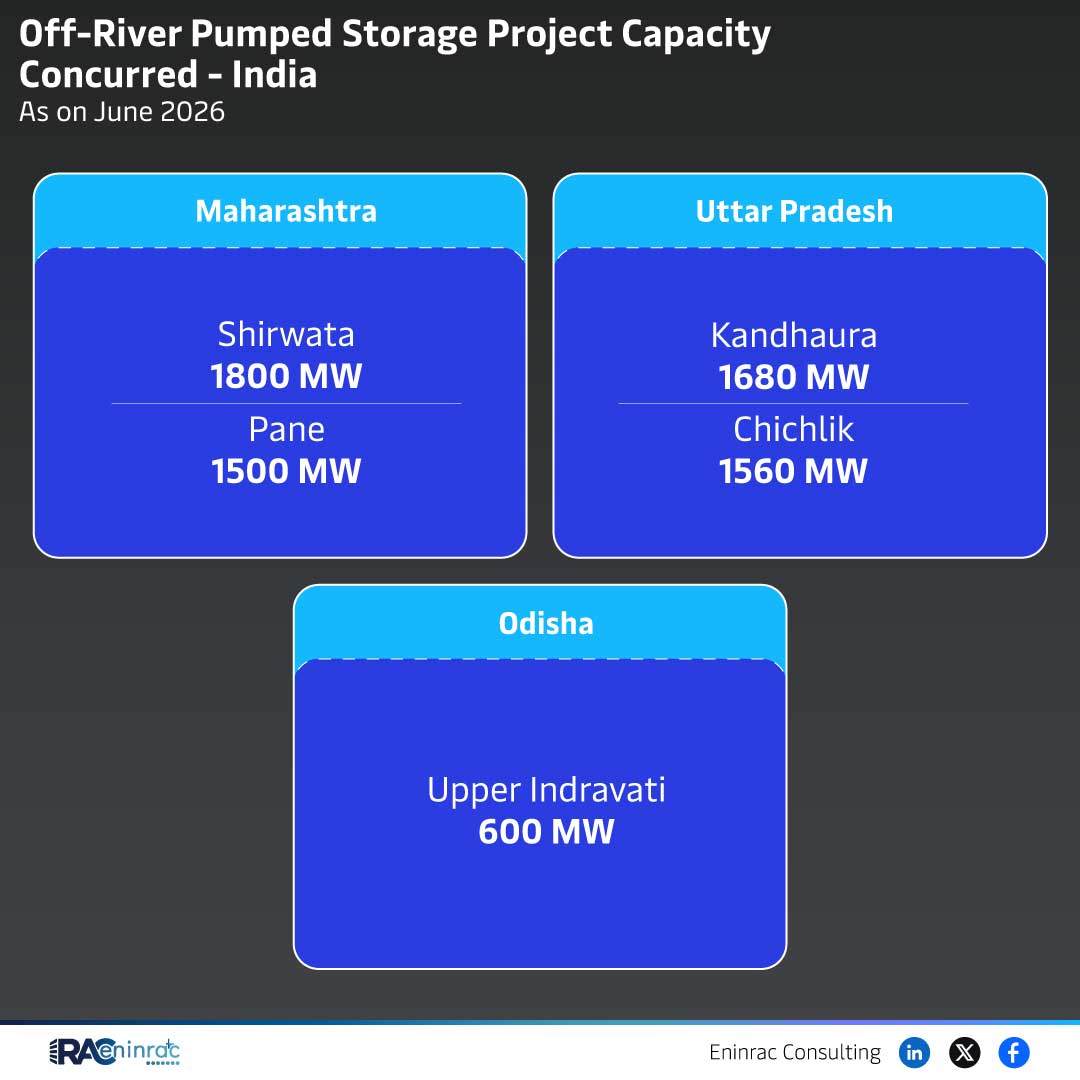
The raw numbers answer a key question: how much installed capacity do India’s off‑river pumped storage projects provide as of June 2026? Shirwata Kandhaura shows a planned capacity of 1,800 MW with a current operational capacity of 1,680 MW. Pane Chichlik is listed with 1,500 MW planned and 1,560 MW operating, indicating a slight over‑performance. Upper Indravati contributes a modest 600 MW, completing a combined total of roughly 3,840 MW of operational pumped storage power. The data confirms rapid scaling and a growing portfolio of large‑scale storage assets.
Comparative Capacity Overview of Major Off‑River Pumped Storage Projects
When the three projects are examined side by side, Shirwata Kandhaura emerges as the largest single installation, exceeding 1.6 GW of working capacity. Pane Chichlik follows closely, with its operational figure surpassing its initial plan, a sign of efficient project execution. Upper Indravati, while smaller, still adds a significant 600 MW to the national storage pool. The variance between planned and operational megawatts suggests that developers are refining construction timelines and commissioning processes, resulting in some projects delivering more power than originally forecast.
Impact on Sectors and Industries
Off‑river pumped storage capacity influences several key sectors. For utilities, the additional megawatts provide flexible load balancing, allowing renewable generation such as solar and wind to be stored during low‑demand periods and released during peaks. Investors see stronger project pipelines, reducing perceived risk and attracting capital to the renewable energy market. Policymakers gain concrete data to shape grid codes that encourage storage integration, while equipment manufacturers benefit from increased demand for turbines, pumps and control systems. Consumers ultimately enjoy a more reliable electricity supply and lower curtailment of green power.
Key Takeaways
- Shirwata Kandhaura leads with 1,800 MW planned.
- Pane Chichlik exceeds its plan at 1,560 MW.
- Upper Indravati adds 600 MW to the mix.
- Total operational capacity approaches 3.9 GW.
- Projects demonstrate faster commissioning than expected.
- Storage growth supports grid stability and renewable integration.
FAQs
What is off‑river pumped storage?
Off‑river pumped storage uses reservoirs located away from natural rivers to store excess electricity by pumping water uphill and generating power when released.
Why is capacity important for pumped storage?
Capacity indicates the maximum power a plant can generate, directly affecting its ability to balance supply and demand on the grid.
How does pumped storage support renewable energy?
It stores surplus solar or wind energy and releases it during peak demand, reducing curtailment and improving overall system efficiency.
Are there environmental concerns with off‑river projects?
Off‑river sites lessen impacts on river ecosystems, but they still require land use planning and careful water management to mitigate local effects.
What trends are expected for pumped storage in India?
Continued capacity expansion, faster project execution and greater integration with renewable power sources are expected as the country pursues its clean‑energy goals.