
Introduction
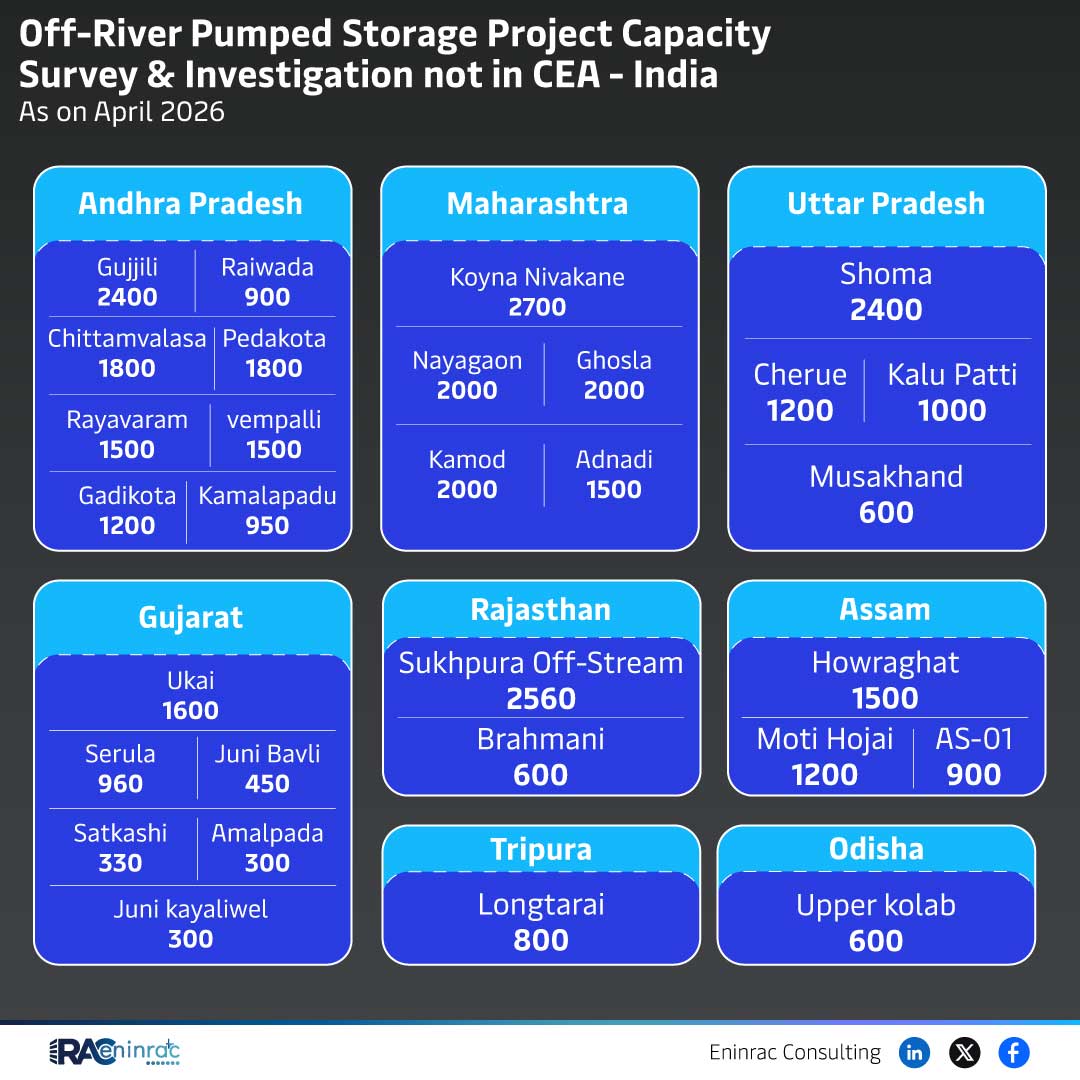
This page presents a concise snapshot of off‑river pumped storage projects surveyed across India as of April 2026. The data highlights installed capacities, geographic distribution and emerging trends in the sector, helping investors, policymakers and industry analysts understand the current landscape.
What Does the Data Reveal About This Topic?
The raw figures show that several states host multiple pumped storage sites with capacities ranging from 950 MW to 2 700 MW. The question is: which regions lead the development of off‑river pumped storage and what capacity gaps remain? The answer lies in the concentration of large‑scale projects in Maharashtra, Andhra Pradesh and Gujarat, while smaller capacities appear in Odisha and other states.
Regional Capacity Comparison
When comparing states, Maharashtra records the highest individual project capacity at 2 700 MW, followed closely by Andhra Pradesh with 2 400 MW. Gujarat hosts projects of 2 560 MW and 1 500 MW, indicating strong regional commitment. Smaller installations such as 950 MW in Odisha and 1 200 MW in Rayavaram illustrate a broader but less intensive rollout in other areas. This distribution suggests that western and southern regions are prioritising larger pumped storage schemes to balance grid variability.
Impact on Sectors and Industries
Off‑river pumped storage directly supports renewable integration by providing grid‑scale energy storage, reducing reliance on fossil‑fuel peaking plants and enhancing grid stability. The sector attracts capital from infrastructure funds, encourages innovation in turbine technology, and creates construction jobs. Policymakers can leverage these projects to meet national renewable targets, while utilities gain a flexible resource to manage peak demand.
Key Takeaways
- Major capacities are concentrated in Maharashtra, Andhra Pradesh and Gujarat.
- Project sizes vary widely, from under 1 GW to more than 2 GW per site.
- Off‑river pumped storage is a critical enabler for renewable energy integration.
- Investment interest is growing, especially from infrastructure and green finance sources.
- Regional policy incentives appear to drive higher capacity deployments.
- Smaller states still have significant untapped potential for future projects.
FAQs
What is off‑river pumped storage?
It is a type of hydro‑electric storage where water is pumped to an upper reservoir during low demand and released to generate power during peak demand.
Why are Maharashtra and Gujarat leading in capacity?
Both states have favorable topography, existing hydro infrastructure and strong state‑level renewable policies that attract developers.
How does pumped storage support renewable energy?
It stores excess solar or wind generation and releases it when the grid needs power, smoothing intermittency.
What are the main investment risks?
Risks include regulatory delays, water resource constraints and high upfront capital costs.
Can smaller states develop pumped storage?
Yes, with appropriate site selection and policy support, smaller capacities can be built to serve regional grids.