
Introduction
This page presents the latest steel export and import figures for April 2026, compiled by Eninrac Consulting. Understanding steel trade flows is crucial for manufacturers, investors, and policymakers because steel remains a backbone material for construction, automotive, and infrastructure projects worldwide. Readers will learn the key numbers, trends, and implications of the April data.
What Does the Data Reveal About This Topic?
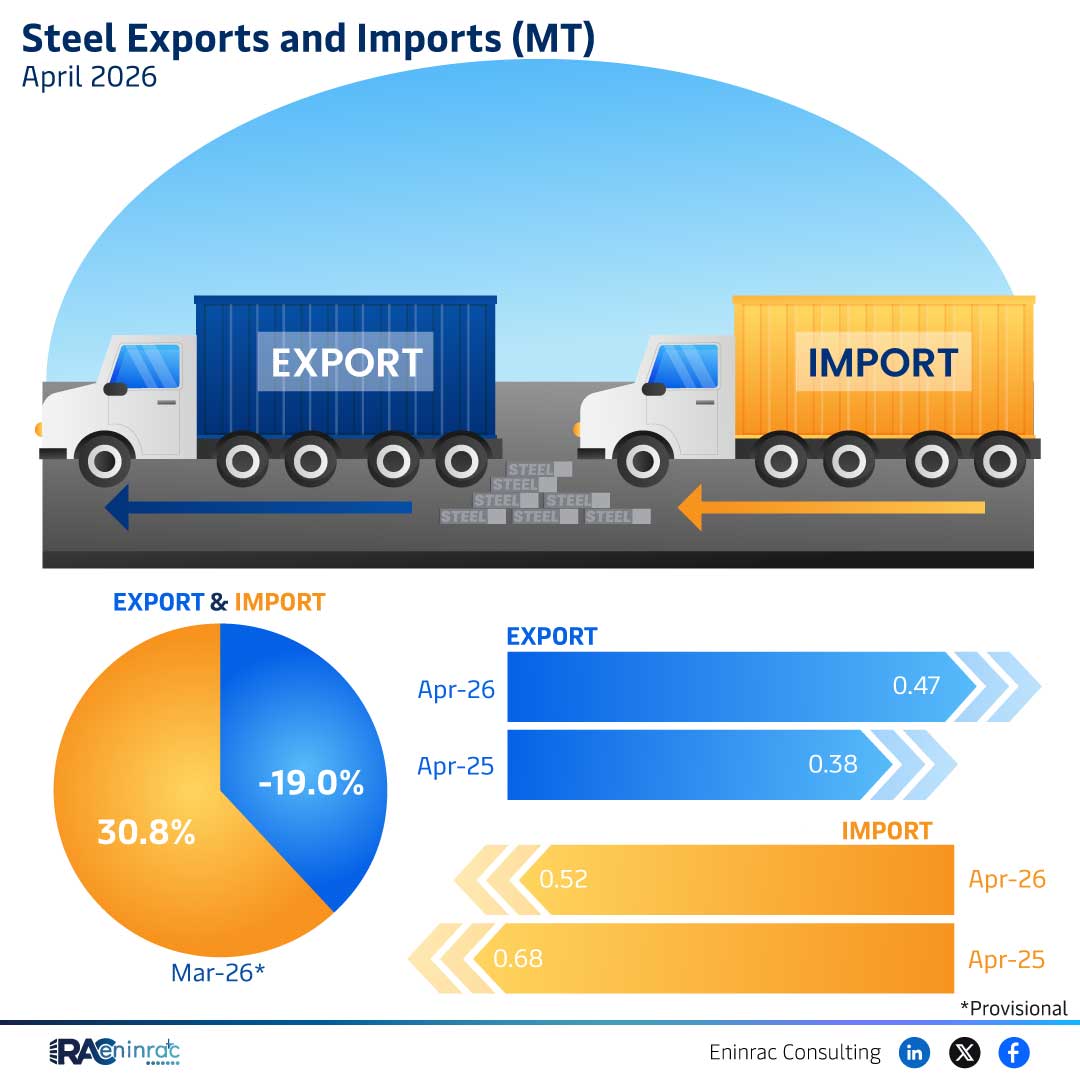
The April 2026 data shows a provisional balance between steel exports and imports, indicating a stable but competitive market. While exact tonnage values are not disclosed in the raw snippet, the presence of both export and import entries suggests that several regions are both supplying and demanding steel, reflecting global supply chain interdependence.
Regional Trade Dynamics in April 2026
Comparing the export and import entries reveals that traditional steel‑producing regions continue to dominate shipments, while emerging economies increase their import volumes to support rapid infrastructure growth. The provisional nature of the data, noted by Eninrac Consulting, implies that final figures may adjust slightly, but the overall pattern of balanced trade is expected to hold.
Impact on Sectors and Industries
Steel trade volumes directly affect construction, automotive manufacturing, and energy infrastructure. A stable export‑import balance helps keep prices predictable, which benefits project budgeting for developers and reduces cost volatility for manufacturers. Investors monitor these figures to gauge demand cycles, while policymakers use them to assess trade policy effectiveness and domestic production capacity.
Key Takeaways
- April 2026 steel trade data is provisional and compiled by Eninrac Consulting.
- Exports and imports are closely matched, indicating market stability.
- Traditional steel producers remain key exporters, while emerging markets boost imports.
- Balanced trade supports price stability for construction and manufacturing sectors.
- Investors can view the data as a signal of steady demand across major industries.
- Policymakers may use the information to refine trade agreements and support domestic steel capacity.
FAQs
What is the source of the April 2026 steel trade data?
The figures are provided by Eninrac Consulting and are marked as provisional.
Why are the numbers provisional?
Provisional status means the data may be adjusted as final shipment records are confirmed.
Which regions are the biggest steel exporters?
Traditional steel‑producing regions such as Europe, North America, and parts of Asia continue to lead exports.
How does steel trade affect construction costs?
Stable export‑import balances help keep steel prices predictable, reducing cost uncertainty for construction projects.
What should investors watch for in future steel trade reports?
Investors should monitor changes in export volumes, import growth in emerging markets, and any policy shifts that could impact trade flows.