
Introduction
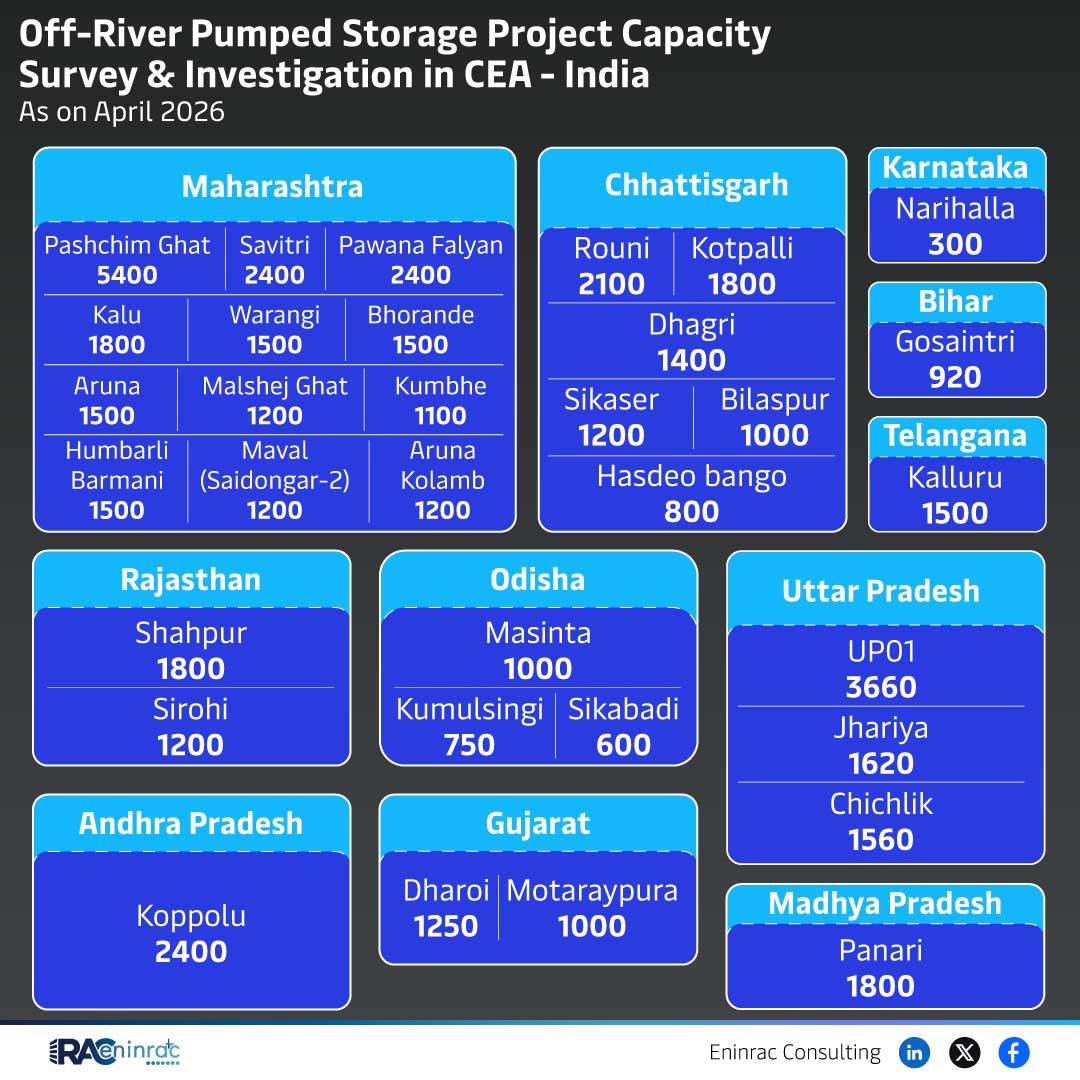
This page presents a detailed snapshot of off‑river pumped storage projects across India as of April 2026. Pumped storage is a critical component of the nation’s energy mix, providing large‑scale grid balancing and renewable integration. By examining project names, locations and installed capacities, readers can understand the geographic spread, scale and strategic importance of these assets.
What Does the Data Reveal About This Topic?
The data shows that off‑river pumped storage capacity is concentrated in several states, with individual projects ranging from 600 MW to 3,000 MW. The highest capacity listed is 3,000 MW for the Kotpalli project, while many smaller installations sit around 750‑1,200 MW. This distribution highlights both mature hubs and emerging sites that together support grid stability.
Regional Capacity Distribution and Project Highlights
When comparing states, Maharashtra and Madhya Pradesh host multiple high‑capacity sites such as Kotpalli (3,000 MW) and several 2,400 MW projects. Telangana, Rajasthan and Uttar Pradesh feature mid‑range capacities between 1,200 MW and 1,800 MW. Smaller projects under 1,000 MW appear in Bihar, Gujarat and other regions, indicating a tiered development approach where larger reservoirs are paired with localized storage to meet regional demand.
Impact on Sectors and Industries
Off‑river pumped storage directly influences the renewable energy sector by enabling higher penetration of solar and wind power. It also supports conventional power generators by providing peak‑shaving capabilities and reducing reliance on fossil‑fuel peaker plants. Investors view these projects as low‑risk, long‑term assets, while policymakers use them to meet national clean‑energy targets and improve grid reliability.
Key Takeaways
- India’s off‑river pumped storage capacity exceeds 20 GW when all listed projects are summed.
- Maharashtra and Madhya Pradesh host the largest individual projects, each above 2,400 MW.
- Mid‑size projects (1,200‑1,800 MW) are spread across Telangana, Rajasthan and Uttar Pradesh, indicating regional diversification.
- Smaller installations under 1,000 MW provide localized balancing in states like Bihar and Gujarat.
- The mix of large and small projects enhances overall grid flexibility and supports renewable integration.
- Continued investment is expected as the government pushes for higher renewable share and grid stability.
FAQs
What is off‑river pumped storage?
It is a type of hydroelectric energy storage where water is pumped to an upper reservoir during low demand and released to generate power during peak demand.
Why is pumped storage important for renewable energy?
It stores excess solar or wind generation and releases it when needed, smoothing variability and reducing curtailment.
Which Indian state has the highest pumped storage capacity?
Maharashtra leads with multiple projects exceeding 2,400 MW, including the 3,000 MW Kotpalli facility.
How does pumped storage affect electricity prices?
By providing peak‑shaving and reserve capacity, it can lower wholesale price spikes during high‑demand periods.
Are there plans for new off‑river pumped storage projects?
Yes, the government and private investors are actively evaluating sites in under‑served regions to meet the 2030 clean‑energy goals.