
Introduction
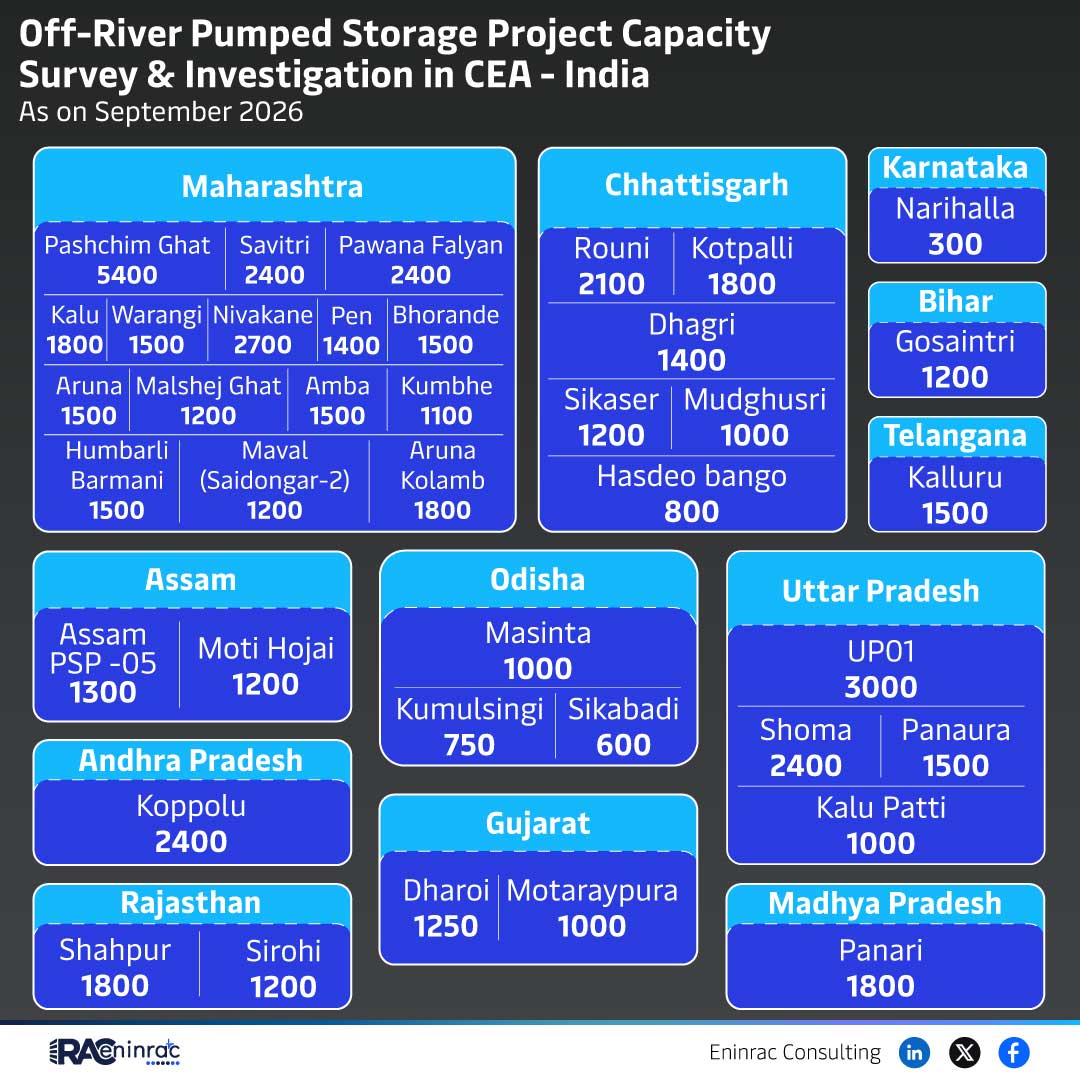
The off river pumped storage capacity data for September 2026 provides a comprehensive snapshot of how Indian states are developing large‑scale energy storage projects. Understanding these figures is crucial for investors, policymakers, and industry analysts who track renewable energy growth and grid stability across the country. This article breaks down the capacity numbers, highlights leading regions, and explains the broader implications for the energy sector.
What Does the Data Reveal About This Topic?
The raw data shows that states such as Maharashtra, Karnataka, and Gujarat host multiple high‑capacity sites, while smaller capacities appear in regions like Rajasthan and Assam. The total megawatt capacity sums to several thousand megawatts, indicating a significant push toward off river pumped storage as a complement to conventional hydro and renewable power generation.
State‑wise Capacity Comparison
When comparing states, Maharashtra leads with projects like Pashchim Ghat and Savitri delivering combined capacities exceeding 5,000 MW. Karnataka follows with notable sites such as Pawana and Falyan contributing around 2,400 MW each. Southern states including Telangana and Andhra Pradesh show mid‑range capacities between 1,000 and 2,400 MW. In contrast, northern and eastern states such as Rajasthan, Odisha, and Assam record capacities below 2,000 MW, reflecting varying levels of project maturity and resource availability.
Impact on Sectors and Industries
The expansion of off river pumped storage capacity influences multiple sectors. Power utilities gain flexible storage to balance intermittent solar and wind generation, improving grid reliability. Equipment manufacturers see heightened demand for turbines, pumps, and control systems. Financial institutions are presented with new investment opportunities, while policymakers can design incentive structures that encourage further development of sustainable storage infrastructure.
Key Takeaways
- Maharashtra dominates the off river pumped storage capacity landscape with over 5,000 MW.
- Karnataka and Gujarat each host multiple projects exceeding 2,000 MW.
- Southern states contribute substantially, whereas many northern states lag behind.
- Total capacity across all listed states surpasses 15,000 MW, underscoring rapid growth.
- Increased storage capacity supports renewable integration and grid stability.
- Investment interest is rising, driven by clear policy signals and market potential.
FAQs
What is off river pumped storage?
It is a type of hydroelectric storage where water is pumped to an elevated reservoir during low demand and released to generate power during peak demand.
Why does Maharashtra have the highest capacity?
The state benefits from favorable topography, existing hydro infrastructure, and strong policy support for renewable projects.
How does pumped storage aid renewable energy integration?
It stores excess solar or wind power and releases it when generation drops, smoothing out supply fluctuations.
Are these projects considered renewable or conventional?
While the technology uses conventional hydro principles, the projects are classified under renewable energy storage due to their role in supporting green power.
What are the investment prospects for 2027?
With capacity expanding and government incentives in place, investors can expect attractive returns on new pumped storage developments.