
Introduction
India’s off‑river pumped storage capacity is emerging as a critical component of the nation’s energy mix. The dataset compiled up to June 2026 lists individual project capacities across several states, revealing a total installed potential measured in megawatts. Understanding where these facilities are located, how large they are, and which regions dominate the landscape helps investors, policymakers, and grid operators evaluate future expansion plans. This overview explains the key figures, compares state‑wise contributions, and outlines the broader implications for renewable integration, grid stability, and capital allocation within the Indian power sector.
What Does the Data Reveal About This Topic?
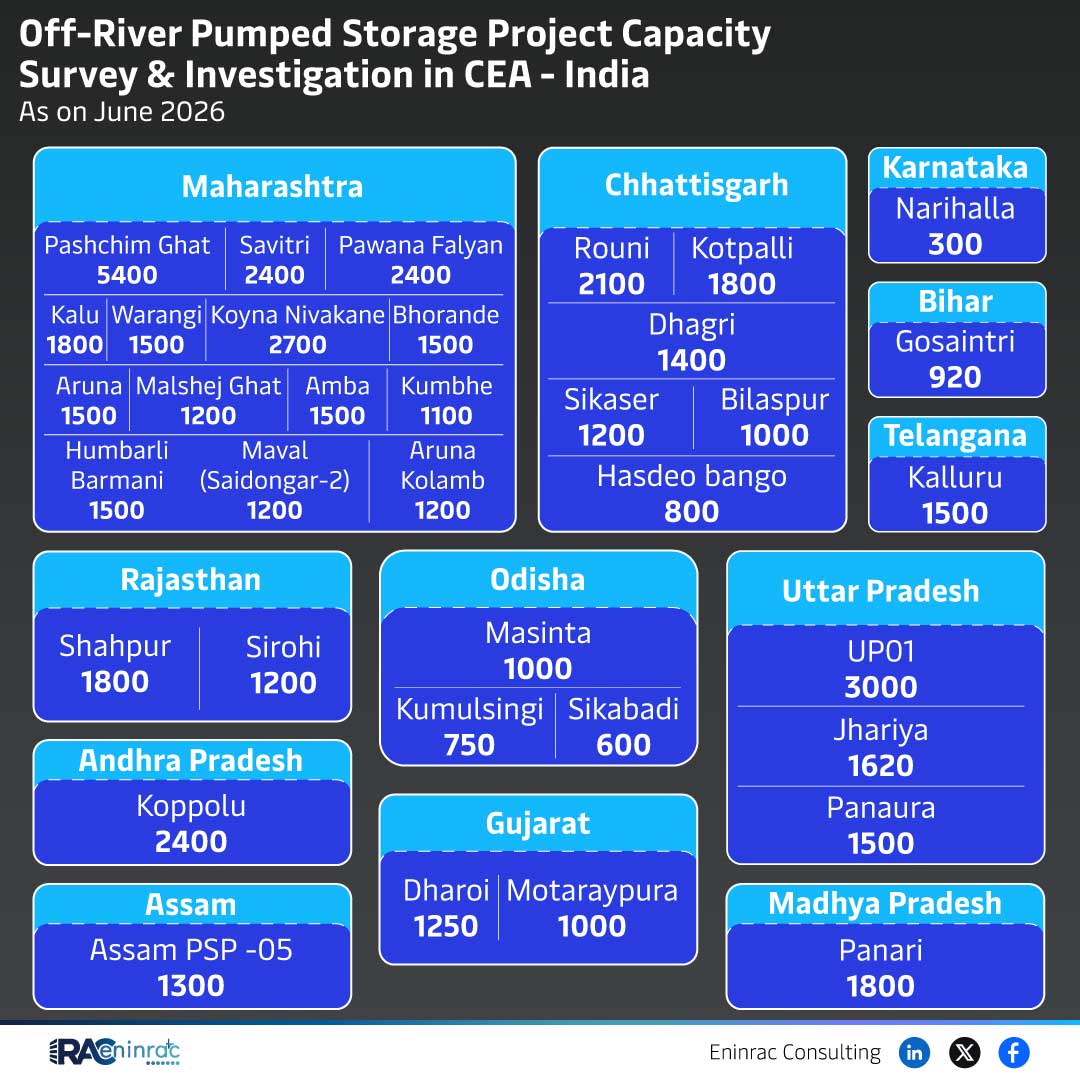
The raw numbers answer a simple question: which Indian states host the most off‑river pumped storage capacity and how does the distribution shape the national energy strategy? The answer shows Maharashtra, Gujarat, and Karnataka leading with multiple projects ranging from 1,200 MW to 5,400 MW, while smaller capacities appear in states such as Odisha, Rajasthan, and Telangana. The data also highlights a mix of mature installations and newer proposals that together indicate a growing reliance on pumped storage to balance intermittent renewable generation.
Regional Capacity Distribution of Off‑River Pumped Storage
A closer look at the state‑wise breakdown illustrates clear geographic trends. Maharashtra’s projects total roughly 5,400 MW, making it the single largest contributor, followed by Gujarat at about 1,500 MW and Karnataka with capacities exceeding 2,400 MW across several sites. Central and western regions dominate, while eastern states like Assam and Bihar report modest figures under 2,000 MW each. Southern states such as Telangana and Andhra Pradesh show emerging interest with capacities around 1,200 MW. This pattern reflects both the availability of suitable terrain for off‑river reservoirs and the strategic focus of state governments on enhancing grid flexibility.
Impact on Sectors and Industries
Off‑river pumped storage capacity influences multiple sectors beyond power generation. For utilities, the ability to store excess renewable output reduces curtailment and improves dispatch efficiency, directly supporting India’s renewable energy targets. Financial institutions see new investment avenues as developers seek capital for high‑cost infrastructure projects, while engineering firms benefit from increased demand for civil and electro‑mechanical expertise. Policy makers can leverage the geographic spread to design region‑specific incentives, and consumers ultimately gain from more reliable electricity and potentially lower tariffs as storage mitigates peak‑load costs.
Key Takeaways
- Maharashtra leads with over 5,000 MW of off‑river pumped storage projects.
- Gujarat and Karnataka together contribute more than 3,900 MW, underscoring western dominance.
- Eastern and northern states show slower growth, indicating untapped potential.
- Capacity expansion aligns with national goals for renewable integration and grid stability.
- Investors are likely to target high‑capacity states for future funding rounds.
- Policy frameworks must address regional disparities to unlock nationwide storage benefits.
FAQs
Which Indian state has the highest off‑river pumped storage capacity?
Maharashtra, with projects totaling around 5,400 MW, holds the top position.
Why is off‑river pumped storage important for renewable energy?
It stores excess solar and wind power, releasing it during demand peaks to smooth variability.
What are the main challenges in developing new pumped storage sites?
Land acquisition, environmental clearances, high upfront capital costs, and suitable topography are key hurdles.
How does pumped storage affect electricity pricing?
By reducing peak‑load generation costs and curtailment, it can lead to more stable and lower consumer tariffs.
Are there any initiatives to increase storage capacity in eastern India?
State governments and private developers are drafting proposals to tap riverine resources, aiming to add several hundred megawatts in the next decade.