
Introduction
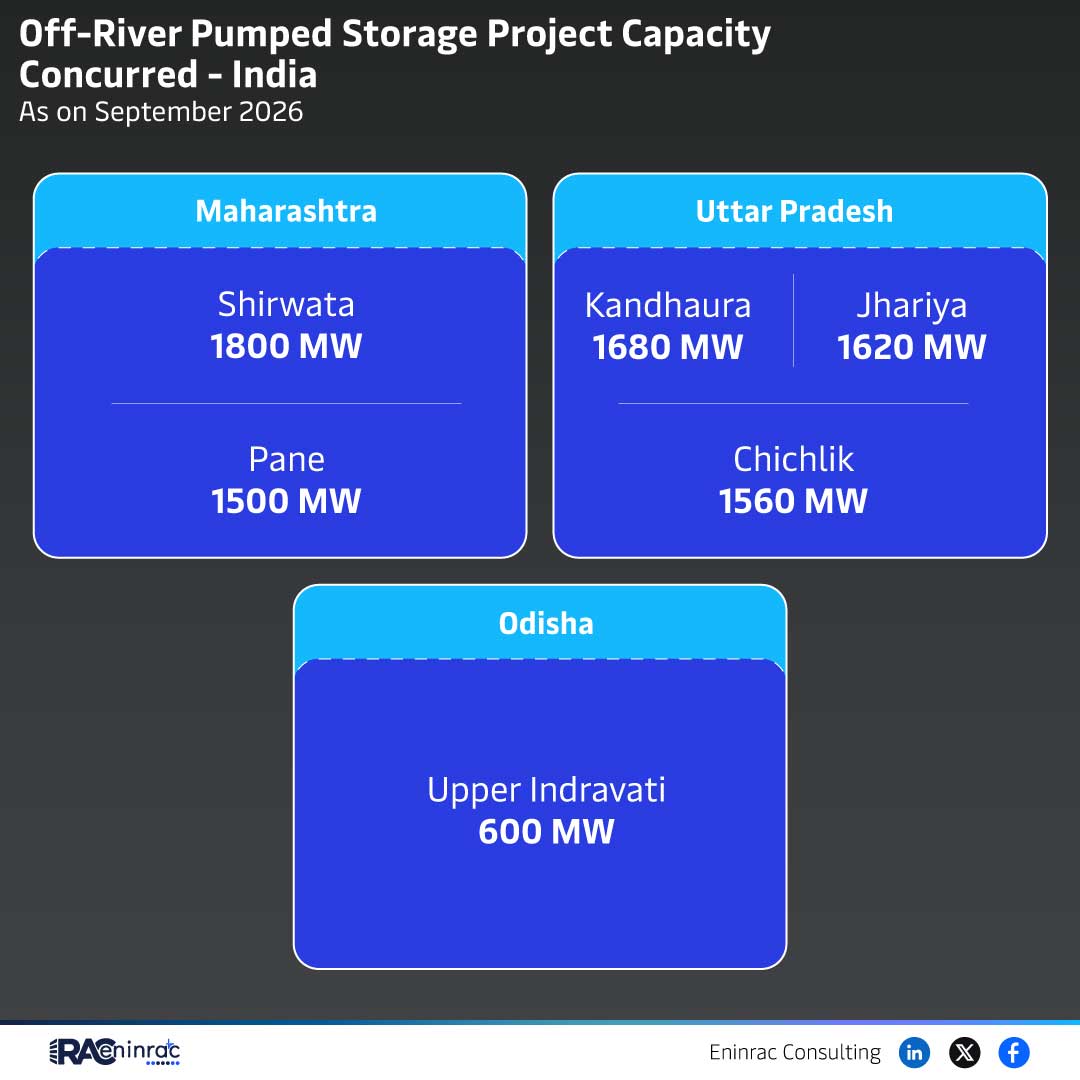
India's off‑river pumped storage capacity is gaining attention as the nation pushes for cleaner, more flexible power generation. The dataset, current to September 2026, lists three major projects—Shirwata Kandhaura Jhariya, Pane Chichlik and Upper Indravati—together representing more than 5 GW of installable capacity. Understanding the size, stage and regional distribution of these projects helps investors, policymakers and industry analysts gauge how pumped hydro can support grid balancing, renewable integration and long‑term energy security across the country.
What Does the Data Reveal About This Topic?
Does the data indicate a clear upward trend in off‑river pumped storage capacity in India? The answer is yes. The combined name‑plate capacity of the three projects exceeds 5 GW, with Shirwata Kandhaura Jhariya alone offering up to 1.8 GW across three reported phases. Pane Chichlik adds roughly 1.5 GW, while Upper Indravati contributes 0.6 GW. The figures suggest that developers are targeting large‑scale installations to complement solar and wind growth, and that the Indian power grid is preparing for substantial storage resources in the next decade.
Project‑by‑Project Capacity Comparison
Shirwata Kandhaura Jhariya stands out as the largest effort, with three capacity entries—1 800 MW, 1 680 MW and 1 620 MW—reflecting staged commissioning or design variations. Pane Chichlik shows two closely aligned figures of 1 500 MW and 1 560 MW, indicating a possible upgrade or a narrow range of projected output. Upper Indravati, at 600 MW, is the smallest but still significant for an off‑river scheme, demonstrating that the technology can be scaled down for regional needs. When summed, these numbers illustrate a diversified portfolio where both mega‑projects and mid‑size developments coexist, offering flexibility for grid operators to match storage size with geographic and demand‑side considerations.
Impact on Sectors and Industries
The expanding off‑river pumped storage capacity influences several key sectors. For renewable energy developers, the availability of multi‑gigawatt storage eases curtailment of solar and wind farms, improving project economics. Grid operators gain a reliable, fast‑responding resource to balance frequency and provide peak‑shaving services, which can reduce reliance on fossil‑fuel peaker plants. Investors see a new asset class with long‑term contracts and clear policy support under India’s renewable targets. Policymakers can leverage these projects to meet emissions goals while enhancing energy security, especially in regions distant from major hydro reservoirs. Equipment manufacturers and construction firms also benefit from increased demand for turbines, pumps, civil works and digital control systems, stimulating the broader clean‑tech supply chain.
Key Takeaways
- Shirwata Kandhaura Jhariya leads with up to 1.8 GW, showing focus on mega‑scale storage.
- Pane Chichlik provides around 1.5 GW, indicating mid‑size project growth.
- Upper Indravati contributes 0.6 GW, demonstrating feasibility of smaller off‑river schemes.
- Combined capacity exceeds 5 GW, a significant addition to India’s storage portfolio.
- Projects enhance grid reliability and enable higher solar‑wind penetration.
- Investment interest rises due to policy support and long‑term revenue streams.
FAQs
What is off‑river pumped storage?
It is a hydroelectric system that stores energy by moving water between two reservoirs at different elevations without relying on a natural river.
Why is capacity important for India’s energy mix?
Large capacity provides grid stability, enables higher renewable penetration, and reduces the need for fossil‑fuel backup.
Which project has the highest reported capacity?
Shirwata Kandhaura Jhariya, with up to 1.8 GW across its reported phases.
How does pumped storage support renewable integration?
It stores excess solar or wind power and releases it during peak demand, smoothing variability.
What are the investment prospects for these projects?
Strong policy backing and long‑term power purchase agreements make them attractive for domestic and international investors.