
Introduction
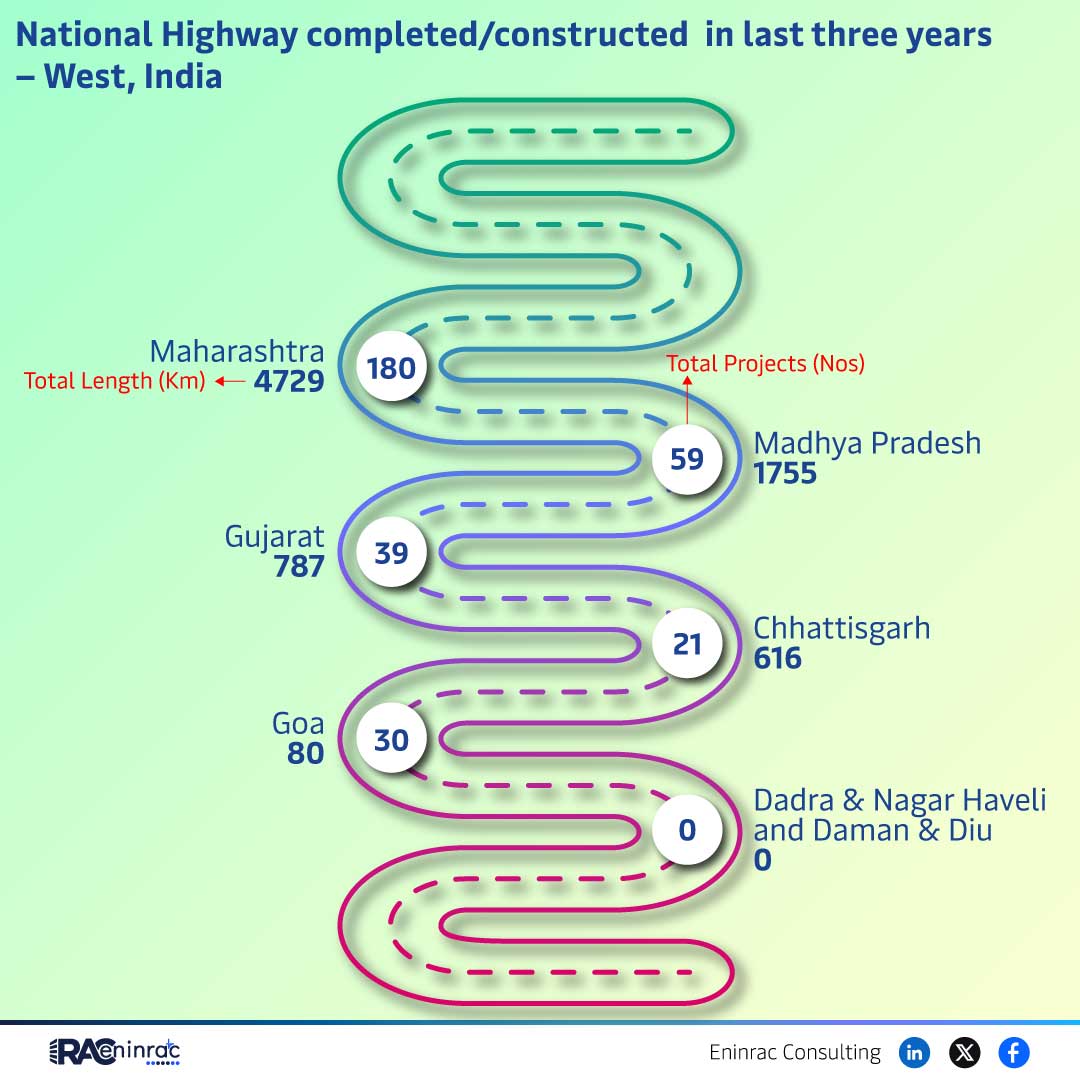
West India highway projects have seen a remarkable surge in the past three years, reshaping the transportation landscape across the region. The combined construction of 5,516 kilometres of national highways reflects a focused effort by state governments and the central ministry to improve connectivity, reduce travel time, and stimulate economic activity. Maharashtra leads the charge with 4,729 km of new routes, while Gujarat adds 787 km, and the Union Territories of Dadra & Nagar Haveli and Daman & Diu contribute additional stretches. This overview examines the data, highlights regional differences, and explores the broader implications for businesses, investors, and policymakers. Understanding these figures helps stakeholders gauge the pace of infrastructure modernization and anticipate future opportunities in logistics, real estate, and tourism across the western belt of India.
What Does the Data Reveal About This Topic?
What does the data reveal about recent highway development in West India? It shows that Maharashtra accounts for roughly 86 % of the total new highway length, underscoring its strategic priority in national freight corridors. Gujarat’s contribution of 787 km, while smaller in absolute terms, represents a 12 % share and signals focused upgrades to coastal trade routes. The inclusion of Dadra & Nagar Haveli and Daman & Diu, although without explicit kilometre figures, indicates that even smaller jurisdictions are benefitting from the nationwide push for better road infrastructure. Overall, the pattern suggests a concentration of investment in high‑traffic corridors that link major ports, industrial hubs, and inland markets. This concentration also reflects policy incentives aimed at reducing logistics costs and enhancing supply‑chain reliability.
Regional Comparison of Highway Growth
The regional comparison underscores stark disparities in kilometre rollout. Maharashtra’s 4,729 km dwarfs Gujarat’s 787 km, a ratio of nearly six to one, illustrating the state’s extensive network of arterial roads that connect the interior of the Deccan plateau to the western coastline. Gujarat, despite its smaller share, focuses on linking key ports such as Mundra and Kandla, enhancing export‑import efficiency. The unnamed contributions from Dadra & Nagar Haveli and Daman & Diu suggest targeted projects that improve local access to neighboring states, potentially boosting tourism and small‑scale trade. Together, these figures reveal a layered approach: massive trunk‑line expansions in larger states complemented by niche improvements in smaller territories. This underscores how investment priorities align with each region’s economic agenda.
Impact on Sectors and Industries
The surge in West India highway construction influences several key sectors. Logistics providers benefit from reduced transit times, enabling just‑in‑time delivery models and lower freight costs. Real‑estate developers anticipate higher land values along new corridors, prompting residential and commercial projects near interchanges. Manufacturing hubs in Maharashtra and Gujarat gain improved access to ports, strengthening export competitiveness. Tourism operators in Daman & Diu and Dadra & Nagar Haveli can market better road access to attract visitors. For investors, the expanding network signals stable policy support for infrastructure, encouraging participation in public‑private partnership models and related financing instruments. Policymakers, meanwhile, can leverage the data to prioritize future upgrades and monitor socioeconomic outcomes.
Key Takeaways
- Maharashtra accounted for 86% of new highway length.
- Total new highways in West India reached 5,516 km.
- Gujarat’s projects focus on port connectivity.
- Smaller territories also received targeted road upgrades.
- Improved roads lower logistics costs and boost trade.
- Infrastructure growth attracts investment and real‑estate development.
FAQs
How many kilometres of highways were constructed in West India in the last three years?
A total of 5,516 km of national highways were completed across West India.
Which state contributed the most to the new highway network?
Maharashtra contributed the largest share, constructing 4,729 km.
What is the impact of these highways on logistics costs?
The new roads reduce travel distance and time, leading to lower freight and logistics expenses.
Are there any new highway projects planned for Dadra & Nagar Haveli?
Yes, targeted upgrades are planned to improve local connectivity, though exact lengths are not yet disclosed.
How do these developments affect real‑estate values?
Improved accessibility typically raises land and property values near the new highway corridors.