
Introduction
India’s road network continues to expand rapidly, with national highway construction India driving economic growth across the southern states. The latest three‑year period, covering 2021 to 2023, saw the completion of several major highway segments in Andhra Pradesh, Telangana and the Union Territory of Puducherry. This overview summarises the total lengths recorded for each jurisdiction, highlights the relative scale of development, and explains why these figures matter to investors, policymakers, and logistics planners. Readers will learn how the new infrastructure improves connectivity, shortens travel times, and supports regional trade corridors.
What Does the Data Reveal About This Topic?
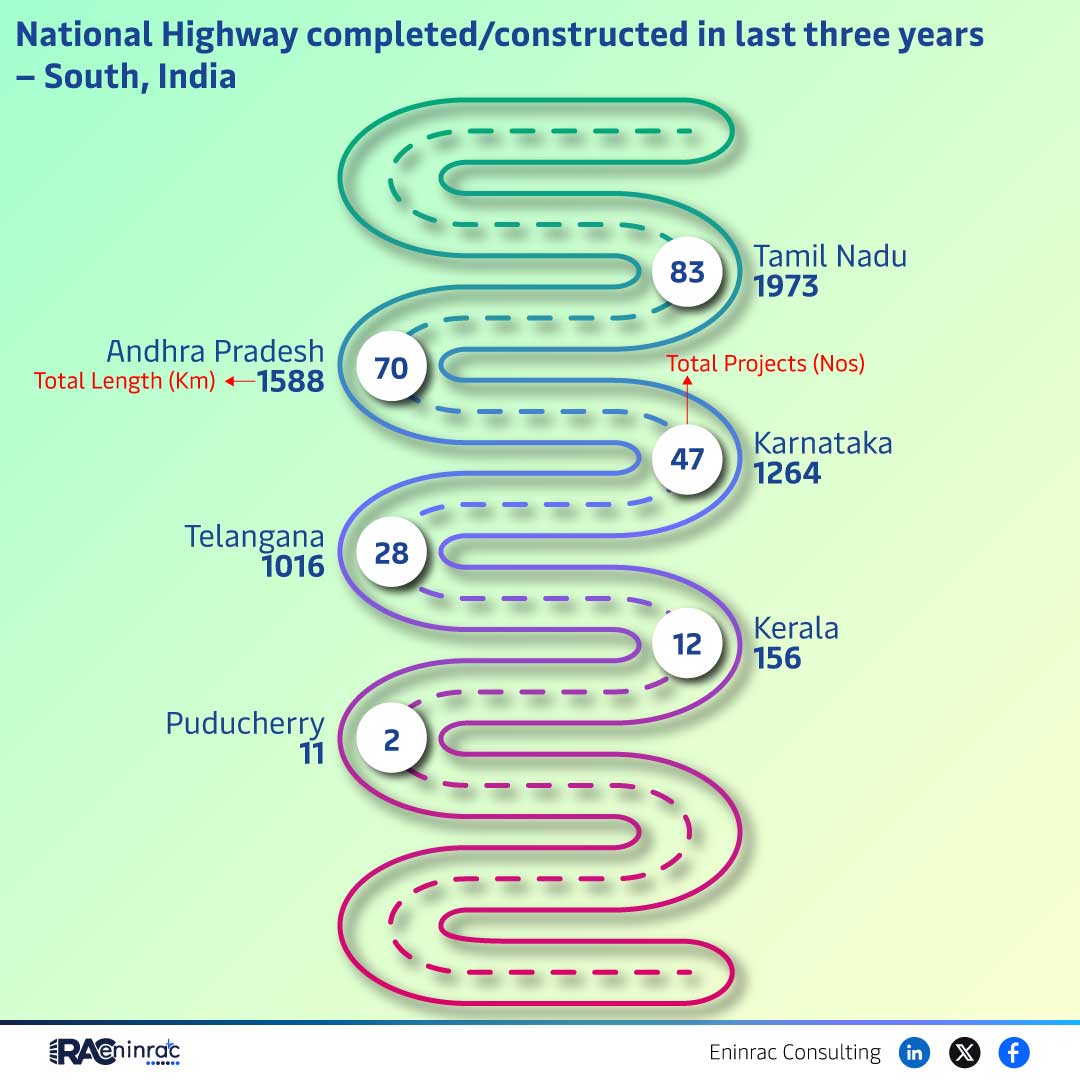
How does the raw data translate into actionable insight? The records show that Andhra Pradesh added 1 588 km of national highway mileage, while Telangana contributed 1 016 km during the same window. Puducherry, although much smaller, reported a modest but strategically important addition that complements its coastal trade routes. The disparity between the two larger states reflects differences in geographic size, existing road density, and state‑level budgeting priorities. By answering the core question of “where and how much” new highway has been built, stakeholders can better allocate resources and plan future projects.
Regional Highway Length Comparison in South India
The comparative picture that emerges positions Andhra Pradesh as the clear leader in sheer length added, outpacing Telangana by more than 570 km. This advantage aligns with Andhra’s larger land area and its focus on connecting agricultural hubs to ports such as Visakhapatnam. Telangana’s growth, while numerically smaller, is concentrated along corridors that link Hyderabad to emerging industrial zones in the north and toward the Deccan plateau. Puducherry’s contribution, though measured in tens of kilometres, is pivotal for linking its limited interior roads to the national grid, enhancing tourism and freight movement along the Bay of Bengal shoreline.
Impact on Sectors and Industries
The infusion of new highway kilometres reverberates across multiple sectors. Logistics firms gain shorter routes that reduce fuel consumption and delivery times, directly boosting profitability. Real‑estate developers capitalize on improved accessibility to launch residential and commercial projects near newly upgraded corridors. The manufacturing sector benefits from smoother supply‑chain links, especially in Telangana’s technology parks and Andhra’s agro‑processing clusters. Tourism operators in Puducherry see higher visitor numbers as road connectivity removes previous bottlenecks. For investors, the data signals government commitment to infrastructure, providing confidence for long‑term capital allocation in roads, bridges, and ancillary services such as tolling and maintenance contracts. Policymakers can also use these metrics to assess the effectiveness of fiscal incentives and plan future allocations.
Key Takeaways
- Andhra Pradesh adds the most highway length.
- Telangana’s growth focuses on industrial corridors.
- Puducherry’s upgrade enhances coastal connectivity.
- New highways reduce logistics costs regionally.
- Infrastructure expansion supports investment confidence.
- Data guides future policy and budgeting decisions.
FAQs
What total highway length was added in Andhra Pradesh?
Andhra Pradesh recorded an addition of 1 588 km of national highway mileage between 2021 and 2023, positioning it as the leading state in South India for recent road expansion.
How does Telangana’s highway growth affect its economy?
Telangana added 1 016 km, mainly along routes linking Hyderabad to emerging industrial zones, which improves supply‑chain efficiency, attracts manufacturers, and spurs job creation in the region.
Why is Puducherry’s highway addition important?
Puducherry’s modest highway extension connects interior areas to the national network, facilitating tourism, easing freight movement to ports, and supporting the Union Territory’s economic diversification.
Who can benefit from the new South India highways?
Logistics providers, real‑estate developers, manufacturers, and tourism operators all gain from reduced travel times and lower transportation costs provided by the newly built highways.
How can investors use this highway data?
Investors can interpret the length data as evidence of government commitment, assess market opportunities in construction, tolling, and ancillary services, and align portfolios with infrastructure growth trends.