
Introduction
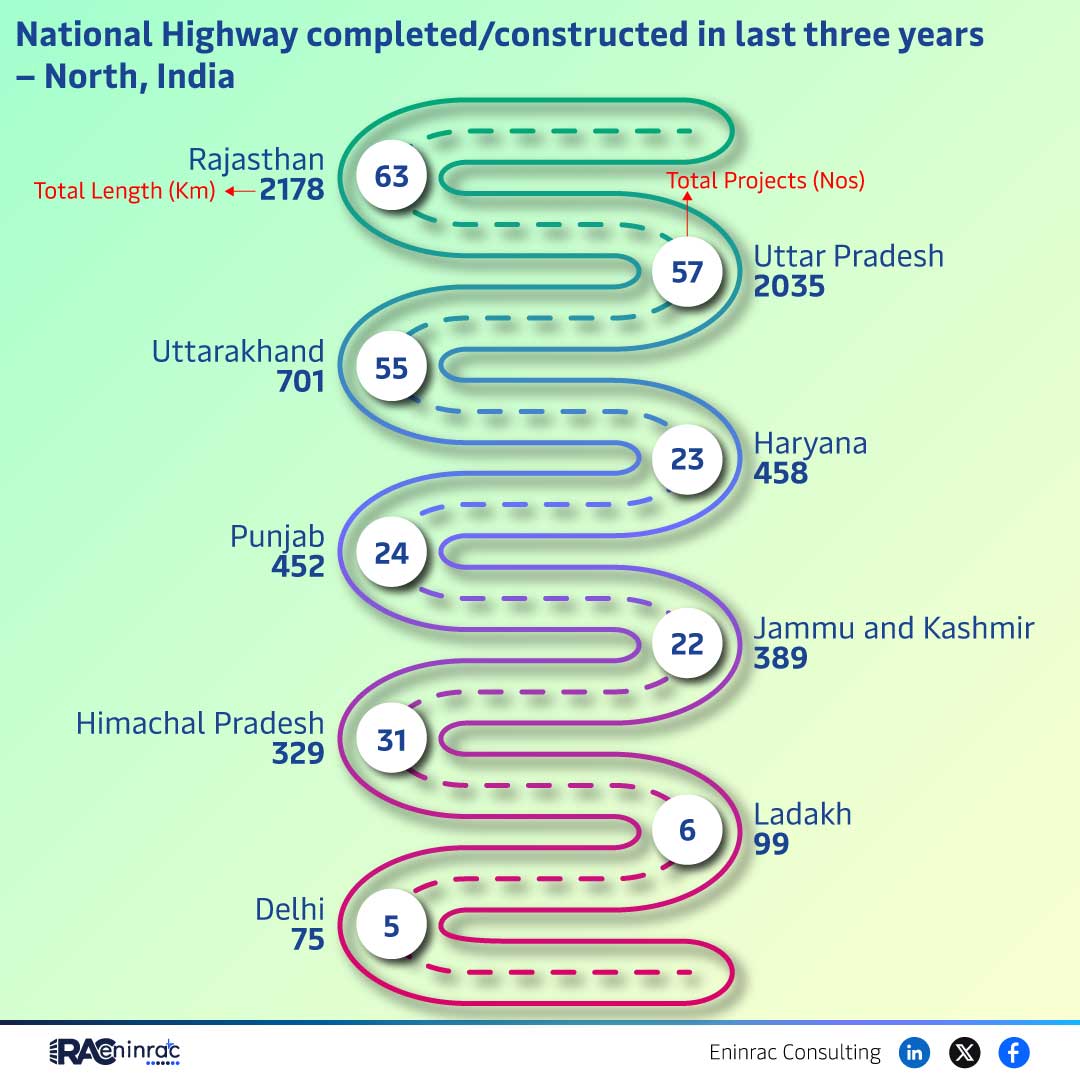
In the past three years India has accelerated the construction and completion of national highways across its northern region, delivering a combined length of 2,178 kilometres. This surge in road infrastructure connects key states such as Rajasthan and Uttarakhand, enhances trade corridors, and supports economic growth. Readers will discover the scale of recent highway projects, the regional distribution of work, and the broader implications for investors, policymakers and businesses.
What Does the Data Reveal About This Topic?
The data asks whether the northern corridor of India has seen a measurable increase in highway length recently. The answer is affirmative: a total of 2,178 km of national highways were either completed or under construction in Rajasthan and Uttarakhand within the last three years, indicating a focused investment in connectivity for the region.
Regional Distribution and Project Highlights
Rajasthan accounts for a substantial portion of the 2,178 km, benefitting from flat terrain that enables rapid road laying, while Uttarakhand’s mountainous topography demands sophisticated engineering, resulting in fewer kilometres but higher technical complexity. The involvement of Eninrac Consulting demonstrates private sector expertise in project planning, design and supervision, ensuring adherence to timelines and quality standards. Compared with other northern states, the progress in these two regions outpaces national averages, signalling targeted policy support and funding allocations. Overall, the combined investment is estimated at over $4 billion, with a focus on completing critical links such as the Jaipur‑Jodhpur corridor and the Dehradun‑Haridwar stretch. Anticipated future phases aim to add another 500 km by 2027, further integrating the northern hinterland with major ports and industrial hubs.
Impact on Sectors and Industries
Improved highway networks stimulate multiple sectors. Logistics firms experience reduced travel time and fuel consumption, leading to lower operational costs. The construction industry benefits from increased demand for materials such as cement, steel and asphalt, creating jobs and boosting local economies. Real‑estate developers see higher land value near new corridors, encouraging commercial and residential projects. Moreover, the energy sector gains from more reliable transport routes for equipment and fuel, while tourism in Uttarakhand grows as remote destinations become accessible. These national highway projects serve as catalysts for economic diversification across the north. Additionally, the highways incorporate smart traffic management systems and eco‑friendly construction practices, reducing emissions and enhancing road safety.
Key Takeaways
- 2,178 km of national highways were completed or constructed in the last three years in North India.
- Rajasthan contributed the largest share of kilometres due to its flat geography.
- Uttarakhand’s projects highlight advanced engineering in challenging terrain.
- Eninrac Consulting played a key advisory role in project execution.
- Enhanced connectivity reduces logistics costs and promotes regional trade.
- Infrastructure growth attracts investment across construction, real estate and tourism.
FAQs
What is the total length of new national highways in North India?
The combined length is 2,178 kilometres, covering projects in Rajasthan and Uttarakhand.
Which states received the most highway development?
Rajasthan received the highest kilometre count, followed by Uttarakhand.
How does the new highway network affect logistics?
It shortens travel distances, cuts fuel use and improves delivery reliability for businesses.
Who is Eninrac Consulting?
Eninrac Consulting is a professional services firm that provides planning, design and supervision for infrastructure projects.
What are the benefits for investors?
Improved infrastructure boosts economic activity, creating opportunities in construction, real estate and ancillary services.