
Introduction
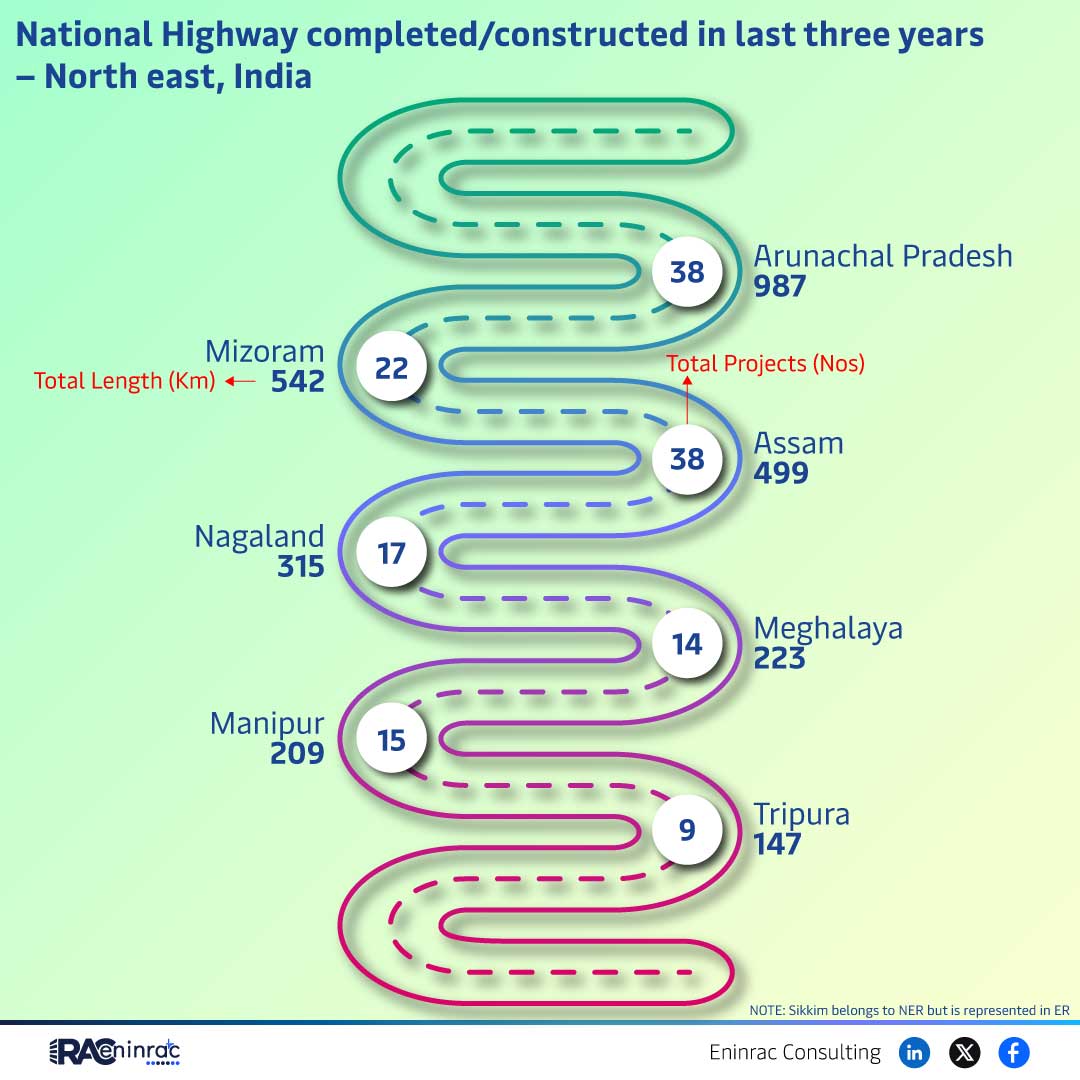
The Indian government has accelerated national highway construction in the Northeast region over the last three years, delivering new road stretches that link remote districts and stimulate economic growth. In Mizoram, 542 kilometres of highway have been completed, while Nagaland and Manipur have seen 315 km and 209 km respectively. This influx of infrastructure not only shortens travel times but also enhances access to markets, health services, and education for millions of residents. Understanding the scale and impact of these projects helps investors, policymakers, and citizens gauge the region’s development trajectory. These projects are part of the central government's Bharatmala Pariyojana aimed at enhancing strategic road corridors across the country.
What Does the Data Reveal About This Topic?
The data shows a clear hierarchy in highway expansion, with Mizoram receiving the largest share of newly built roads, followed by Nagaland and then Manipur. This raises the question: why does Mizoram dominate recent construction efforts? Factors such as challenging terrain, strategic border proximity, and targeted central government funding contribute to the higher kilometre count. Conversely, the relatively lower figures for Nagaland and Manipur reflect differing baseline infrastructure levels and varying project timelines. The data also underscores the government's commitment to equitable development among border states.
State‑wise Highway Length Comparison in the Northeast
When the kilometre totals are compared side‑by‑side, Mizoram’s 542 km represents more than half of the combined 1,066 km added across the three states. Nagaland’s 315 km accounts for roughly 30 % of the total, while Manipur’s 209 km makes up the remaining 20 %. This disparity highlights Mizoram’s aggressive push to close connectivity gaps in hilly areas, whereas Nagaland focuses on linking its major towns and border points. Manipur’s modest addition suggests a phased approach, prioritising critical corridors before expanding to peripheral districts.
Impact on Sectors and Industries
Enhanced highway networks stimulate a range of sectors. Logistics firms benefit from reduced transit times, enabling faster freight movement between tea gardens, tourism spots, and export hubs. Construction material suppliers see increased demand for asphalt, cement, and steel as projects progress. The tourism industry gains improved accessibility to natural attractions, potentially boosting visitor numbers and local hospitality businesses. Moreover, investors view the expanded road base as a catalyst for setting up agro‑processing plants, renewable energy sites, and digital infrastructure, reinforcing the Northeast’s economic diversification. Greater road capacity also encourages private sector participation in warehousing, cold storage, and e‑commerce distribution networks.
Key Takeaways
- Mizoram added the longest new highway length in the past three years.
- Total new highway construction across the three states exceeds 1,000 km.
- Improved roads aim to reduce travel time and boost regional trade.
- Infrastructure growth supports tourism, logistics, and investment opportunities.
- State‑wise differences reflect varied terrain, funding, and priorities.
- Enhanced connectivity is expected to accelerate economic development in NE India.
FAQs
Which state received the most new highway kilometres?
Mizoram leads with 542 km of newly constructed national highway segments, surpassing Nagaland and Manipur.
How does highway construction affect local economies?
New roads lower transport costs, open markets for farmers, attract tourism, and stimulate job creation in construction and related services.
What challenges does the Northeast face in building highways?
Rugged terrain, heavy rainfall, land acquisition issues, and the need for environmentally sensitive routes pose significant obstacles.
Are there future highway projects planned for these states?
The central government’s Bharatmala program outlines further extensions and upgrades to strengthen border connectivity and regional integration.
How can investors benefit from improved road infrastructure?
Better connectivity reduces logistics expenses, encourages setting up manufacturing units, agro‑processing facilities, and enhances the viability of tourism and e‑commerce ventures.