
Introduction
The past three years have seen a surge in infrastructure activity across East India, with national highways playing a pivotal role in regional connectivity. Governments and private partners have accelerated construction to support economic growth, improve trade routes, and enhance mobility for millions of residents. This article examines the recent highway data, focusing on the number of projects and total length achieved in Odisha and West Bengal, and explains why these developments matter for investors, policymakers, and everyday commuters.
What Does the Data Reveal About This Topic?
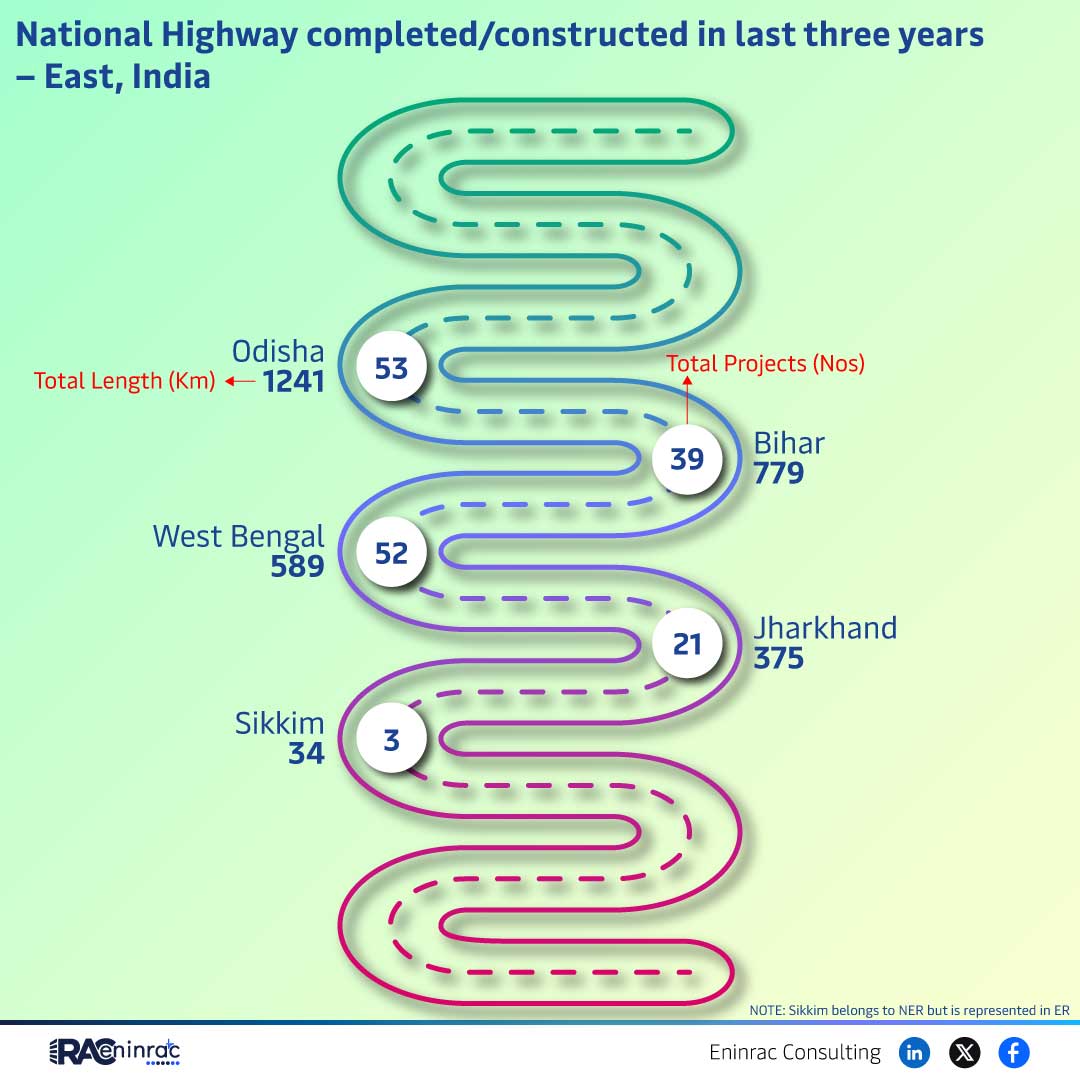
Analyzing the latest statistics, the data shows that Odisha completed 53 highway projects totaling 1,241 kilometres, while West Bengal added 589 kilometres of new roadways. The figures answer key questions about regional progress: how many projects were executed, what distance was covered, and which state leads in terms of sheer kilometre output. The contrast highlights differing pace and scale of development within East India, providing a clear snapshot of infrastructure growth between 2021 and 2023.
Regional Comparison: Odisha vs West Bengal Highway Development
When comparing the two states, Odisha’s larger project count reflects a strategy of dispersing construction across multiple corridors, often targeting previously underserved districts. In contrast, West Bengal’s focus appears concentrated on extending existing networks, resulting in a substantial kilometre addition despite a lower number of individual projects. This divergence suggests distinct policy priorities: Odisha prioritises widespread access, whereas West Bengal emphasizes enhancing capacity on major arteries. Both approaches contribute to the broader goal of strengthening East India’s road infrastructure, yet they illustrate how local conditions and planning frameworks shape outcomes.
Impact on Sectors and Industries
The expansion of national highways in East India has ripple effects across several sectors. Logistics companies benefit from reduced transit times and lower fuel consumption, while agricultural producers gain faster routes to markets, increasing profitability. Real‑estate developers see enhanced land values near new corridors, and tourism operators can promote more accessible travel experiences. For investors, the growing road network signals stable demand for construction materials, engineering services, and financing products, while policymakers can leverage improved connectivity to drive regional development initiatives and attract further public‑private partnerships.
Key Takeaways
- Odisha completed 53 highway projects, covering 1,241 km in three years.
- West Bengal added 589 km of highways, emphasizing capacity upgrades.
- The two states adopted different strategies: multiple small projects versus larger kilometre expansions.
- Improved road networks boost logistics, agriculture, real‑estate, and tourism sectors.
- Investors gain opportunities in construction materials, engineering, and financing services.
- Policymakers can use the data to tailor future infrastructure plans for balanced growth.
FAQs
How many highway projects were completed in Odisha between 2021 and 2023?
Odisha finished 53 separate highway projects, collectively spanning 1,241 kilometres of new or upgraded road.
What is the total length of highways added in West Bengal during the same period?
West Bengal added 589 kilometres of highway infrastructure, focusing on extending existing routes and improving capacity.
Why does Odisha have more projects but West Bengal a higher kilometre total?
Odisha’s approach spreads construction across many corridors to reach remote areas, while West Bengal concentrates on longer stretches of existing highways, resulting in fewer projects but a sizable kilometre increase.
Which sectors benefit most from these highway expansions?
Logistics, agriculture, real‑estate, and tourism experience the greatest gains due to faster transport, reduced costs, and better market access.
How can investors use this data for decision‑making?
Investors can target opportunities in construction material supply, engineering firms, and financing solutions that support ongoing and future highway projects in East India.