
Introduction
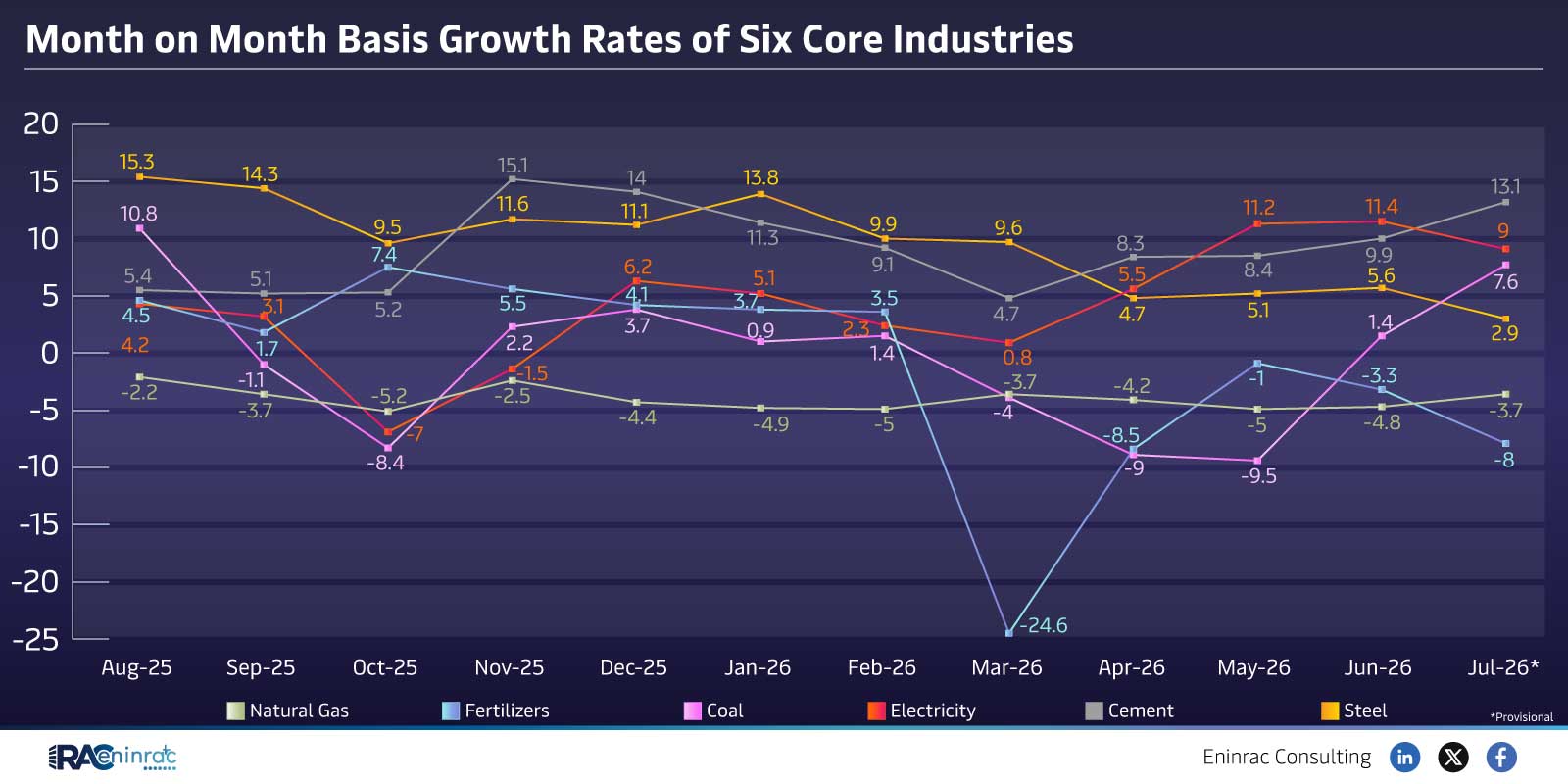
The month‑on‑month growth rates of six core industries between August 2025 and July 2026 provide a snapshot of how energy‑intensive sectors are performing in a rapidly changing economic environment. By examining natural gas, fertilizers, coal, electricity, cement and steel, readers can understand the forces driving growth, the seasonal patterns that appear, and the implications for investors and policymakers.
What Does the Data Reveal About This Topic?
The data shows that growth is not uniform across the six industries. While natural gas and electricity display relatively steady month‑to‑month increases, coal experiences volatility and occasional declines. Fertilizers, cement and steel exhibit a mixture of moderate gains and short‑term setbacks that correspond to demand cycles, supply chain constraints and policy shifts. The key insight is that macro‑economic trends, weather patterns and energy policy all influence month‑on‑month growth differently for each sector.
Sector‑Specific Trends Across the Twelve‑Month Period
Natural gas maintains a positive trajectory, reflecting higher demand for heating and power generation during colder months and a gradual shift toward gas‑fired generation in emerging markets. Fertilizer production shows a peak in early‑year months, linked to agricultural planting seasons, then tapers off as demand stabilises. Coal’s growth rates fluctuate sharply, dropping during months when renewable energy subsidies are announced and rising when logistics bottlenecks ease. Electricity growth mirrors natural gas, with a slight lag during summer months when peak cooling demand pushes generation to alternative sources. Cement growth aligns with construction activity, climbing in the spring‑summer window and slowing in winter. Steel follows a similar pattern but is more sensitive to global trade dynamics and raw‑material price volatility.
Impact on Sectors and Industries
Understanding these month‑on‑month growth rates helps investors allocate capital to the most resilient sectors. Policymakers can use the information to adjust energy subsidies, plan infrastructure upgrades, and anticipate pressure on utilities. Businesses that rely on steel or cement can time procurement to benefit from periods of lower growth and potentially lower prices. Consumers indirectly feel the effect through electricity tariffs and the cost of agricultural inputs such as fertilizers, which are tied to natural gas pricing. Overall, the data underscores the interconnectedness of conventional energy and heavy‑industry outputs.
Key Takeaways
- Natural gas and electricity show the most consistent month‑on‑month growth, indicating strong demand for conventional power sources.
- Fertilizer production peaks during planting seasons, highlighting the agricultural calendar’s influence on industrial output.
- Coal growth is the most volatile, reacting sharply to policy announcements and logistical changes.
- Cement growth mirrors construction cycles, rising in spring and summer and receding in colder months.
- Steel’s performance is highly sensitive to global trade flows and raw‑material price swings.
- Investors, policymakers and businesses can use these trends to optimise timing, pricing strategies and regulatory decisions.
FAQs
Why does natural gas growth remain steady throughout the year?
Natural gas benefits from diversified demand across heating, power generation and industrial processes, which smooths seasonal fluctuations.
What causes the sharp swings in coal growth rates?
Coal is heavily impacted by renewable energy incentives, regulatory changes, and transportation bottlenecks that can quickly alter supply and demand.
How does fertilizer growth relate to agricultural cycles?
Fertilizer production peaks before planting seasons when farmers stock up on inputs, then stabilises once the planting period ends.
Are electricity growth patterns linked to weather?
Yes, electricity demand rises in winter for heating and in summer for cooling, creating predictable peaks that drive month‑on‑month growth.
What should investors watch for in the steel sector?
Investors should monitor global trade policies, raw‑material costs and macro‑economic indicators that influence construction and manufacturing demand.