
Introduction
The Indian energy and manufacturing landscape is heavily influenced by a handful of large coal importers that also have strong footprints in the steel and power sectors. Companies such as JSW Steel, Adani Group, Tata Steel, and Essar Power dominate import volumes, linking raw coal supply directly to the production of steel, cement, and electricity. Understanding who these major players are, how much coal they move, and why their operations matter provides critical insight for investors, policymakers, and industry observers tracking conventional energy trends in the country.
What Does the Data Reveal About This Topic?
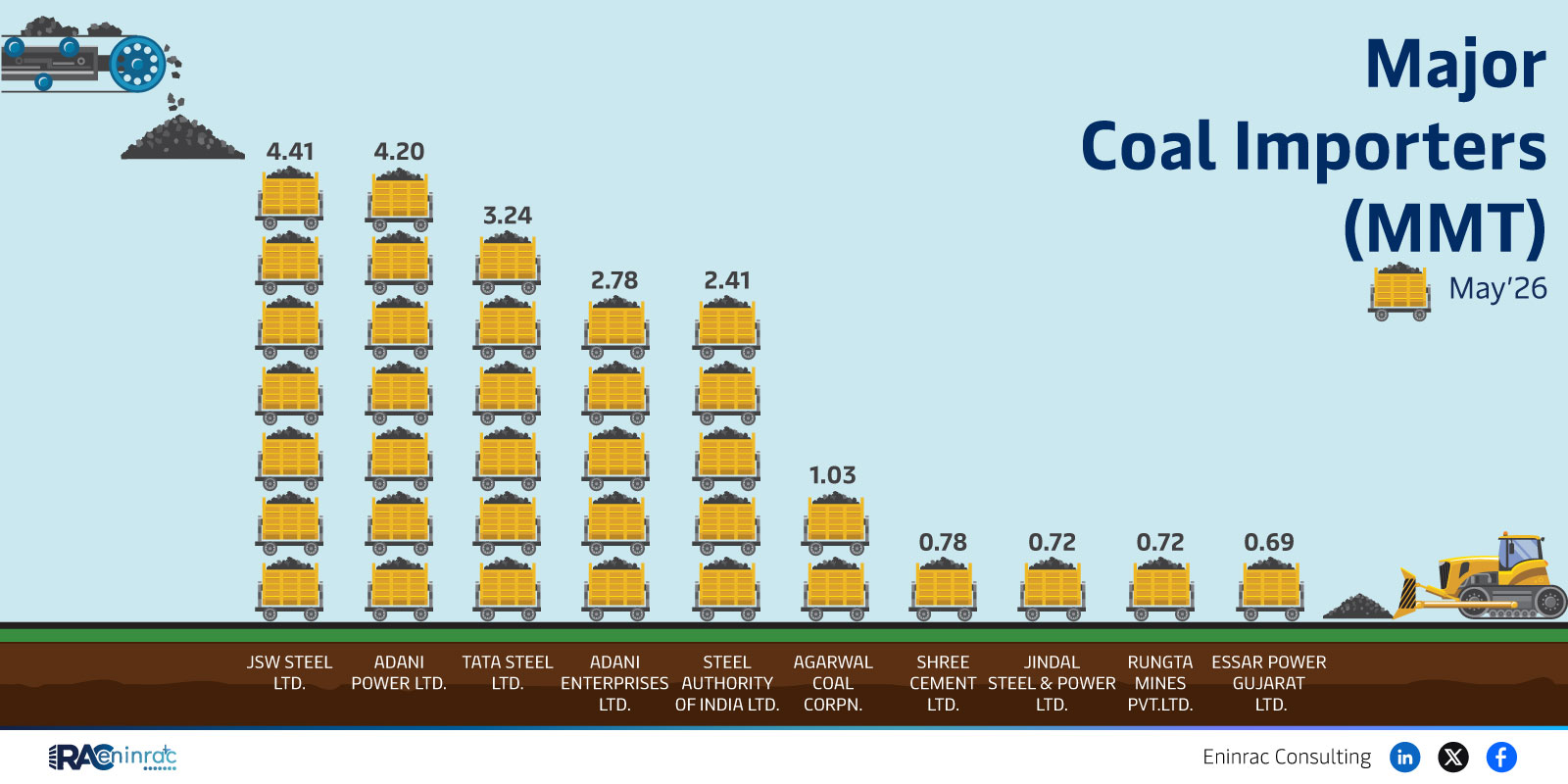
The raw data indicates that a core group of firms collectively import roughly 2 MMT of coal each month, with JSW Steel and Adani Group leading the pack. These import volumes are tied to large-scale projects in steel manufacturing, power generation, and cement production across Gujarat and other key industrial regions. The data also highlights the interconnected nature of coal imports with downstream industries, suggesting that shifts in import levels can ripple through multiple sectors of the Indian economy.
Key Companies and Their Import Volumes
A comparative look shows JSW Steel importing close to 600 kt of coal per month, while Adani’s energy arm moves about 500 kt, and Tata Steel contributes roughly 400 kt. Essar Power and other regional enterprises together account for the remaining share. This pattern reflects a concentration of import capacity among firms that own integrated steel‑making plants and captive power stations. Gujarat emerges as a strategic hub, hosting several of these operations, which benefits from port infrastructure and proximity to domestic coal mines, yet still relies heavily on overseas supply to meet demand.
Impact on Sectors and Industries
The dominance of a few coal importers shapes the conventional energy sector by influencing price formation, supply security, and investment decisions. Steel manufacturers depend on consistent coal quality to maintain production efficiency, while power generators use imported coal to supplement domestic reserves during peak demand. Policymakers monitor these import trends to assess the effectiveness of energy diversification initiatives and to gauge the environmental impact of continued reliance on fossil fuels. For investors, the data signals where capital may be allocated, especially in projects that integrate coal supply chains with downstream manufacturing.
Key Takeaways
- JSW Steel leads coal imports among Indian firms.
- Adani and Tata Steel are close followers.
- Gujarat is the primary logistical hub.
- Imported coal supports steel, cement, and power.
- Concentration creates supply‑chain vulnerabilities.
- Policy shifts could alter import dynamics.
FAQs
Which companies are the largest coal importers in India?
JSW Steel, Adani Group, and Tata Steel together account for the majority of imported coal volumes.
How does coal import affect the steel industry?
Steady coal supplies enable continuous steel production, influencing output levels and cost structures.
What region hosts most of the coal import infrastructure?
Gujarat’s ports and industrial zones serve as the main entry points for imported coal.
Are there environmental concerns with high coal imports?
Yes, reliance on coal contributes to emissions and raises sustainability challenges for the energy mix.
Can policy changes reduce dependence on imported coal?
Policies promoting renewable energy and domestic mining can gradually lower import reliance.