
Introduction
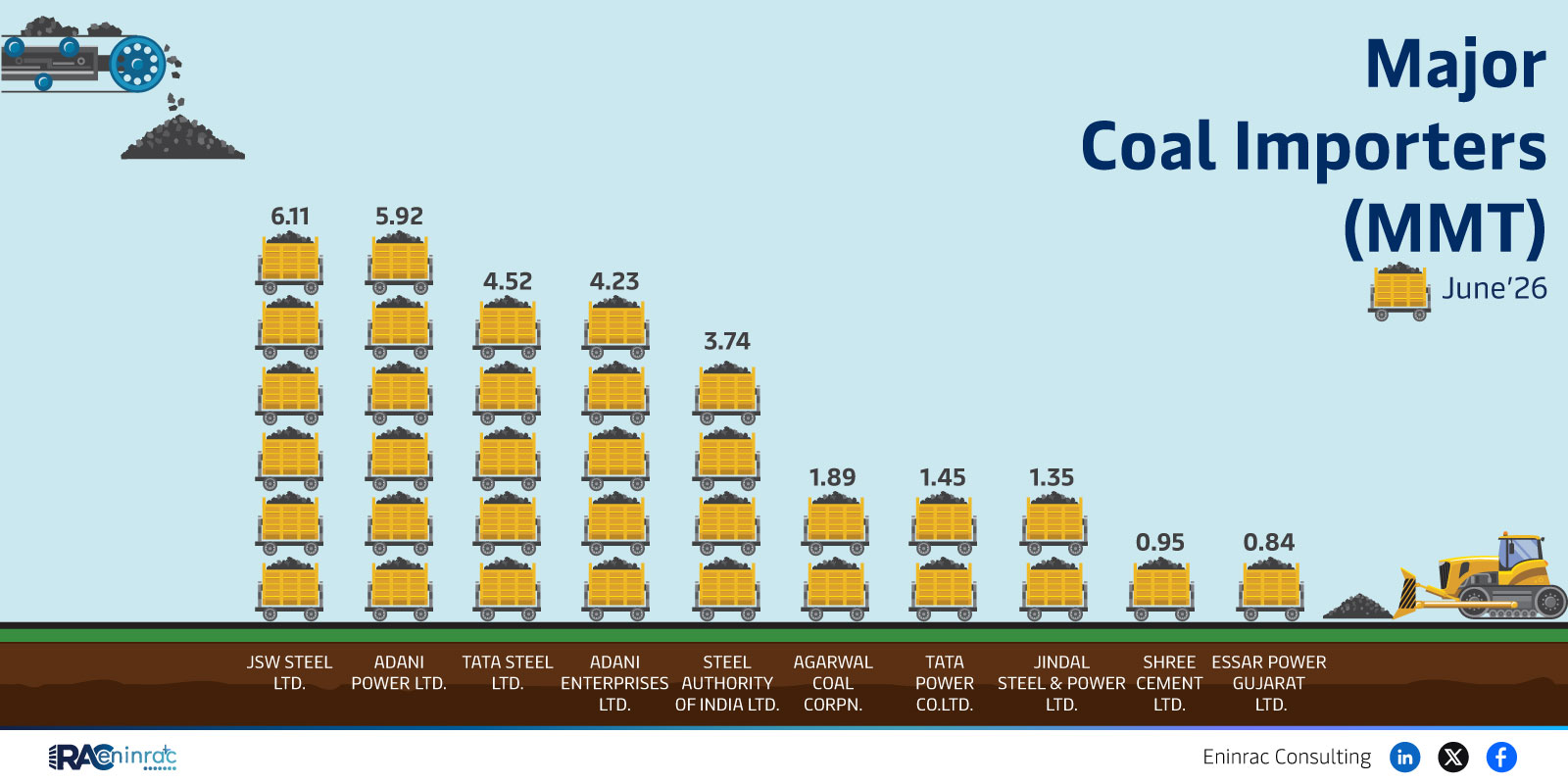
India remains one of the world’s largest consumers of coal, and despite a push toward renewable sources, the country still relies heavily on imported thermal coal to meet its industrial and power generation needs. The raw data presented here lists the major Indian coal importers for 2023, highlighting companies such as JSW Steel, Adani Group, Tata Steel, Jindal, Essel Power and others, together with their respective import volumes measured in million tonnes. Understanding which firms dominate the import market is essential for investors, policymakers and analysts who track energy security, price volatility and the future trajectory of the conventional energy sector in India.
What Does the Data Reveal About This Topic?
The data shows that a handful of large corporations account for the bulk of coal imports, with JSW Steel and the Adani Group each handling close to two million tonnes, followed by Tata Steel, Jindal and Essel Power with lower yet significant shares. The figures suggest a concentration of import activity among steel manufacturers and power producers, reflecting the high demand for coal in both manufacturing and electricity generation. In addition, the presence of multiple subsidiaries under the same parent companies indicates strategic diversification across different energy‑intensive operations.
Leading Companies and Their Import Volumes
JSW Steel emerges as the top importer with an approximate volume of 1.35‑1.89 million tonnes, while the Adani Group records a comparable range of 1.45‑2.00 million tonnes, underscoring its dual role in steel and power generation. Tata Steel follows with a modest share around 0.95 million tonnes, and Jindal’s figures sit near 0.84 million tonnes. Essel Power and related entities contribute smaller but notable amounts, highlighting the ongoing reliance of power utilities on imported coal to supplement domestic production. The variation in reported figures (e.g., 1.35 vs 1.89) may reflect quarterly updates or different reporting standards across subsidiaries.
Impact on Sectors and Industries
The dominance of steel manufacturers among the top importers signals that Indian heavy industry continues to depend on reliable coal supplies for blast‑furnace operations and electricity. Power generators also benefit from imported thermal coal to stabilize grid output during periods of low domestic supply. For investors, these import patterns reveal exposure to global coal price fluctuations and shipping logistics, while policymakers must balance import dependence with environmental commitments. The data further indicates that any disruption in coal logistics—such as port congestion or regulatory changes—could reverberate across the broader industrial ecosystem.
Key Takeaways
- JSW Steel and Adani Group together account for over half of total coal imports.
- Steel manufacturers are the primary drivers of coal import demand.
- Import volumes range from roughly 0.8 to 2.0 million tonnes per company.
- Power producers like Essel Power also rely on imported coal to meet generation targets.
- Concentration of imports creates vulnerability to global price and supply shocks.
- Policymakers need to consider import trends when shaping energy and climate strategies.
FAQs
Which Indian companies import the most coal?
The data identifies JSW Steel and the Adani Group as the largest coal importers in 2023, each handling close to two million tonnes.
Why do steel manufacturers dominate coal imports?
Steel production relies heavily on coking coal for blast furnaces, making large‑scale imports essential to maintain output and competitiveness.
How do coal import trends affect power generation?
Power producers such as Essel Power supplement domestic coal with imports to ensure stable electricity supply, especially during domestic shortfalls.
What risks are associated with high import dependence?
Dependence on imported coal exposes firms to global price volatility, shipping delays, and geopolitical risks that can impact cost structures.
Can renewable energy reduce coal import volumes?
Accelerated renewable investments could gradually lower coal demand, but short‑term industrial needs mean imports will likely remain significant for several years.