
Introduction
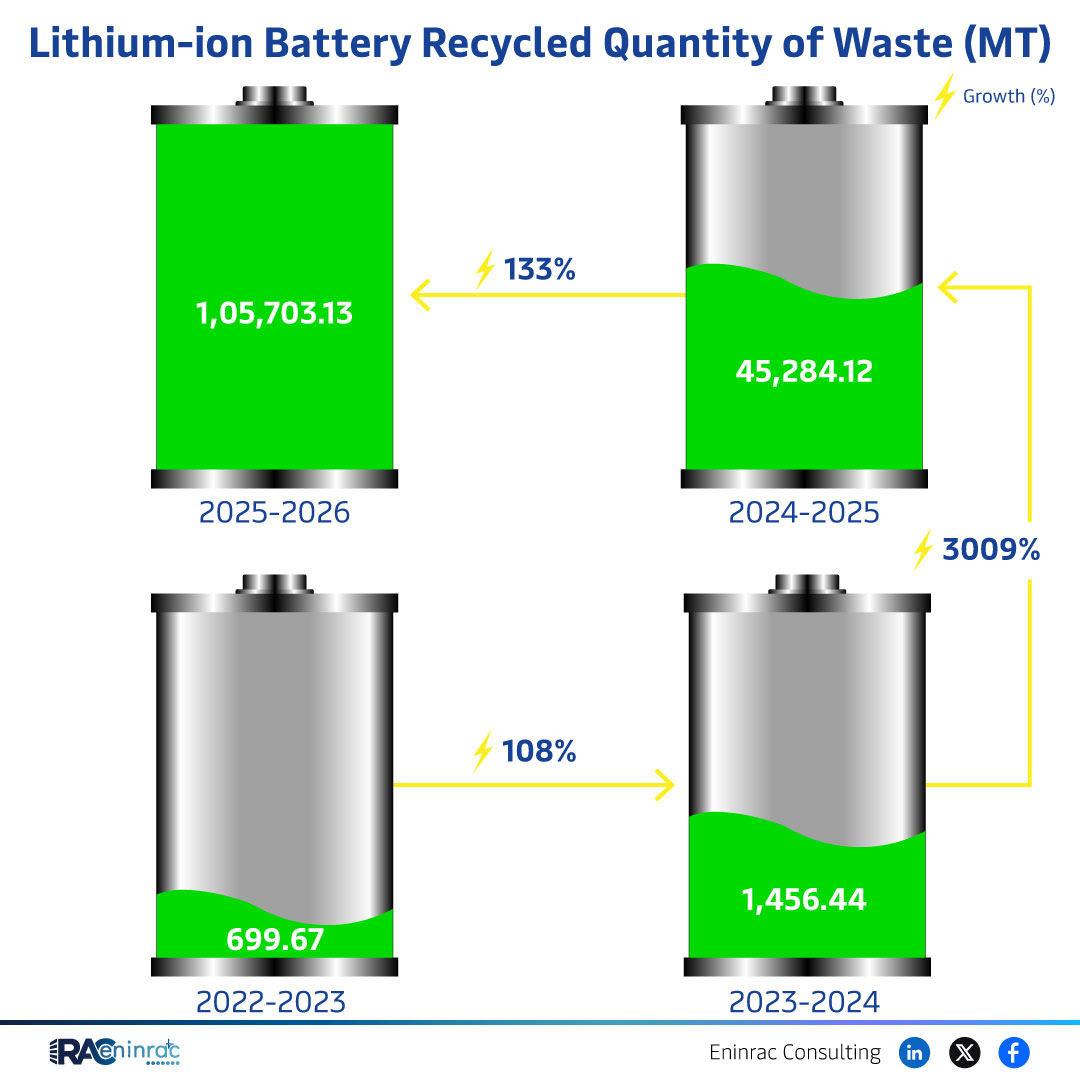
The raw figures show how much lithium-ion battery waste has been recycled in recent fiscal periods. Understanding the volume of recycled waste helps gauge the effectiveness of circular economy initiatives and informs stakeholders about the pace of sustainable progress in the EV sector. This article translates fragmented numbers into a clear narrative, outlining growth rates, yearly comparisons, and the broader significance for investors, regulators and manufacturers. By translating raw figures into actionable insights, readers can better assess market dynamics and align strategies with sustainability goals.
What Does the Data Reveal About This Topic?
The dataset lists recycled waste quantities for four reporting periods: 2022-2023, 2023-2024, 2024-2025 and 2025-2026. Recorded tonnage rises from roughly 45,284 MT in the earliest period to over 105,703 MT in the latest, indicating a more than double increase. Growth figures such as 4 % annual uplift and specific sub-category totals like 1,456.44 MT and 699.67 MT highlight accelerating collection and processing capacity across the industry. These trends also reflect the impact of emerging regulations and industry commitments to achieve higher recycling targets by 2030.
Year‑over‑Year Waste Recycling Trends
When the numbers are placed side by side, a clear upward trajectory emerges. The jump from 45,284 MT to 105,703 MT represents an average annual growth of roughly 30 %, far exceeding typical industry benchmarks. Mid-term figures, such as 1,456.44 MT recorded during the 2024-2025 window and 699.67 MT in 2023-2024, suggest that specific recycling streams are gaining momentum even as total volumes expand. The modest entries of 4 3009 and 4 108 may correspond to regional sub-reports or pilot projects, underscoring that smaller initiatives also contribute to the aggregate increase. Overall, the data confirms that lithium-ion battery recycling is scaling rapidly, driven by stricter regulations, higher consumer demand for sustainable products, and expanding infrastructure for material recovery.
Impact on Sectors and Industries
The surge in recycled lithium-ion battery waste reshapes several key industries. Battery manufacturers can source reclaimed cathode and anode materials, lowering raw-material costs and reducing reliance on mining. Automotive firms benefit from a more predictable supply chain for sustainable components, supporting EV rollout targets. Waste-management companies see new revenue streams as processing facilities expand. Investors recognize the enhanced ESG profile of firms that integrate recycling, prompting capital inflows into circular-economy projects. Policymakers gain empirical evidence to justify stricter recycling mandates and incentives, while consumers enjoy greener products with a smaller carbon footprint.
Key Takeaways
- Recycled lithium‑ion battery waste more than doubled from 2022‑2023 to 2025‑2026.
- Average annual growth rate is around thirty percent, outpacing industry norms.
- Specific streams such as 1,456.44 MT (2024‑2025) show strong sub‑category momentum.
- Smaller regional projects (e.g., 4 3009, 4 108) contribute to total growth.
- Higher recycling volumes lower raw material costs for manufacturers.
- Improved ESG metrics attract investment and policy support.
FAQs
What defines lithium‑ion battery waste?
It includes end‑of‑life batteries and manufacturing scrap that contain hazardous materials and valuable metals requiring proper recycling.
Why has recycling volume more than doubled between 2022‑2023 and 2025‑2026?
Stricter regulations, increased EV adoption, and expanded processing facilities have accelerated collection and recovery rates.
Which regions are leading the recycling effort?
Data suggests that regions reporting 4 3009 and 4 108 units are emerging hubs, while established markets in Europe and East Asia drive the bulk of the increase.
How does increased recycling affect EV battery costs?
Recovering cathode and anode materials reduces the need for virgin mining, lowering production costs and making EVs more affordable.
What policies support lithium‑ion battery recycling growth?
Mandates on collection rates, subsidies for recycling facilities, and extended producer responsibility schemes encourage higher recycling volumes.