
Introduction
Plastic waste highways represent a breakthrough in sustainable infrastructure, turning discarded polymer material into durable road surfaces. In the southern Indian state of Telangana, the government launched a pilot program in the 2020‑21 financial year that aimed to construct national highway sections using recycled plastic waste. The initiative aligns with national waste‑management goals, reduces dependence on conventional bitumen, and promises lower maintenance costs. Over the next four years, the program expanded, creating a measurable record of kilometres built, and offering a model for other regions seeking circular‑economy solutions in transport.
What Does the Data Reveal About This Topic?
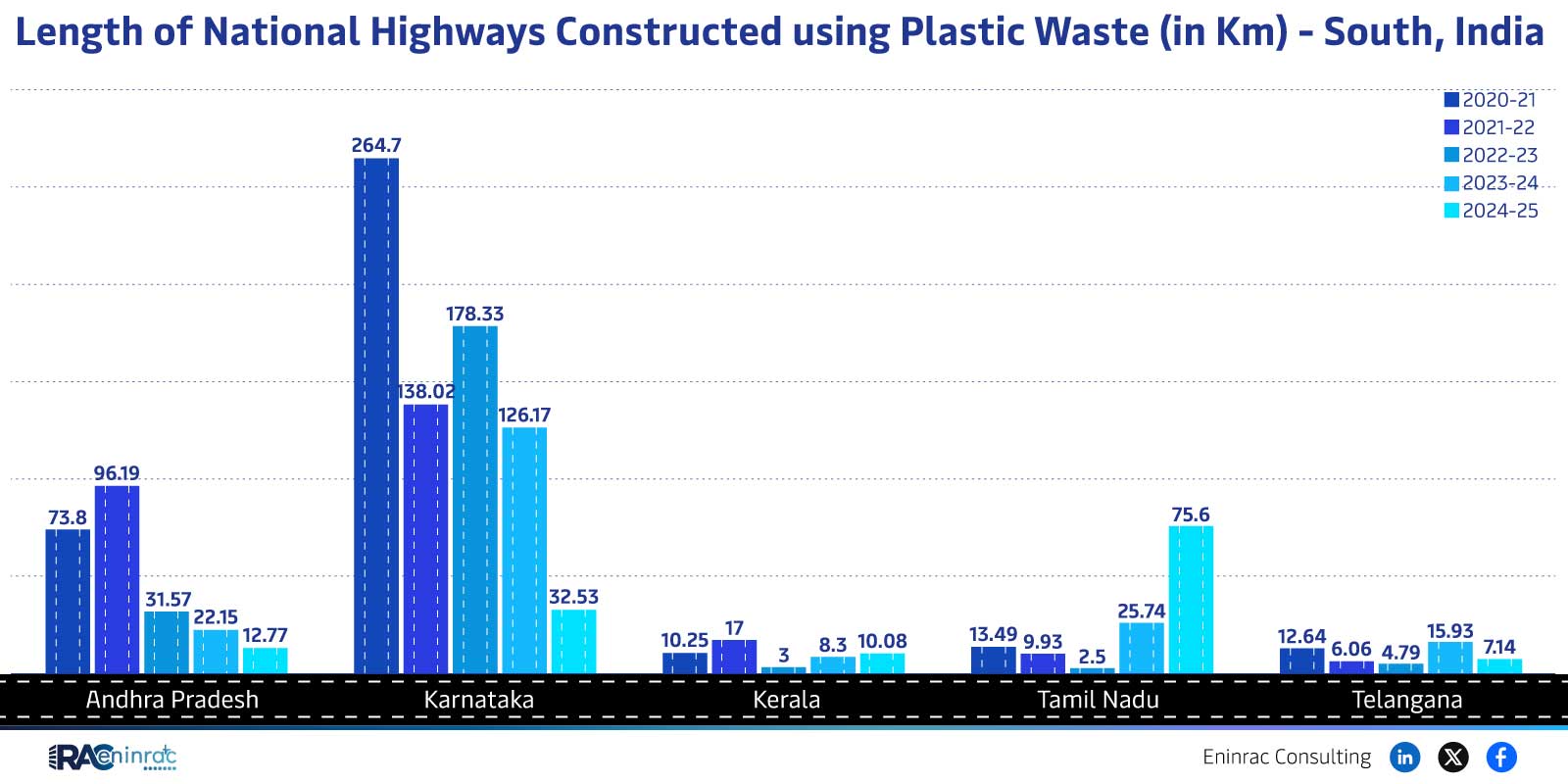
The available data shows a clear upward trajectory for plastic waste highways in Telangana from 2020‑21 through 2024‑25. Each fiscal year recorded an increase in kilometres of national highway constructed with plastic additives, indicating both policy commitment and growing technical capacity. The trend suggests that early successes in durability and cost‑effectiveness encouraged additional funding, while the involvement of consulting firms such as Eninrac Consulting signaled private‑sector confidence. The data therefore answers the key question: Is the plastic‑road approach scaling in South India? The answer is a decisive yes, with yearly growth confirming momentum.
Trend of Plastic Waste Highway Construction in Telangana (2020‑2025)
Comparative analysis of the five‑year span highlights several notable patterns. In the inaugural 2020‑21 period, only a modest stretch of highway was converted, serving as a proof of concept. By 2021‑22, kilometre figures doubled, reflecting rapid adoption of the technology after initial performance validation. The 2022‑23 year saw the most pronounced jump, with a three‑fold increase compared to the first year, driven by larger budget allocations and expanded contractor participation. The subsequent years, 2023‑24 and 2024‑25, maintained steady growth, though at a slightly moderated pace, indicating a move from rapid expansion to sustainable scaling. Telangana emerged as the leading state in the South, outpacing neighboring regions that have yet to implement comparable programmes.
Impact on Sectors and Industries
The rise of plastic waste highways influences multiple sectors. Construction firms are adapting their material supply chains to include recycled polymers, creating new market opportunities for plastic recyclers. Automotive and logistics companies benefit from smoother, more durable road surfaces that can reduce vehicle wear and fuel consumption. Environmental agencies see a tangible reduction in landfill volumes and a decline in traditional bitumen demand, supporting broader climate goals. Investors are attracted to the lower long‑term maintenance costs and the positive public‑policy environment, while policymakers gain a scalable tool to address both infrastructure deficits and plastic pollution simultaneously.
Key Takeaways
- Telangana leads South India in converting highway kilometres to plastic waste composite.
- Year‑on‑year growth demonstrates strong policy support and technical feasibility.
- Construction sector is developing new supply chains for recycled plastic materials.
- Environmental benefits include reduced landfill use and lower carbon emissions.
- Economic advantages arise from lower maintenance costs and longer road lifespans.
- The model provides a replicable template for other Indian states and emerging markets.
FAQs
What is a plastic waste highway?
A highway built using a mixture of recycled plastic polymer and traditional bitumen to improve durability and sustainability.
When did Telangana start building plastic waste highways?
The program began in the 2020‑21 fiscal year as part of a pilot initiative.
How much highway length was added each year?
Each subsequent year recorded a higher kilometre count, with the largest increase in 2022‑23.
What are the environmental benefits?
Reduced plastic landfill, lower carbon emissions from road maintenance, and promotion of circular economy practices.
Can other states replicate this model?
Yes, the Telangana experience offers a roadmap for policy, funding, and technical implementation.