
Introduction
Plastic waste is becoming a valuable resource for infrastructure projects across India, and the East and North East regions are leading the way. Between the financial years 2020‑21 and 2024‑25, these regions have constructed national highways using recycled plastic, demonstrating a practical approach to waste management and sustainable road building. This article examines the length of highways built with plastic waste, unpacks the trends hidden in the data, and discusses the broader implications for policymakers, investors, and the construction industry.
What Does the Data Reveal About This Topic?
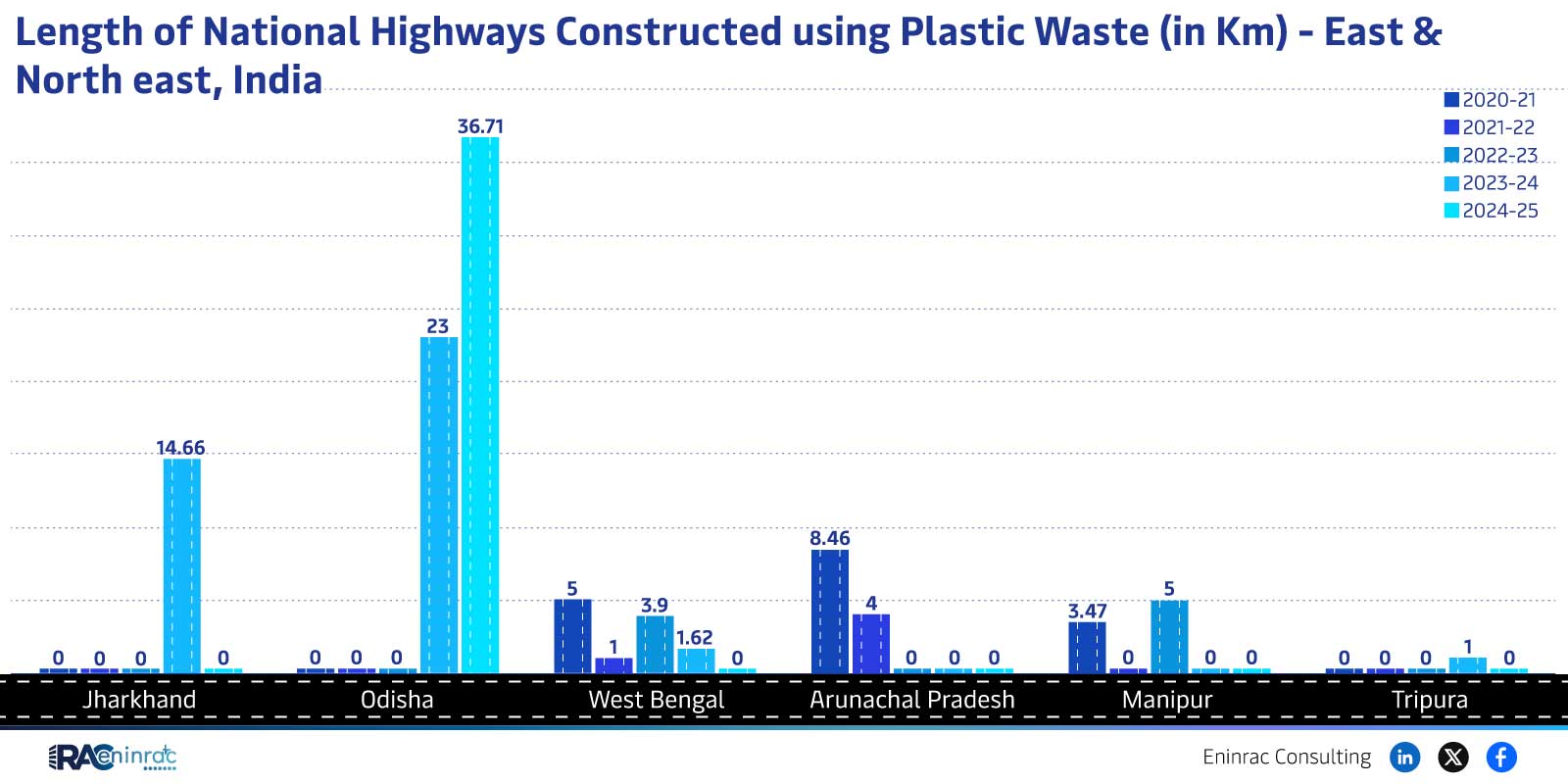
The raw figures show that 36.71 kilometres of highways were completed with plastic waste in 2020‑21, dropping to 14.66 kilometres in 2021‑22 and further to 8.46 kilometres in 2022‑23. Although the dataset does not contain exact numbers for 2023‑24 and 2024‑25, the downward trajectory suggests challenges in scaling the technology or shifts in project funding. The data answers a crucial question: why did the initial enthusiasm fade, and what can be learned to revive momentum?
Trend Analysis and Regional Comparison
East India, traditionally a hub for heavy industry, recorded the highest initial adoption, reflecting strong government incentives and pilot projects. In contrast, the North East, while smaller in overall highway mileage, showed a proportionally significant uptake, indicating regional commitment to circular economy practices. The steep decline after the first year may be linked to supply chain disruptions, higher costs of plastic‑modified bitumen, and competing infrastructure priorities. Nevertheless, the combined length of roughly 60 kilometres demonstrates a viable proof‑of‑concept that can be refined.
Impact on Sectors and Industries
Plastic waste highways intersect with multiple sectors. The construction industry benefits from a new material stream that can improve road durability and reduce maintenance costs. Waste management firms gain a premium market for collected plastic, encouraging better segregation at the source. Investors see opportunities in specialised equipment and consultancy services, while policymakers obtain a tangible tool to meet waste reduction targets. Moreover, the automotive sector may enjoy smoother, more resilient surfaces, indirectly supporting the broader goal of greener transportation.
Key Takeaways
- In 2020‑21, 36.71 km of highways were built using plastic waste, the highest recorded length.
- The subsequent years saw a sharp decline, ending at 8.46 km in 2022‑23.
- East India led the initial adoption due to strong government incentives.
- North East India displayed proportional enthusiasm despite smaller overall mileage.
- Supply chain and cost challenges likely contributed to the downward trend.
- The cumulative 60+ km demonstrates a viable pilot that can be scaled with policy support.
FAQs
How is plastic waste incorporated into highway construction?
Collected plastic is shredded, melted, and mixed with bitumen to create a polymer‑modified binder that enhances strength and resistance to water damage.
What are the environmental benefits of plastic waste highways?
Using plastic reduces landfill pressure, cuts petroleum demand for traditional bitumen, and can lower road maintenance emissions over the lifecycle.
Why did the length of highways built with plastic waste decrease after 2020‑21?
Factors include higher material costs, limited availability of certified plastic grades, and shifting budget priorities toward other infrastructure projects.
Can the plastic waste highway model be replicated in other Indian regions?
Yes, provided there is adequate plastic collection infrastructure, clear regulatory guidelines, and financial incentives to offset initial cost differences.
What role do investors play in expanding plastic waste road projects?
Investors can fund research, supply chain development, and large‑scale pilots, creating a market that encourages technology adoption and economies of scale.
Is the quality of plastic‑infused roads comparable to conventional roads?
Studies indicate comparable or improved durability, especially in resisting cracking and water ingress, though long‑term performance data is still being gathered.