
Introduction
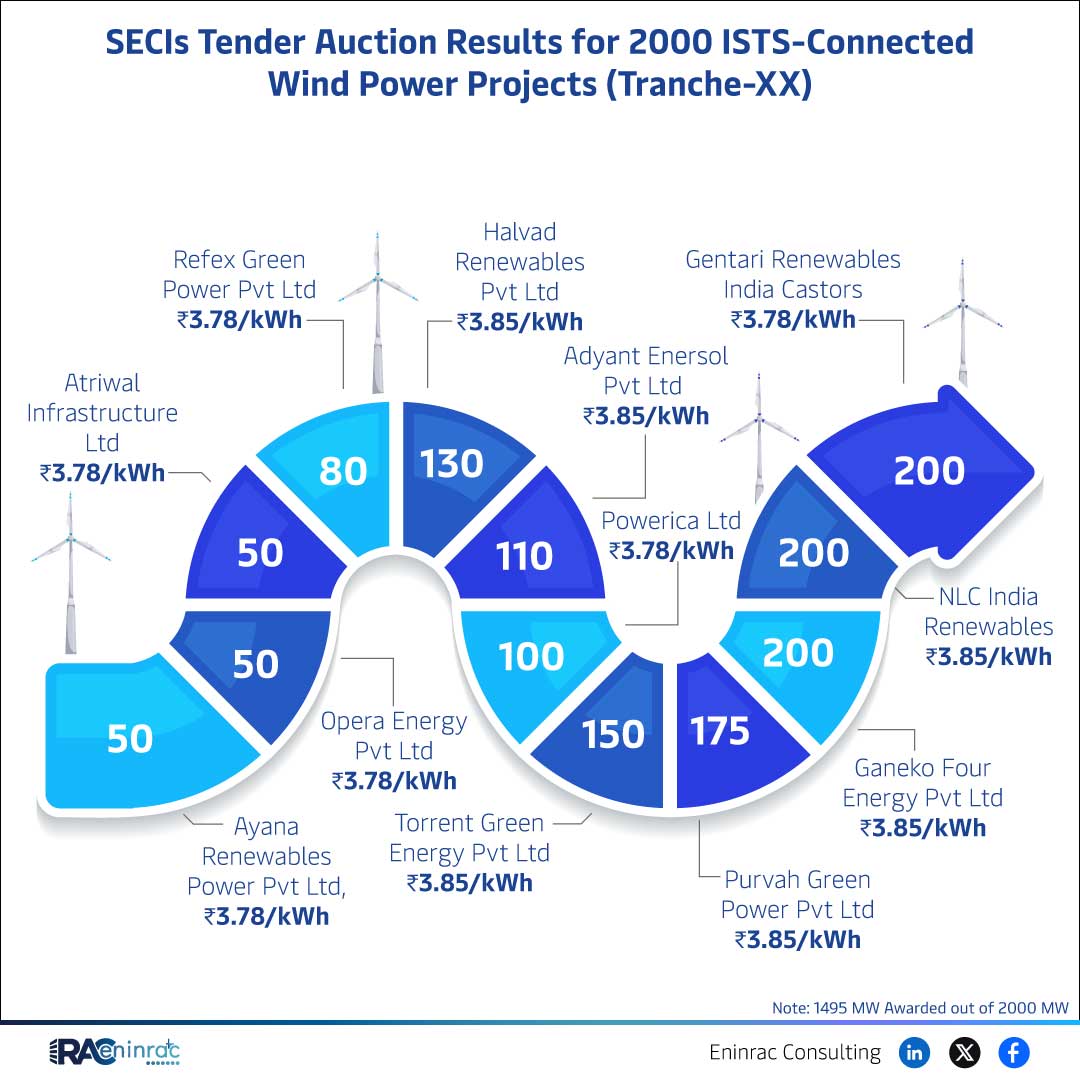
The recent SECIs tender auction for 2,000 MW of ISTS‑connected wind power projects in the Halvad region has drawn significant attention from investors, developers and policymakers. With 1495 MW successfully awarded, the results highlight competitive pricing, a diverse group of bidders, and the growing momentum of renewable energy deployment in India. This article breaks down the auction data, explains the implications for the wind sector, and outlines the key takeaways for stakeholders interested in renewable power procurement.
What Does the Data Reveal About This Topic?
The auction data shows that multiple companies secured contracts at tariffs ranging from 3.78 kWh to 23.85 kWh, indicating varied cost structures and project scales. The leading bidders, such as Refex Green Renewables, Gentari Renewables, and Power Pvt Ltd, achieved the most competitive rates, while the overall award rate of 74.75% (1495 MW of 2000 MW) demonstrates robust market interest and the effectiveness of the SECIs mechanism in mobilising private capital for wind energy.
Key Tariff Rates and Winning Bidders in the Halvad Tender
Analyzing the tariff distribution reveals that the lowest offered price was 3.78 kWh, submitted by several participants including Powerica Ltd and NLC India Renewables. The highest accepted rates hovered around 23.85 kWh, presented by firms like Gentari Renewables and Ayana Torrent Green. Companies such as Eninrac Consulting and Adyant Enersol also featured with mid‑range tariffs of 3.85 kWh. The spread illustrates how project location, technology choices, and financing structures influence bid competitiveness, with lower tariffs often linked to larger, well‑capitalised developers.
Impact on Sectors and Industries
The outcome of the SECIs wind power tender directly influences several sectors. For the renewable energy industry, the awarded capacity adds a substantial chunk of wind generation to India's clean‑energy mix, supporting national emissions targets. Investors gain confidence from the transparent auction process, encouraging further equity inflows into wind projects. Equipment manufacturers, particularly turbine suppliers, can anticipate increased demand, while local construction and operations firms stand to benefit from project development and O&M activities. Policymakers can use these results to refine future auction designs, ensuring cost‑effective renewable integration.
Key Takeaways
- SECIs awarded 1495 MW, representing a 74.75% success rate of the 2000 MW offering.
- Tariffs ranged from 3.78 kWh to 23.85 kWh, reflecting diverse bid strategies.
- Refex Green Renewables, Gentari Renewables, and Power Pvt Ltd secured the most competitive rates.
- Lower tariffs were associated with larger, financially robust developers.
- The tender outcome strengthens India’s renewable energy pipeline and market confidence.
- Future auctions may adjust capacity buckets to balance award rates and pricing competition.
FAQs
What is the total capacity awarded in the Halvad wind tender?
A total of 1495 MW was awarded out of the 2000 MW originally offered.
Which companies offered the lowest tariff?
Powerica Ltd, NLC India Renewables and several others submitted the lowest tariff of 3.78 kWh.
How does the award rate compare to previous SECIs auctions?
The 74.75% award rate is higher than several earlier rounds, indicating stronger market participation.
What impact does this tender have on renewable energy goals?
The awarded capacity adds significant wind generation, helping India progress toward its renewable energy and emission reduction targets.
Will the awarded projects be operational soon?
Developers are expected to commence construction within the next 12‑18 months, subject to financing and permitting timelines.