
Introduction
The small hydro power sector in India continues to evolve, and the latest August 2026 figures provide a clear snapshot of capacity, growth, and regional leadership. Understanding these numbers is essential for investors, policymakers, and industry analysts who track renewable energy trends and plan future projects. This article interprets the raw data, highlights the states adding the most capacity, and explains the broader implications for the Indian energy landscape.
What Does the Data Reveal About This Topic?
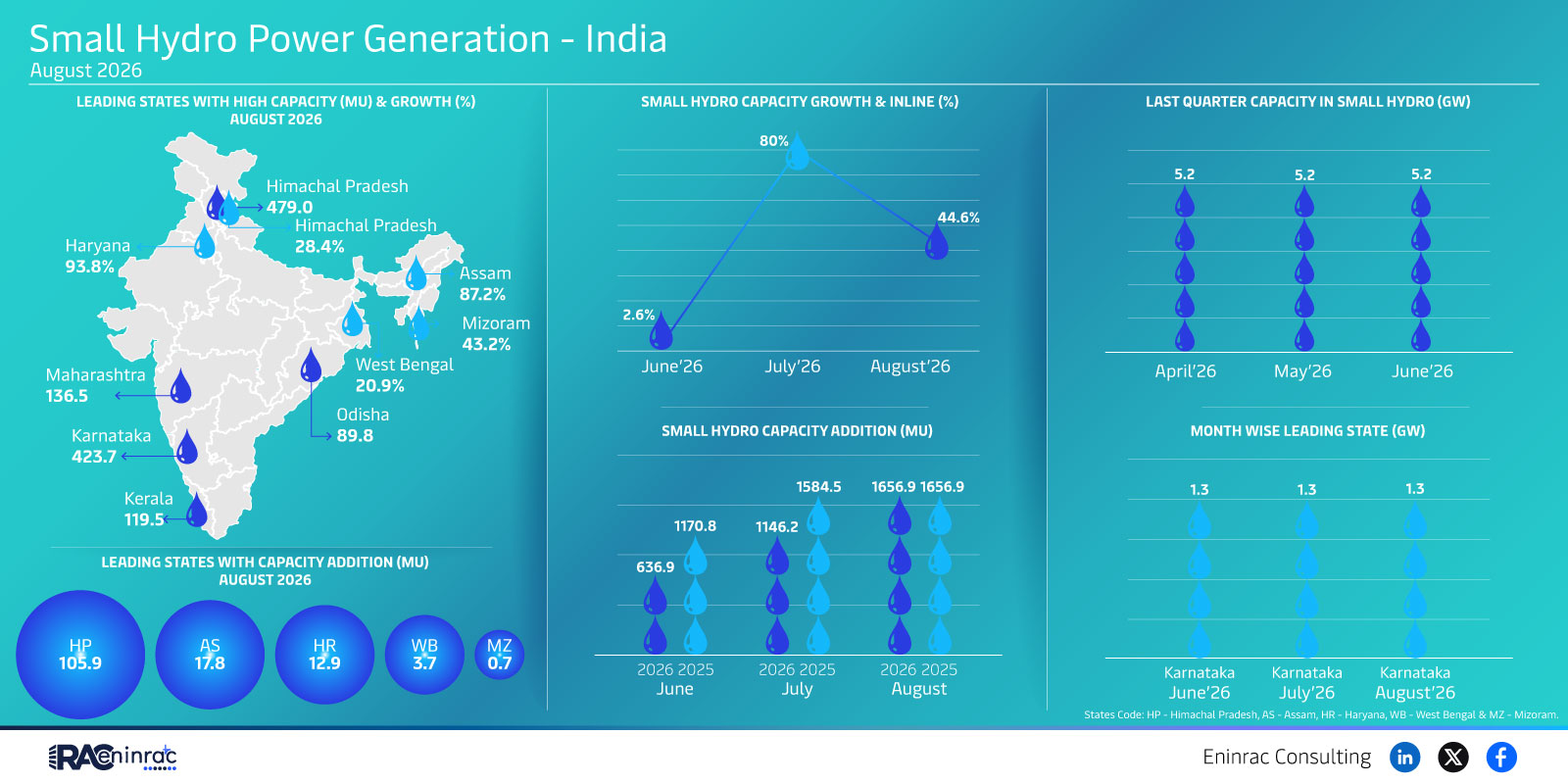
What does the August 2026 data tell us about small hydro power in India? It shows that the total small hydro capacity stands at roughly 1,656.9 MW, with notable additions during June, July, and August 2026. Karnataka emerges as the top contributor for three consecutive months, while states such as Maharashtra, Odisha, and Himachal Pradesh display significant capacity figures and growth rates. The data also indicates a steady upward trend in capacity addition, reflecting policy support and increasing project commissioning.
State‑wise Capacity and Growth Highlights
When comparing states, Karnataka dominates the monthly leading list, suggesting strong pipeline projects and effective state‑level incentives. Maharashtra records the highest absolute capacity at 1,265 MW, underscoring its strategic focus on hydro resources. Himachal Pradesh, Assam, West Bengal, Odisha, and Mizoram also appear in the dataset, each contributing between 20.9 MW and 89.8 MW. The growth percentages for the period show a rise of 44.6 % in capacity addition, indicating an accelerating development pace across the country.
Impact on Sectors and Industries
Small hydro power influences several sectors. For renewable energy developers, the expanding capacity signals lucrative opportunities for new installations and financing. Grid operators must incorporate additional hydro generation into load‑balancing strategies, especially during monsoon periods when water flow peaks. Investors benefit from clearer risk assessments as state‑wise performance data becomes transparent. Policymakers can use these insights to tailor incentives, streamline clearances, and prioritize infrastructure upgrades in high‑growth regions.
Key Takeaways
- Karnataka leads the monthly capacity addition for June, July, and August 2026.
- Maharashtra holds the largest overall small hydro capacity at 1,265 MW.
- The sector grew by 44.6 % in capacity addition during the reported quarter.
- States such as Himachal Pradesh, Assam, and Odisha also show notable capacity contributions.
- Steady capacity growth supports India’s broader renewable energy targets.
- Policymakers can leverage state‑level data to refine incentive schemes and accelerate project approvals.
FAQs
Which state added the most small hydro capacity in August 2026?
Karnataka topped the list for August 2026, maintaining its position as the leading state for three consecutive months.
What is the total small hydro capacity in India as of August 2026?
The cumulative small hydro capacity reached approximately 1,656.9 MW by the end of August 2026.
How does the growth rate of small hydro compare to other renewables?
Small hydro showed a 44.6 % increase in capacity addition during the quarter, a rate comparable to rapid growth seen in solar and wind segments.
Why is Karnataka a consistent leader in small hydro additions?
Karnataka benefits from favorable topography, supportive state policies, and a well‑developed pipeline of approved projects.
What implications does this data have for investors?
Investors can identify high‑growth states, assess risk more accurately, and align portfolio strategies with the accelerating small hydro market in India.