
Introduction
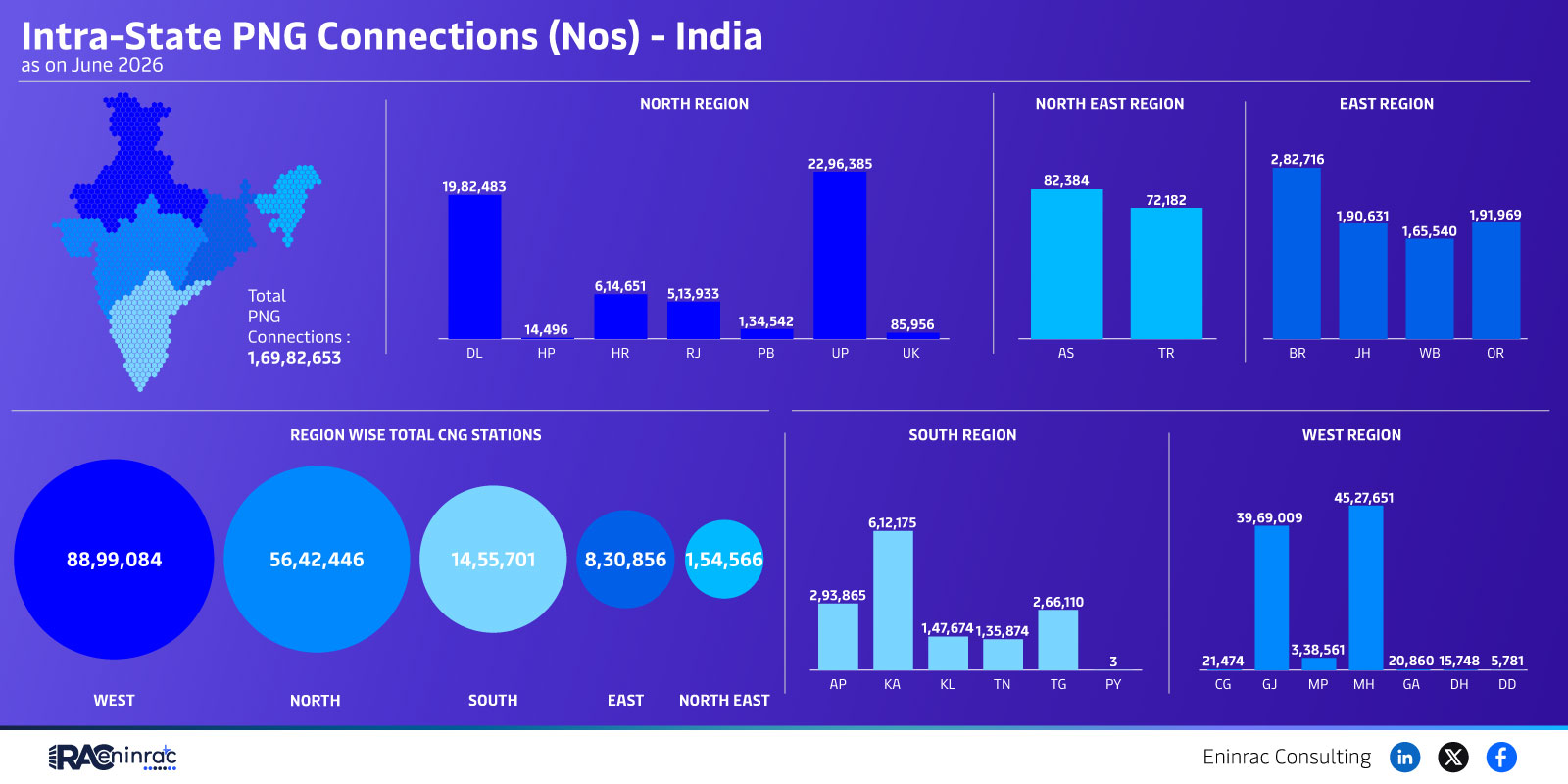
In June 2026 India released the most recent figures on intra‑state PNG (Piped Natural Gas) connections. The data breaks down the number of connections and associated CNG stations across the country’s major regions – North, South, East, West and Northeast. Understanding these numbers is essential for energy planners, investors and policymakers because they reflect how natural‑gas infrastructure is expanding to meet growing demand for cleaner fuel alternatives.
What Does the Data Reveal About Intra‑State PNG Connections?
The raw statistics show that the North region leads with roughly 2.3 million connections, followed by the East with about 0.28 million and the Northeast with close to 2 million. Southern and Western regions report lower but still significant figures, each exceeding one hundred thousand connections. A separate tally of CNG stations indicates the South region hosts the largest network of over 8.9 million stations, while the West maintains around 4.5 million. These numbers answer the core question: which parts of India are most heavily invested in PNG infrastructure and where growth opportunities remain.
Regional Comparison of PNG Connections and CNG Stations
When comparing regions, the North’s dominance in connection count suggests strong urban and industrial demand, especially in states such as Delhi, Uttar Pradesh and Punjab. The East, while smaller in absolute numbers, shows a rapid per‑capita increase, hinting at expanding market penetration in West Bengal and Odisha. The South’s massive CNG station count – the highest in the nation – highlights a mature distribution network that supports both passenger vehicles and commercial fleets. Meanwhile, the West region, despite a modest connection figure, demonstrates efficient station deployment, indicating strategic placement of infrastructure to cover key logistics corridors.
Impact on Energy Sectors and Industries
These connectivity trends have direct implications for several sectors. The transportation industry benefits from the extensive CNG station footprint, reducing reliance on diesel and lowering emissions. Power generation firms can tap the growing PNG network to supplement coal‑based plants, aligning with India’s decarbonisation goals. Investors see the North’s high connection volume as a signal for potential joint‑venture projects, while the South’s station density points to opportunities in service and maintenance businesses. Policymakers can use the regional gaps identified in the data to target subsidies and incentives that accelerate PNG rollout in under‑served states.
Key Takeaways
- The North region holds the largest number of intra‑state PNG connections, exceeding 2 million.
- The South region leads in CNG station count with about 8.9 million facilities.
- East and Northeast regions are experiencing rapid connection growth, indicating emerging markets.
- Western India shows efficient station deployment despite lower connection totals.
- Growth in PNG infrastructure supports cleaner transportation and power generation.
- Data highlights regional investment gaps that can guide future policy and private‑sector initiatives.
FAQs
Which Indian region has the most PNG connections?
The North region leads with approximately 2.3 million intra‑state PNG connections as of June 2026.
How many CNG stations are present in the South region?
The South region hosts the largest network, with about 8.9 million CNG stations.
Why is PNG important for India’s energy mix?
PNG provides a cleaner‑burning alternative to coal and diesel, helping reduce emissions while supporting growing electricity and transportation demand.
What opportunities exist for investors in the PNG sector?
High connection volumes in the North and extensive station networks in the South create opportunities for infrastructure financing, technology services and downstream distribution ventures.
How can policymakers address regional disparities?
Targeted subsidies, tax incentives and streamlined permitting can encourage PNG expansion in regions with lower connection counts, such as the West and certain parts of the Northeast.