
Introduction
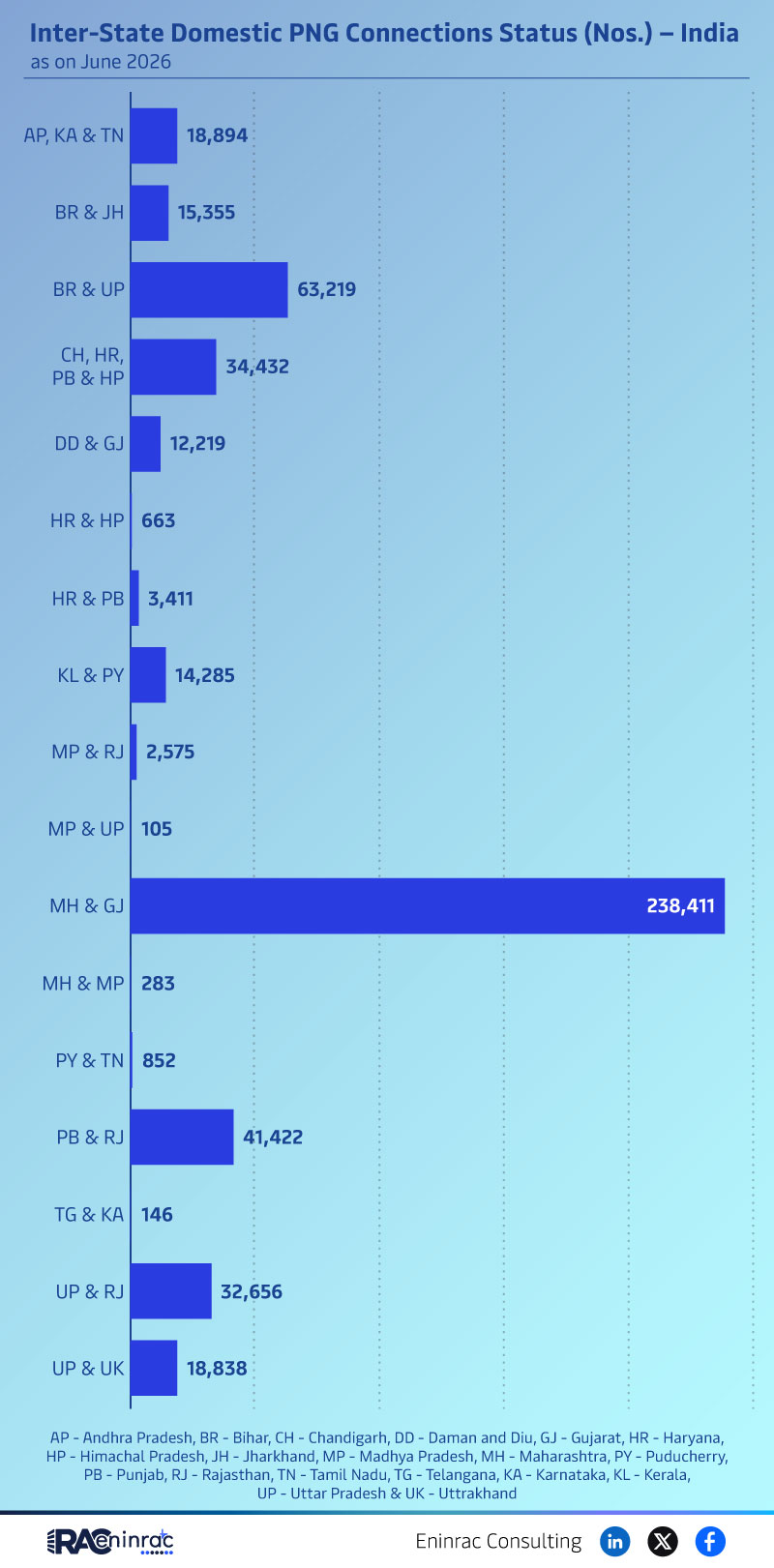
The Inter‑State Domestic PNG Connections data for India, compiled as of June 2026, provides a detailed snapshot of the number of connections linking each pair of states. This dataset captures the scale of domestic networking activity across the country, revealing which regions are most actively linked and where growth potential remains. Understanding these connection figures is essential for policymakers, infrastructure developers, investors, and analysts who track the evolution of national connectivity. In this article we examine the key figures, compare state‑to‑state volumes, discuss sectoral implications and outline actionable insights drawn from the numbers.
What Does the Data Reveal About This Topic?
What does the data reveal about inter‑state domestic PNG connections? The numbers show a clear concentration of activity in certain corridors. The Rajasthan, paired with Punjab, records the highest figure with 41,422 connections, followed closely by the Uttar Pradesh‑Rajasthan link at 32,656. The southern corridor of Kerala‑Puducherry (14,285) also stands out, while some pairs such as Madhya Pradesh‑Uttar Pradesh (105) display minimal linkage. These patterns suggest that economic hubs, logistics corridors and population centers drive the bulk of domestic PNG networking, whereas less‑developed or geographically distant state pairs lag behind. Furthermore, the data highlights emerging connectivity in the western region where the Bihar‑Jharkhand corridor reaches 63,219 connections, indicating growing inter‑state collaboration in that area.
State‑wise Comparison of PNG Connection Volumes
The dataset lists each state pair with its respective connection count. Rajasthan‑Punjab (41,422), Uttar Pradesh‑Rajasthan (32,656) and Bihar‑Jharkhand (63,219) dominate the upper tier, reflecting high demand in densely populated and industrially active zones. In contrast, connections such as Madhya Pradesh‑Uttar Pradesh (105) and MP‑UP (105) sit at the lower end, pointing to limited inter‑state network expansion in those corridors. Southern states show moderate activity, with Kerala‑Puducherry (14,285) and Andhra Pradesh‑Tamil Nadu (unspecified) contributing notable volumes. The disparity underscores the influence of economic density, trade routes, and regional development policies on PNG connectivity.
Impact on Sectors and Industries
Inter‑state domestic PNG connections affect a wide range of sectors. For infrastructure planners, the data highlights priority corridors that may require capacity upgrades or new investments. Telecom and broadband providers can align rollout strategies with high‑connection zones to maximize service penetration. Investors gain insight into regions with strong networking foundations, reducing risk for projects in logistics, manufacturing, and e‑commerce. Policymakers can use the figures to identify lagging states and design targeted incentives that encourage network expansion, thereby fostering balanced economic growth across the nation.
Key Takeaways
- Rajasthan‑Punjab leads with over 41,000 connections.
- Bihar‑Jharkhand shows strong western corridor activity.
- Southern pair Kerala‑Puducherry records moderate volume.
- Low‑volume pairs indicate potential growth opportunities.
- Data supports strategic planning for infrastructure and investment.
- Policymakers can target lagging regions for connectivity incentives.
FAQs
Which state pair has the highest number of PNG connections?
The Rajasthan‑Punjab corridor leads with 41,422 connections as of June 2026.
What does a low connection count indicate?
It suggests limited network development, possibly due to geographic distance, lower economic activity, or lack of investment.
How can investors use this data?
Investors can focus on high‑volume corridors for infrastructure projects and identify low‑volume areas for growth opportunities.
What role do policymakers play?
Policymakers can design incentives to boost connectivity in under‑served regions, promoting balanced regional development.
Are southern states well‑connected?
Southern corridors like Kerala‑Puducherry show moderate connectivity, but there is room for further expansion.