
Introduction
The latest snapshot of PNG connections in India, compiled for June 2026, offers a clear picture of how the nation’s power network is distributed across domestic, commercial and industrial users. By breaking down the numbers state‑wise, the data highlights which regions are driving growth, where investment is needed, and how the overall connectivity landscape is evolving. Readers will learn which states lead in each segment, the total connection volume, and what these trends mean for policymakers, investors and energy providers.
What Does the Data Reveal About This Topic?
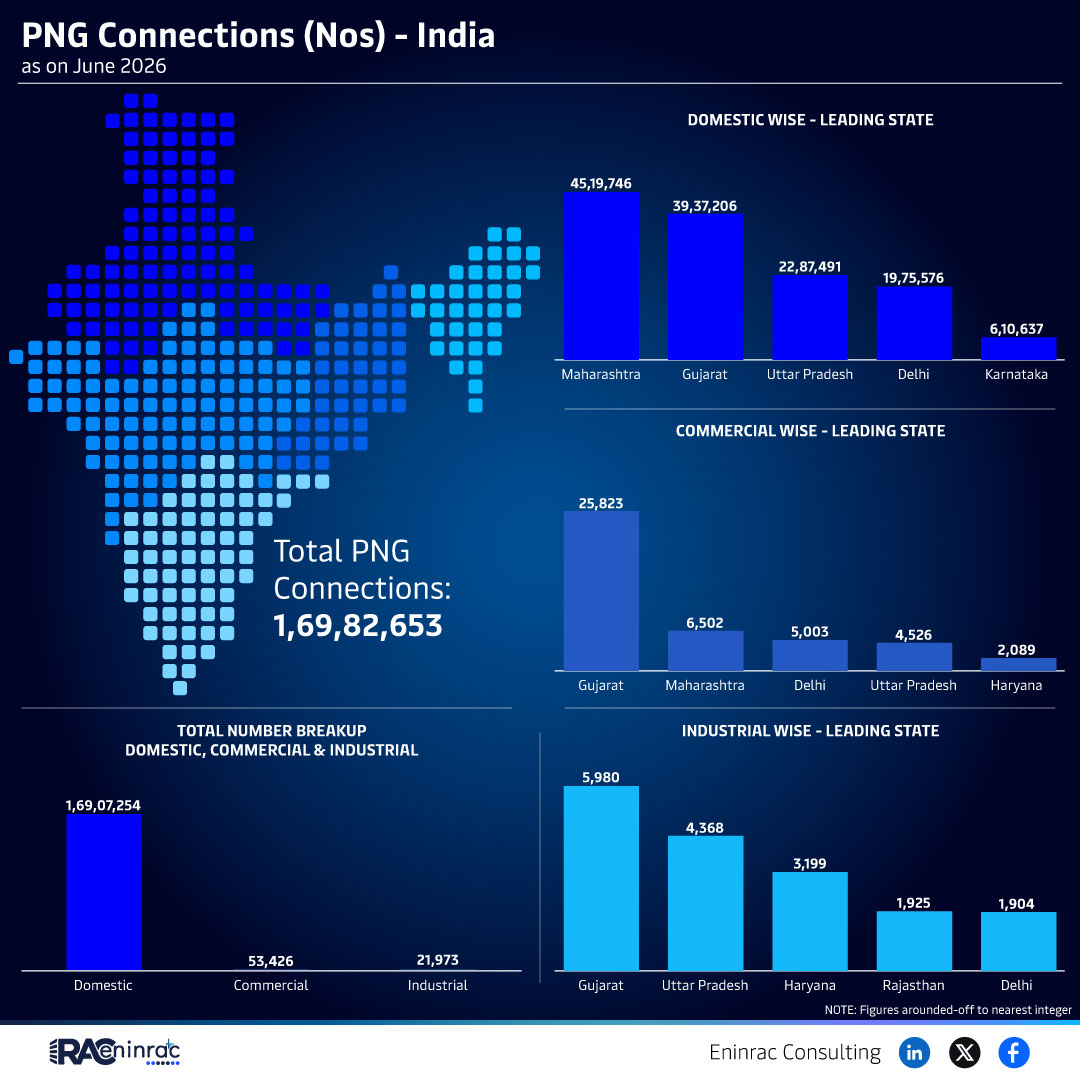
Why do certain states dominate PNG connections while others lag behind? The June 2026 figures show that Maharashtra, Gujarat and Uttar Pradesh together account for more than half of all domestic PNG connections, underscoring their large population bases and expanding urban infrastructure. In the commercial arena, Gujarat emerges as the clear front‑runner, reflected by its higher count of business‑grade connections. Industrial PNG connections, though smaller in absolute number, are concentrated in Gujarat, Haryana and Rajasthan, indicating focused manufacturing hubs.
State‑wise PNG Connection Rankings
Domestic connections total approximately 16.98 million, with Maharashtra leading at roughly 4.52 million, followed by Gujarat at about 3.94 million and Uttar Pradesh at 2.29 million. Delhi and Karnataka also feature prominently, each contributing close to 2 million connections. On the commercial side, Gujarat tops the list with over 25,800 connections, while other states such as Delhi and Maharashtra hold smaller shares. Industrial connections are most pronounced in Gujarat, where the sector records nearly 5,980 connections, with Haryana and Rajasthan adding modest but strategic volumes. This distribution reflects both population density and the concentration of economic activity in these regions.
Impact on Sectors and Industries
The spread of PNG connections influences a broad spectrum of sectors. For utilities, the high domestic load in Maharashtra and Gujarat drives the need for upgraded distribution networks and smart‑grid investments. Commercial users in Gujarat benefit from reliable power, attracting businesses and fostering job creation. Industrial hubs in Gujarat, Haryana and Rajasthan see enhanced productivity as stable PNG connections reduce downtime and support heavy‑duty manufacturing processes. Investors can pinpoint growth opportunities by focusing on states with expanding connection bases, while policymakers can tailor incentives to accelerate electrification in lagging regions, promoting balanced regional development.
Key Takeaways
- Maharashtra holds the largest share of domestic PNG connections.
- Gujarat leads both commercial and industrial PNG connections.
- Uttar Pradesh ranks third in domestic connectivity.
- Delhi and Karnataka each contribute close to 2 million domestic connections.
- Industrial connections are concentrated in Gujarat, Haryana and Rajasthan.
- Total PNG connections in India reach approximately 16.98 million as of June 2026.
FAQs
Which state has the most domestic PNG connections?
Maharashtra leads with about 4.5 million domestic connections, reflecting its large population and extensive urban network.
What is the total number of PNG connections in India?
India recorded roughly 16.98 million PNG connections across domestic, commercial and industrial segments in June 2026.
Why does Gujarat dominate commercial PNG connections?
Gujarat’s business‑friendly environment, robust infrastructure and active manufacturing sector drive its high commercial connection count.
How do industrial PNG connections differ from domestic ones?
Industrial connections are fewer but serve higher‑capacity loads, mainly in manufacturing hubs like Gujarat, Haryana and Rajasthan.
What opportunities arise for investors from this data?
Investors can target states with rising connection numbers—especially Gujarat and Maharashtra—for infrastructure projects, smart‑grid technologies and renewable integration.