
Introduction
The intra‑state compressed natural gas (CNG) station landscape in India is a critical indicator of the nation’s progress toward cleaner transport fuels. As of May 2026, the distribution of CNG stations across the country’s major regions reflects both policy focus and market demand. This article examines the latest station counts, highlights regional disparities, and explains why these numbers matter to investors, policymakers, and commuters seeking sustainable mobility options.
What Does the Data Reveal About This Topic?
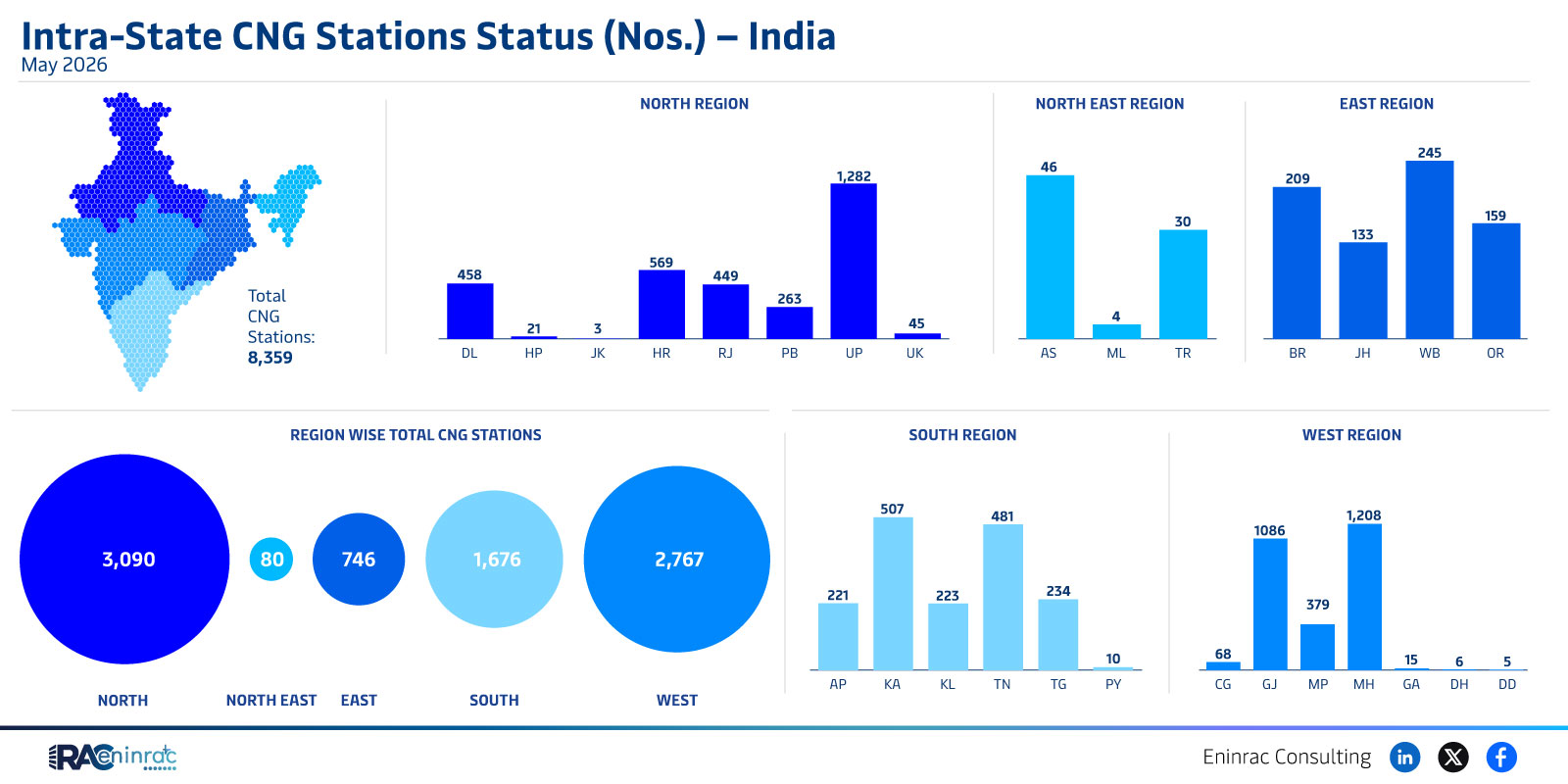
When the May 2026 figures are broken down, a clear picture emerges: the northern region leads with 245 stations, the northeast follows with a substantial 1,282 stations, and the east contributes 209 stations. Southern India hosts 507 stations while the western region holds 481 stations. Together these totals sum to an approximate national count of 1,208 intra‑state CNG stations, underscoring a pronounced concentration in the northeast and a growing presence in the south.
Regional Distribution of CNG Stations
The comparative analysis shows that the northeast’s 1,282 stations represent more than half of the country’s total network, indicating aggressive state‑level incentives and a strong pipeline of projects. In contrast, the northern and eastern regions, with 245 and 209 stations respectively, reveal moderate expansion but still lag behind the northeast’s momentum. The southern and western zones, with 507 and 481 stations, illustrate steady growth driven by state transport fleets and private fleet conversions. These trends suggest that regional policy frameworks, fuel pricing strategies, and infrastructure financing are pivotal in shaping the CNG station map.
Impact on Sectors and Industries
The expanding CNG station footprint influences several key sectors. Automotive manufacturers are accelerating the production of CNG‑compatible vehicles to meet rising demand. Logistics and public transport operators benefit from lower operational costs and reduced emissions, aligning with corporate sustainability targets. Financial institutions see new investment opportunities in infrastructure loans and green bonds tied to CNG projects. Policymakers can leverage the data to fine‑tune subsidies, tax incentives, and regulatory standards that promote the shift from diesel to cleaner gaseous fuels, thereby supporting India’s broader climate objectives.
Key Takeaways
- The northeast region commands the largest share of intra‑state CNG stations with 1,282 sites.
- Southern India shows robust growth, housing over 500 CNG stations.
- Overall national coverage reaches approximately 1,208 stations as of May 2026.
- Regional policy incentives are the primary driver of station concentration.
- Expansion of CNG infrastructure creates market opportunities for vehicle manufacturers and investors.
- Improved CNG availability supports emission reduction goals and fuels diversification.
FAQs
Which Indian region has the most CNG stations?
The northeast region leads with about 1,282 intra‑state CNG stations, accounting for the largest share of the national network.
How many total CNG stations are there in India as of May 2026?
Approximately 1,208 intra‑state CNG stations are operating across all regions.
Why is the northeast region’s CNG growth so rapid?
State‑level subsidies, supportive policies, and targeted financing have accelerated CNG infrastructure deployment in the northeast.
What impact does CNG station growth have on the automotive sector?
Automakers are increasing production of CNG‑compatible vehicles to satisfy rising consumer and fleet demand, spurring innovation in engine technology.
Can investors benefit from the expanding CNG network?
Yes, investors can explore opportunities in infrastructure financing, green bonds, and related services as the CNG market continues to grow.