
Introduction
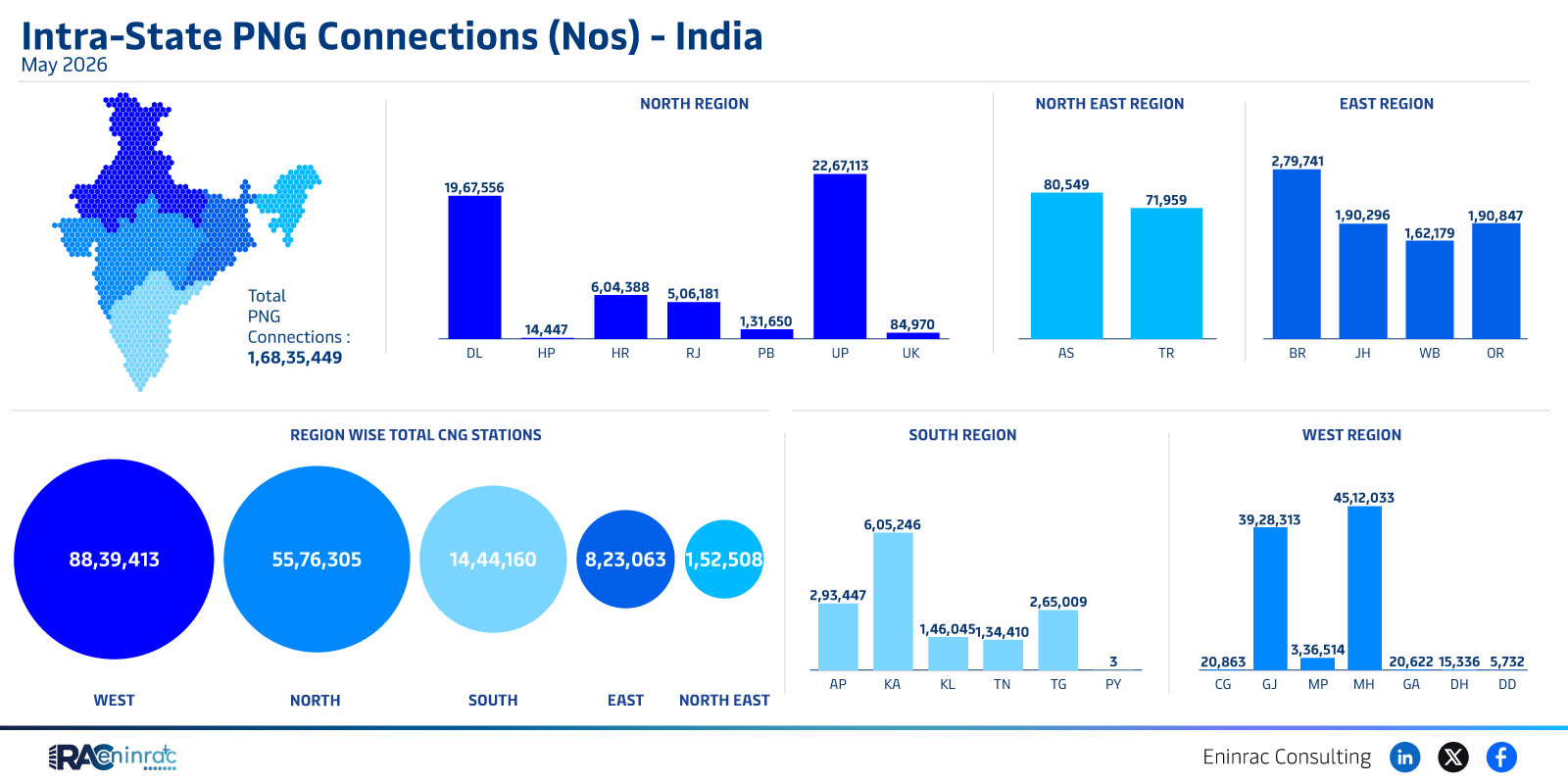
The May 2026 report on intra-state PNG connections in India provides a clear snapshot of how natural gas pipelines are expanding across the country. Understanding this data is vital for policymakers, investors, and industry stakeholders who need to track infrastructure growth, regional demand, and the readiness of CNG stations to support cleaner transportation. This article breaks down the numbers, highlights regional disparities, and explains the broader implications for the Indian energy landscape.
What Does the Data Reveal About This Topic?
The raw figures show that total intra-state PNG connections amount to over 600,000 units nationwide, with the north and northeast regions contributing the largest shares. CNG station counts vary widely, indicating that some regions have significantly more fueling infrastructure than others. The data answers key questions about where pipeline networks are most dense and which areas need further investment to balance supply and demand.
Regional Distribution of PNG Connections in India
In the north region, connections total 22,67,113, while the northeast records 19,67,556, together forming the bulk of the network. The south region shows a modest 20,863 connections, whereas the east registers 2,79,741 and the west leads with 45,12,033 connections. CNG station presence mirrors these trends, with the west housing the highest number of stations at 39,28,313, followed by the north with 14,44,160 stations. The northeast lags with only 2,65,009 stations, suggesting a need for accelerated development to meet growing demand.
Impact on Sectors and Industries
Expanding intra-state PNG connections directly influences several sectors. The transportation industry benefits from increased CNG availability, reducing reliance on diesel and cutting emissions. Energy investors find new opportunities in regions with under‑served infrastructure, while policymakers can prioritize funding to close gaps identified in the data. Additionally, downstream sectors such as automotive manufacturing and renewable‑energy integrations stand to gain from a more robust natural‑gas network.
Key Takeaways
- North and northeast regions account for the majority of PNG connections.
- West India leads both in connection numbers and CNG station density.
- South and east regions display moderate growth, indicating potential for future expansion.
- Northwest regions show the greatest infrastructure gap between connections and stations.
- Investors should focus on underserved regions to capture early‑stage growth.
- Policymakers can use the data to allocate resources strategically for balanced national development.
FAQs
Which Indian region has the highest number of PNG connections?
The west region, with over 45 lakh connections, leads the nation in pipeline network density.
How many CNG stations are reported in the north region?
The north region hosts approximately 14.44 lakh CNG stations, supporting a large portion of its pipeline network.
Why is the northeast region considered under‑served?
Despite having nearly 20 lakh connections, the northeast has only about 2.65 lakh CNG stations, indicating a mismatch between supply and fueling infrastructure.
What opportunities exist for investors in the south region?
The south’s modest connection count and relatively low station density suggest room for investment in both pipeline extensions and CNG station development.
How can policymakers use this data?
By identifying regional disparities, policymakers can direct funding and incentives toward areas that need infrastructure upgrades to achieve balanced growth.