
Introduction
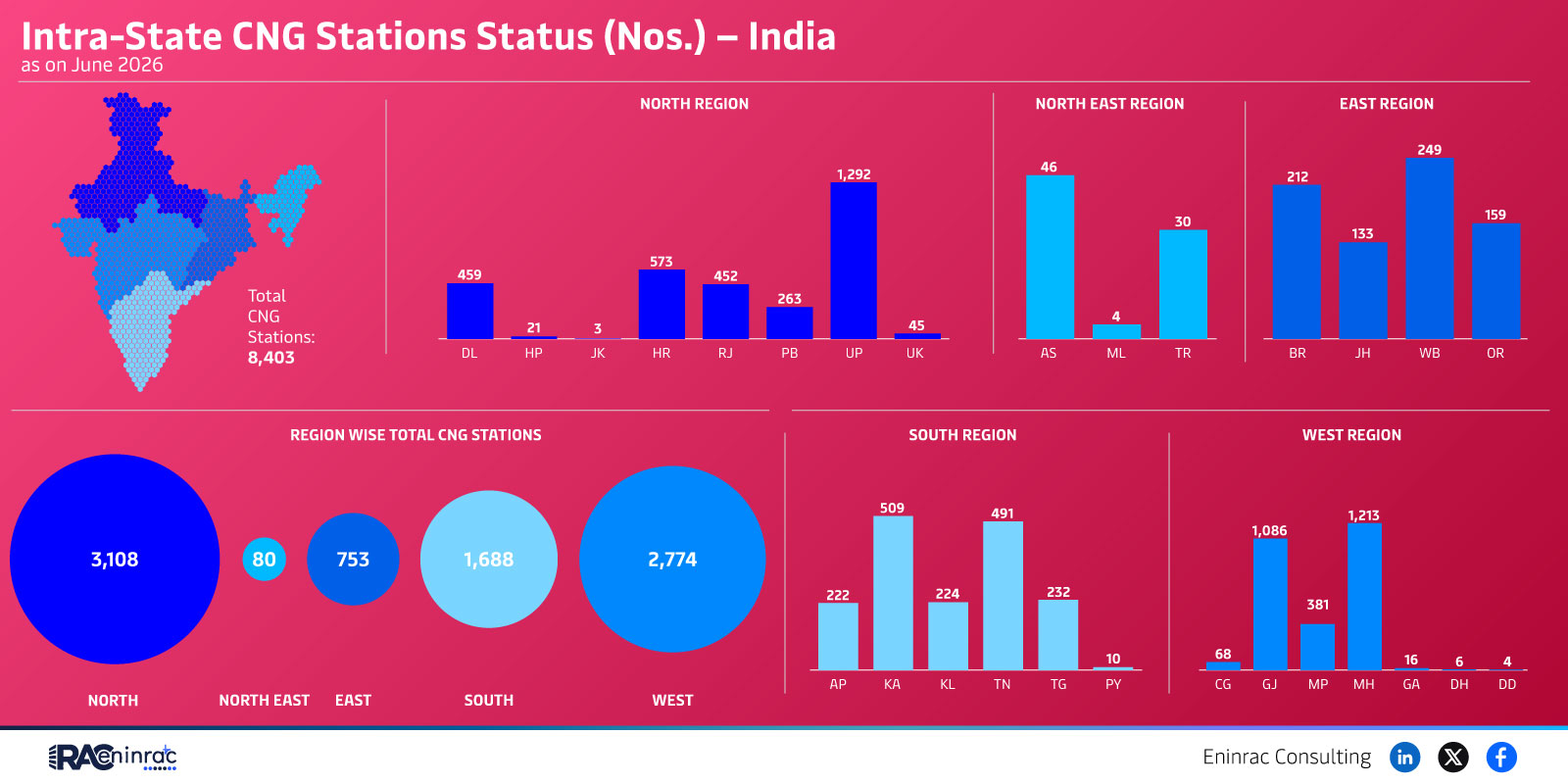
India’s intra‑state compressed natural gas (CNG) network continues to expand as part of the nation’s strategy to promote cleaner fuels and reduce diesel dependence. The latest snapshot, captured in June 2026, provides a clear picture of how many CNG stations operate within each major geographic region—North, Northeast, East, South and West. Understanding these numbers is essential for policymakers, investors, transport operators and consumers who are tracking the shift toward natural‑gas‑powered vehicles and assessing where infrastructure gaps still exist.
What Does the Data Reveal About This Topic?
The raw data shows a pronounced regional imbalance in CNG station deployment. While the Northeast boasts the highest count with over 1,200 stations, the North follows with roughly 250 stations. The East region records about 260 stations, whereas the South and West lag behind with totals near 500 and 230 respectively. This distribution highlights that certain regions have embraced CNG infrastructure more aggressively, creating pockets of high accessibility alongside areas that remain under‑served.
Regional Comparison of CNG Station Deployment
A closer look at the numbers reveals that the Northeast’s strong performance is driven by proactive state policies, subsidies for station owners and a dense urban corridor that encourages natural‑gas vehicle adoption. In contrast, the South’s modest count of approximately 500 stations reflects a slower rollout, partly due to competing investments in electric vehicle charging networks. The West, with just over 200 stations, faces challenges such as higher land costs and a dispersed population pattern, which raise the per‑station investment burden. The North and East regions sit in the middle, showing steady growth but still leaving room for expansion to match the demand from freight and passenger fleets.
Impact on Sectors and Industries
The uneven spread of CNG stations influences several key sectors. Transport and logistics companies operating in well‑served regions can lower fuel costs and meet stricter emission norms more easily, giving them a competitive edge. Investors see the South and West as potential high‑return markets where new stations could capture untapped demand. For policymakers, the data underscores the need for targeted incentives and infrastructure funding to balance regional development, support air‑quality initiatives and align with national energy security goals.
Key Takeaways
- The Northeast leads with the highest concentration of intra‑state CNG stations, exceeding 1,200 sites.
- The North and East regions hold moderate counts, around 250 and 260 stations respectively.
- The South region, despite a large population, hosts about 500 stations, indicating growth opportunities.
- The West lags with roughly 230 stations, highlighting a clear infrastructure gap.
- Regional policy support and subsidies are key drivers behind higher station numbers.
- Investors and planners can target under‑served South and West markets for future expansion.
FAQs
How many intra‑state CNG stations were reported in India as of June 2026?
Approximately 2,500 stations were recorded nationwide, spread across the five major regions.
Why does the Northeast have the most CNG stations?
State‑level incentives, dense urban corridors and early adoption of natural‑gas vehicles have accelerated station rollout.
What challenges does the West region face in expanding CNG infrastructure?
Higher land costs, dispersed populations and competition from electric‑vehicle charging networks slow station deployment.
Can investors expect good returns by opening new CNG stations in the South?
Yes, the South’s relatively low station count paired with strong vehicle demand creates attractive growth prospects.
How does CNG station availability affect air‑quality goals?
Increased CNG usage reduces diesel emissions, supporting national targets for cleaner air and lower carbon footprints.