
Introduction
The latest April 2026 snapshot of inter‑state power connections India reveals how the nation’s domestic power network (PNG) links states together. Understanding these connections is essential for investors, policymakers, and energy professionals because they highlight infrastructure capacity, regional demand balances, and future growth corridors.
What Does the Data Reveal About This Topic?
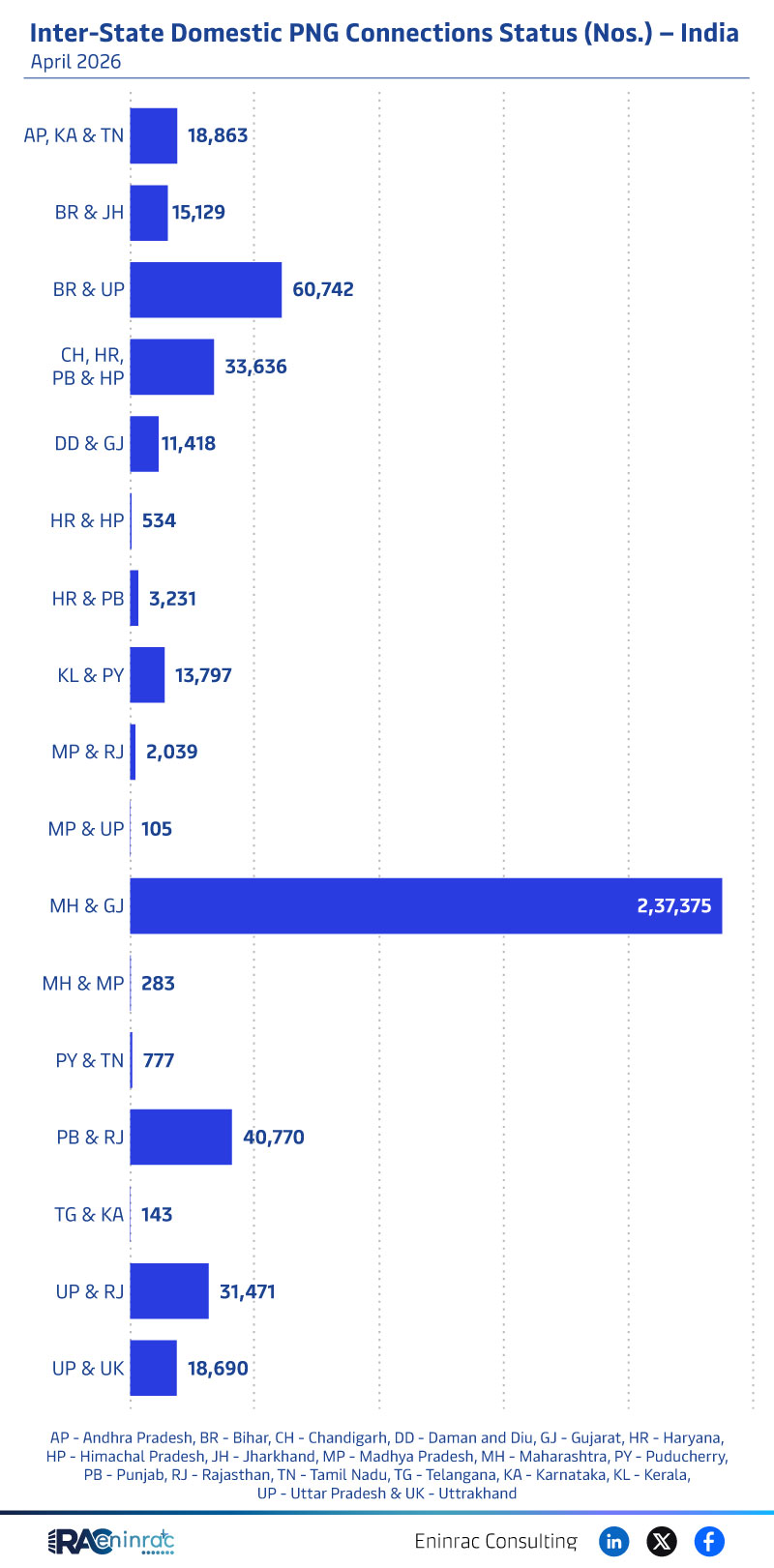
Which state pairs dominate the inter‑state power connections India landscape? The data shows that Maharashtra‑Gujarat (MH & GJ) leads with over 237,000 connections, followed by Punjab‑Rajasthan (PB & RJ) at 40,770, and Uttar Pradesh‑Rajasthan (UP & RJ) with 31,471 links. This concentration indicates strong trade of electricity between industrial and agricultural hubs.
State‑to‑State Connection Volumes in April 2026
A comparative look uncovers the scale differences among the listed pairs. Kerala’s link with Puducherry (KL & PY) records 13,797 connections, a modest figure compared with the megatrend of Maharashtra‑Gujarat. Madhya Pradesh‑Rajasthan (MP & RJ) is a smaller corridor with just 2,039 links, while Uttar Pradesh‑Uttarakhand (UP & UK) adds 18,690 connections, reflecting north‑central demand sharing. These figures illustrate how southern, western, and northern regions each contribute uniquely to the national grid stability.
Impact on Sectors and Industries
Robust inter‑state power connections India supports multiple sectors. Manufacturing clusters in Maharashtra and Gujarat rely on high‑capacity transfers to keep production lines running. Agricultural states such as Uttar Pradesh benefit from supplemental electricity during peak irrigation periods. The energy market sees improved price convergence, attracting private investors to fund transmission upgrades. Moreover, policymakers can pinpoint bottlenecks and prioritize investments in under‑connected corridors like MP‑RJ.
Key Takeaways
- Mohammed‑Gujarat (MH & GJ) dominates with over 237,000 connections, indicating a high‑volume corridor.
- Punjab‑Rajasthan (PB & RJ) and Uttar Pradesh‑Rajasthan (UP & RJ) are the next largest links, showing strong north‑west power sharing.
- Southern connections such as Kerala‑Puducherry remain modest but essential for regional reliability.
- North‑central links like Uttar Pradesh‑Uttarakhand highlight growing demand for electricity in hilly terrains.
- Overall, the data underscores the importance of targeted transmission investment to balance regional disparities.
- Investors can leverage the concentration of high‑volume corridors for strategic infrastructure projects.
FAQs
What is a PNG connection?
PNG stands for domestic Power Network Grid, representing inter‑state transmission lines that move electricity across state borders.
Why is Maharashtra‑Gujarat the top corridor?
The two states host large industrial parks and a high concentration of power generation assets, creating a natural high‑volume electricity exchange.
How do these connections affect electricity pricing?
Strong inter‑state links smooth supply‑demand mismatches, leading to more uniform pricing and reduced volatility across regions.
Which regions need more transmission investment?
States with lower connection counts, such as Madhya Pradesh‑Rajasthan and Kerala‑Puducherry, could benefit from capacity upgrades to improve reliability.
Can investors tap into this data for project planning?
Yes, the connection volumes provide clear signals of where transmission infrastructure demand is highest, guiding investment decisions.