
Introduction
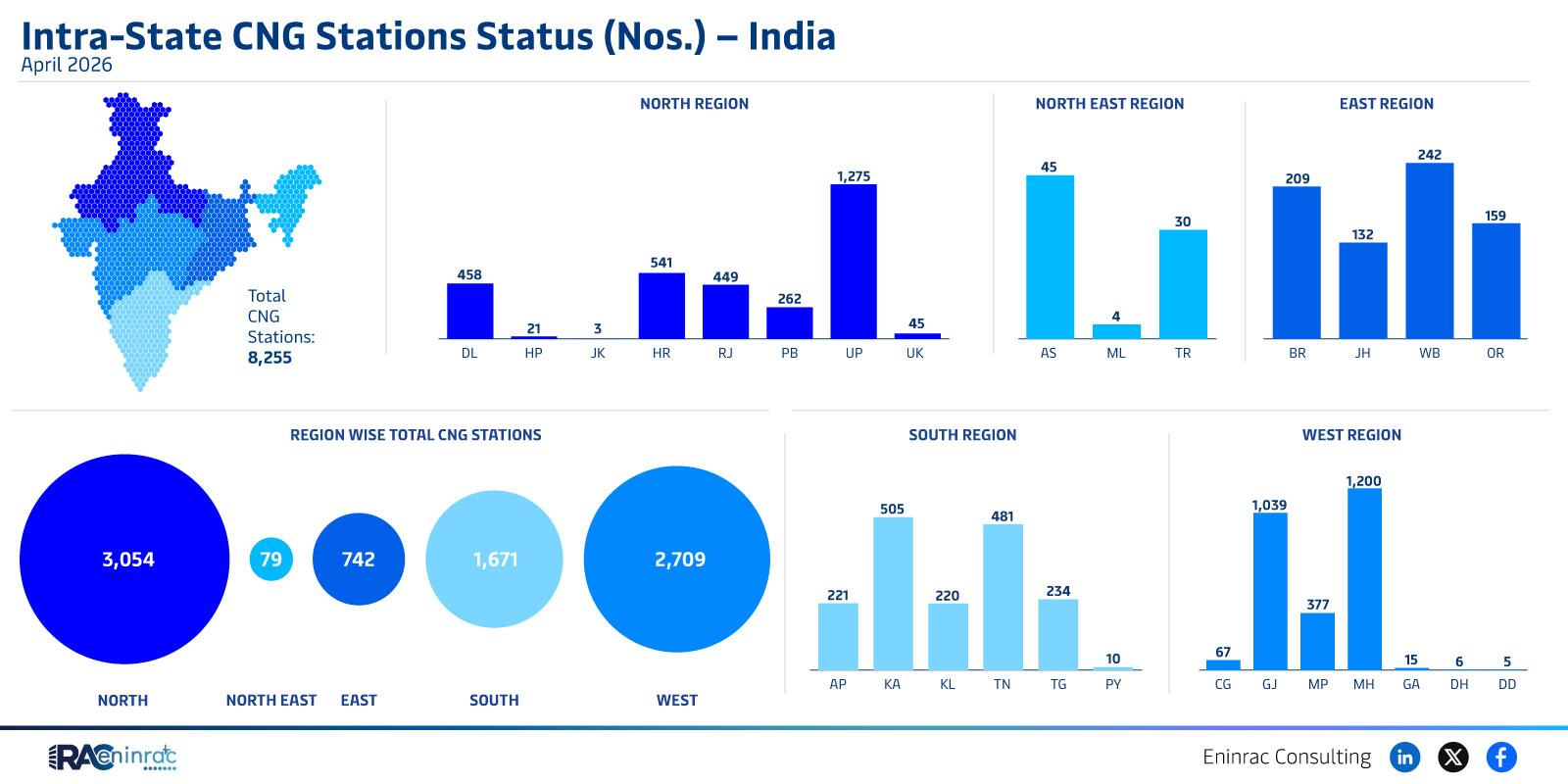
The latest intra‑state CNG stations status for India, released for April 2026, provides a clear snapshot of how compressed natural gas infrastructure is spread across the country. Understanding the regional distribution of India CNG stations is essential for investors, policymakers, and industry players who are tracking the growth of conventional energy assets and looking for opportunities in the transport sector.
What Does the Data Reveal About This Topic?
Does the April 2026 data show uneven development of CNG infrastructure across Indian regions? The answer is yes – the numbers indicate that certain regions, particularly the Northeast, host a far larger number of stations compared to others, suggesting differing levels of market maturity and policy support.
Regional Distribution of CNG Stations in India
According to the report, the North region reported 242 stations, the Northeast led with a striking 1,275 stations, the East accounted for 209 stations, the South recorded 505 stations, and the West listed 481 stations. This comparative interpretation highlights the Northeast as the clear leader, while the North and East lag behind. The concentration in the Northeast may be driven by state‑level incentives and a higher demand for cleaner urban mobility, whereas the relatively lower figures in the North point to potential gaps in rollout strategy.
Impact on Sectors and Industries
The distribution of CNG stations influences multiple sectors. For the automotive industry, a dense network in the Northeast encourages the adoption of CNG‑powered vehicles, reducing reliance on diesel and gasoline. Energy traders and investors see the regional spread as an indicator of where future infrastructure projects and capital allocation may be most profitable. Policymakers can use the data to identify underserved areas, such as the North and East, and design targeted subsidies or regulatory frameworks to accelerate station deployment. Consumers in regions with higher station density benefit from lower fuel costs and reduced emissions, supporting broader sustainability goals.
Key Takeaways
- The Northeast region dominates the CNG station landscape with 1,275 stations.
- The South and West maintain moderate coverage, hosting 505 and 481 stations respectively.
- The North and East regions have the lowest station counts, highlighting potential growth opportunities.
- Regional disparities suggest varying levels of policy support and market readiness across India.
- Investors can target under‑served regions for expansion of CNG infrastructure.
- Policymakers can leverage the data to design region‑specific incentives to balance the network.
FAQs
Which Indian region has the most CNG stations?
The Northeast region leads with 1,275 CNG stations as of April 2026.
How many CNG stations are there in South India?
South India reports 505 operational CNG stations.
Why are CNG stations important for clean energy goals?
CNG is a lower‑emission alternative to gasoline and diesel, helping reduce urban air pollution and greenhouse gas emissions.
What opportunities exist for investors in the North region?
With only 242 stations, the North region offers significant room for new station development and associated financing.
How can policymakers use this data?
Policymakers can identify underserved areas and create incentives to accelerate CNG station rollout, fostering balanced national coverage.