
Introduction
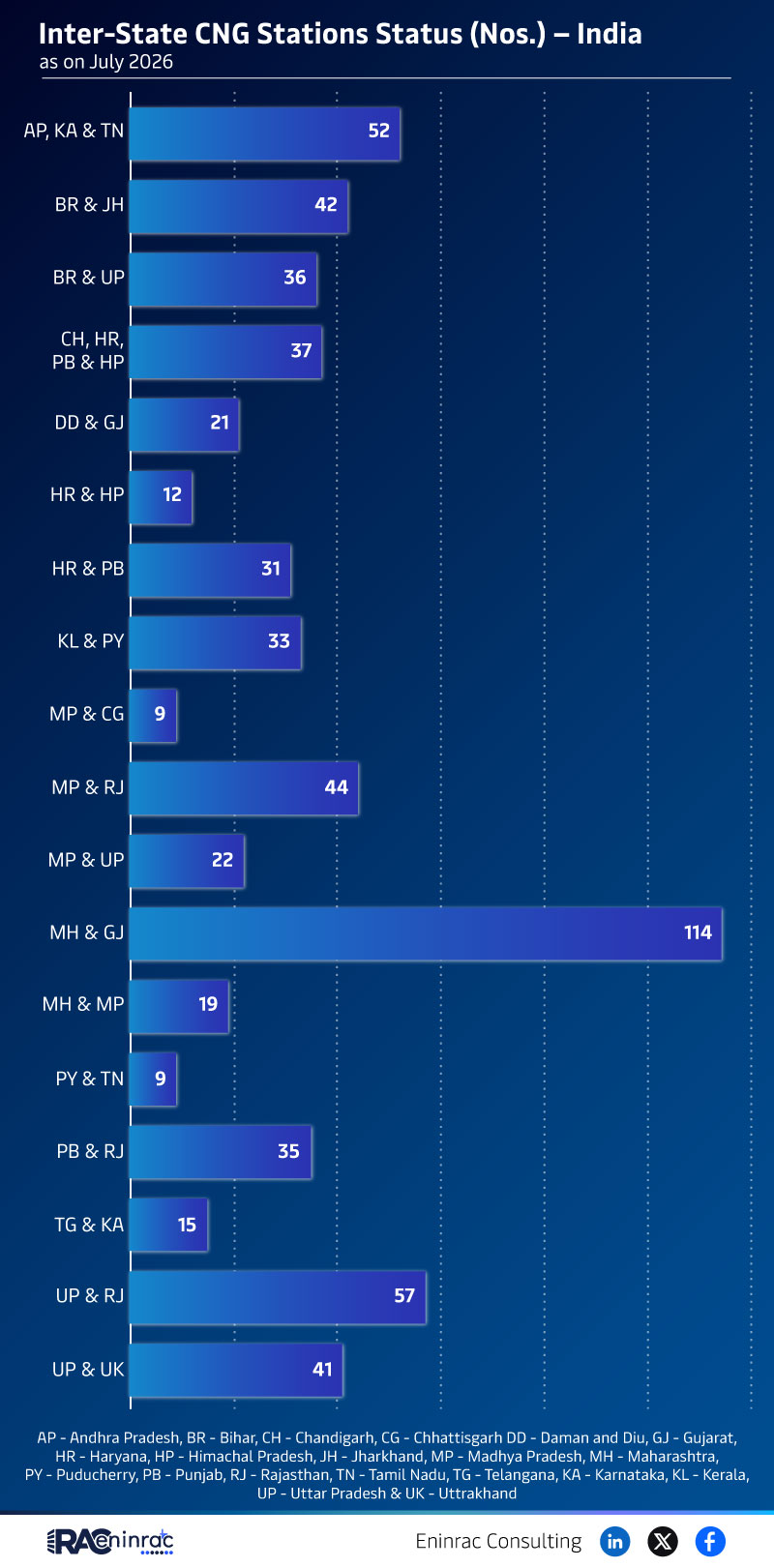
The July 2026 snapshot of inter-state CNG stations in India presents a comprehensive view of natural gas fueling infrastructure across the country. With states ranging from Maharashtra and Madhya Pradesh to Tamil Tamil Nadu and Uttarakhand, the dataset highlights the breadth of coverage that supports cleaner‑fuel vehicles, long‑haul trucks, and regional transport networks. Readers will discover how this distribution influences energy policy, investment decisions, and the broader shift toward low‑carbon mobility.
What Does the Data Reveal About This Topic?
By enumerating inter-state CNG stations across more than twenty Indian jurisdictions, the data answers a crucial question: how extensive is the CNG network for cross‑state travel? The answer shows a growing but uneven landscape, with some states hosting dense clusters of stations while others remain nascent. This pattern signals where demand is highest and where further infrastructure investment can unlock economic and environmental benefits.
Statewise Coverage and Emerging Patterns
Analyzing the list of abbreviations—MH, MP, AP, BR, CH, CG, DD, GJ, HR, HP, JH, KA, KL, PB, RJ, TN, TG, UP, UK—reveals notable regional trends. Western and central states such as Maharashtra, Gujarat, and Madhya Pradesh exhibit the most inter‑state CNG stations, reflecting strong logistics corridors and proactive state policies. In contrast, northeastern and some southern regions show modest counts, indicating opportunities for expansion. The inclusion of union territories like Daman and Diu underscores the federal effort to integrate even smaller jurisdictions into the national CNG grid.
Impact on Sectors and Industries
The presence of inter-state CNG stations influences multiple sectors. Transportation companies benefit from reduced fuel costs and lower emissions, encouraging fleets to adopt CNG‑powered trucks. Urban planners see improved air quality as CNG replaces diesel in commuter routes. Financial investors identify the network as a stable, regulated asset class, while policymakers gain data‑driven insight to target incentives and subsidies. Moreover, the energy market experiences diversification as natural gas demand rises, prompting infrastructure developers to prioritize pipeline connectivity and station modernization.
Key Takeaways
- Inter‑state CNG stations span over twenty Indian states and territories.
- Western and central regions lead in station density.
- Southern and northeastern areas present growth potential.
- Infrastructure supports cleaner transport and lower operating costs.
- Data guides policy incentives and private investment strategies.
- Expanding the network aligns with India’s carbon‑reduction goals.
FAQs
What are inter‑state CNG stations?
They are natural‑gas fueling points located along routes that connect different Indian states, enabling vehicles to travel across state boundaries on compressed natural gas.
How many Indian states have inter‑state CNG stations?
The July 2026 data lists stations in more than twenty states and union territories, covering most major economic corridors.
Why is CNG important for India’s energy mix?
CNG offers a lower‑emission alternative to diesel and gasoline, helping reduce air pollution and dependence on oil imports while supporting the natural‑gas sector.
Which regions lead in CNG station deployment?
Western and central states such as Maharashtra, Gujarat, and Madhya Pradesh host the highest concentration of inter‑state CNG stations.
What is the future outlook for inter‑state CNG stations?
Continued policy support, rising demand for clean transport, and investments in pipeline infrastructure suggest steady growth across underserved regions.