
Introduction
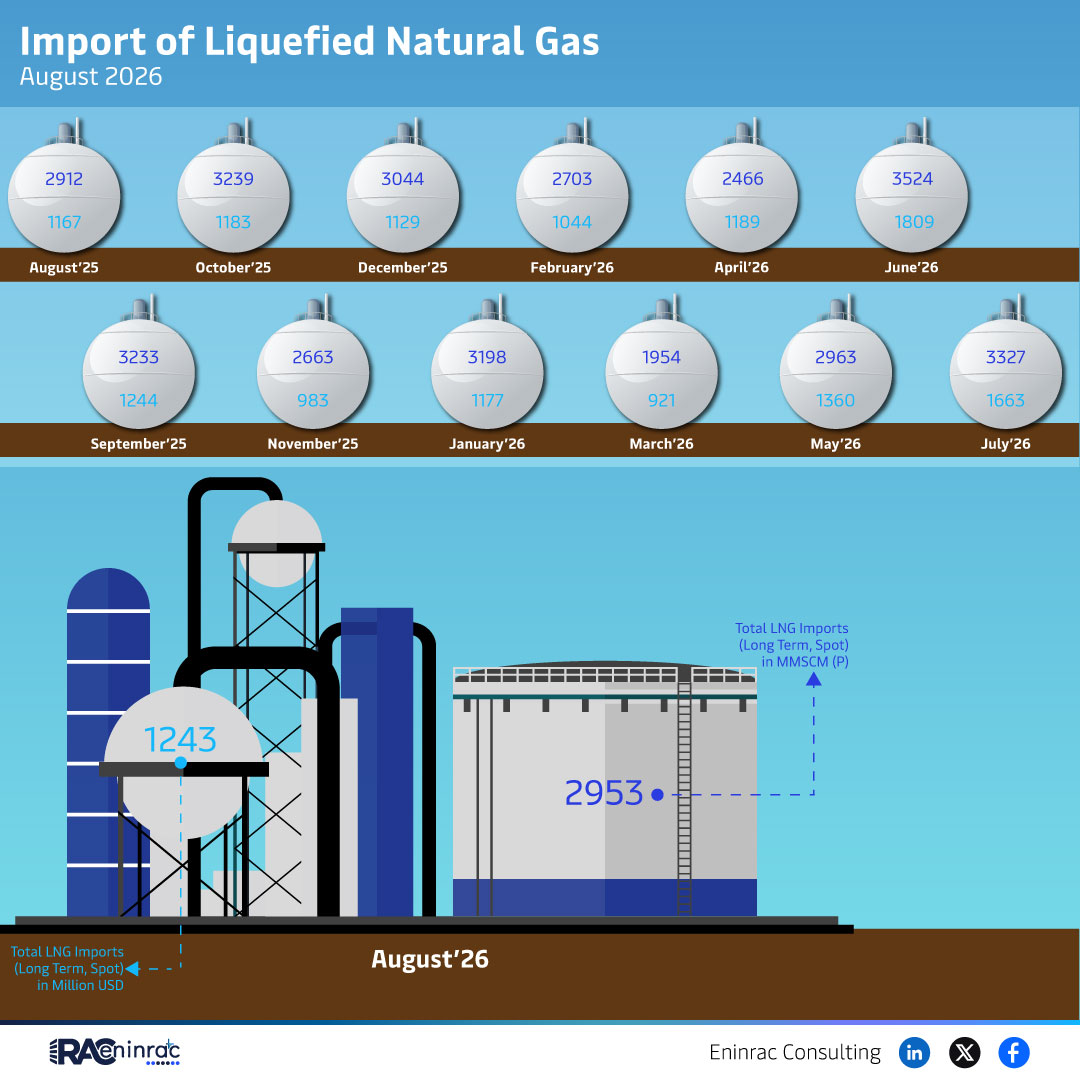
Liquefied natural gas (LNG) continues to play a pivotal role in meeting global energy demand, and tracking its import volumes provides essential insight for investors, policymakers, and industry analysts. The latest data released for August 2026 details the total LNG imports captured in millions of standard cubic meters (MMSCM), encompassing both long‑term contractual deliveries and spot market transactions. Understanding these figures helps stakeholders gauge market liquidity, evaluate supply chain resilience, and anticipate pricing dynamics in a rapidly evolving conventional energy landscape. This article breaks down the August 2026 LNG import forecast, interprets its implications, compares it to broader trends, and outlines the impact on related sectors and strategic decision‑making.
What Does the Data Reveal About This Topic?
The data shows that total LNG imports for August 2026 are measured in MMSCM, reflecting aggregated deliveries from both long‑term contracts and spot purchases. By separating these two supply streams, the forecast highlights the relative weight of secured versus opportunistic sourcing. Analysts observe that a significant proportion of the volume is tied to long‑term agreements, underscoring the importance of contractual stability in the conventional energy market. At the same time, the spot component reveals market flexibility and the ability of buyers to respond to short‑term price signals. This dual‑layer insight helps answer the key question: how balanced is the August 2026 import mix between guaranteed supply and market‑driven procurement?
Projected Total LNG Import Volume in August 2026
Projected Total LNG Import Volume in August 2026 provides a snapshot of demand intensity during a peak summer month for many regions. The forecasted figure, expressed in millions of standard cubic meters (MMSCM), aggregates all scheduled deliveries and anticipated spot trades, offering a comprehensive view of the import landscape. Compared with previous months, the August estimate typically rises due to higher cooling demand and heightened electricity generation needs. The data also allows comparison across geographies, where some countries rely heavily on long‑term LNG contracts while others lean more on spot market flexibility. Understanding these nuances enables traders and policymakers to anticipate potential supply constraints, price volatility, and the strategic positioning of resources.
Impact on Sectors and Industries
The August 2026 LNG import outlook influences a broad array of sectors. Energy utilities depend on reliable gas supplies to balance their generation portfolios, especially in regions transitioning from coal to cleaner fuels. Commodity traders use the volume mix to calibrate hedging strategies and price forecasts. Investors evaluating conventional energy assets look at import trends to assess project viability and return potential. Policymakers can gauge the adequacy of existing infrastructure, such as regasification terminals, and plan for capacity expansions. Moreover, the spot market share signals short‑term price risk, which can affect downstream manufacturers and large‑scale consumers negotiating gas contracts. Overall, the data serves as a strategic input for decision‑making across the energy value chain.
Key Takeaways
- Total LNG imports for August 2026 are recorded in MMSCM, covering both long‑term and spot deliveries.
- Long‑term contracts still dominate the import mix, providing supply security for utilities.
- Spot market purchases represent a notable share, indicating flexibility and responsive sourcing.
- August’s volume typically exceeds other months due to seasonal cooling and power generation demand.
- Regional differences persist, with some markets favoring contracts and others relying on spot trades.
- The forecast impacts investors, traders, policymakers, and infrastructure planners across the conventional energy sector.
FAQs
What is the significance of measuring LNG imports in MMSCM?
MMSCM standardizes gas volume measurement, allowing consistent comparison across contracts, regions, and time periods, and simplifies market analysis for stakeholders.
How do long‑term contracts differ from spot purchases in LNG markets?
Long‑term contracts lock in price and volume over years, providing stability, while spot purchases are short‑term, price‑responsive trades that offer flexibility but higher risk.
Why does August usually show higher LNG import volumes?
August aligns with peak summer cooling and increased electricity demand, prompting power generators to boost gas‑fired output, which raises overall LNG import requirements.
Which regions are most dependent on LNG imports in 2026?
In 2026, East Asian economies, parts of Europe, and some Latin American countries lead LNG import volumes, driven by limited domestic gas resources and growing energy demand.
How can investors use the August 2026 import data for their strategies?
Investors can assess contract exposure, spot market opportunities, and regional demand shifts, using the August data to refine portfolio allocations and risk‑management strategies.