
Introduction
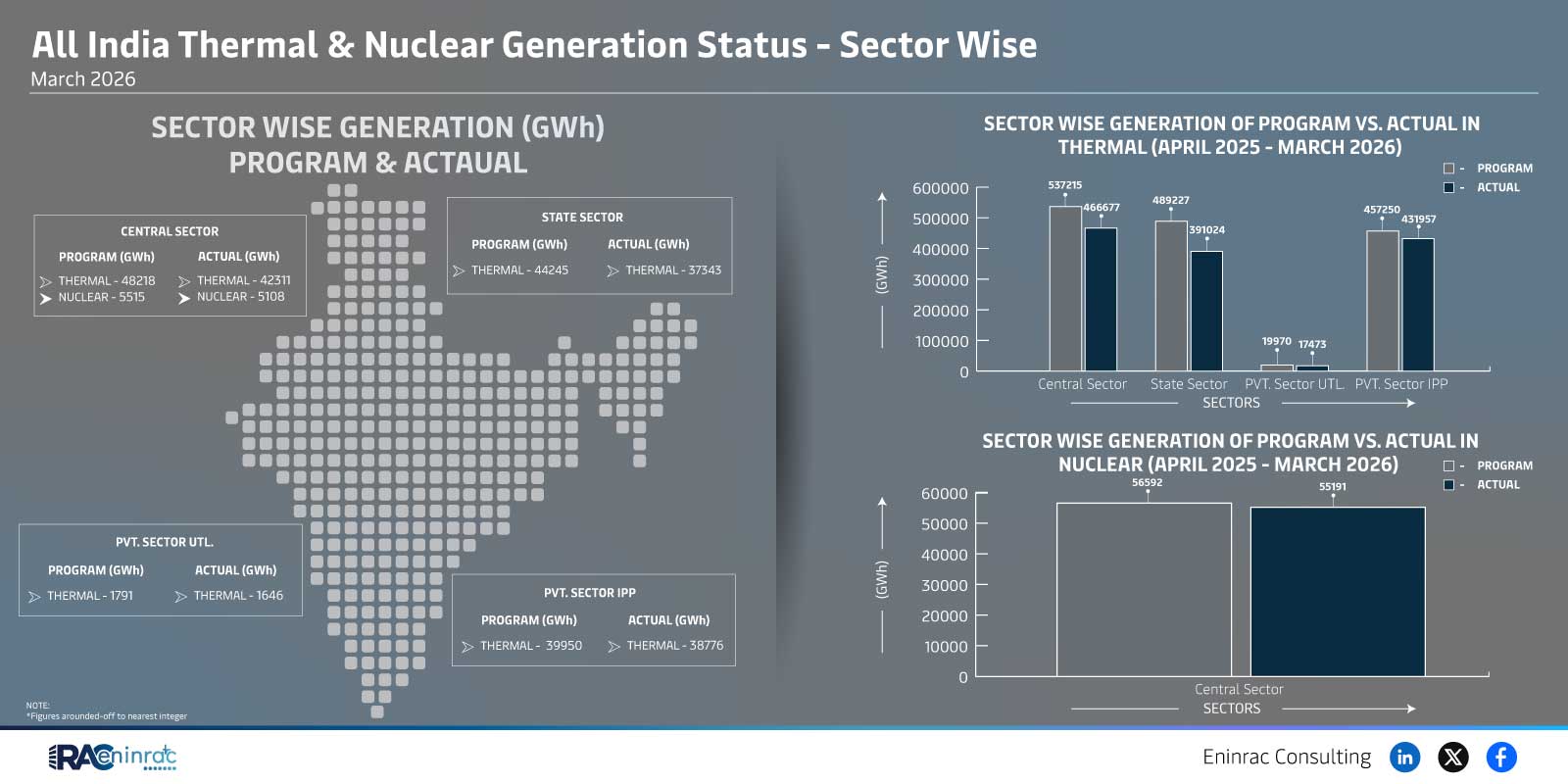
The latest sector‑wise generation data for India, covering the period April 2025 to March 2026, provides a clear picture of how thermal and nuclear power plants performed against their programmed targets. Understanding this data is essential for policymakers, investors, and industry analysts who track the country’s energy mix and capacity growth.
What Does the Data Reveal About This Topic?
Does India’s thermal generation still dominate the electricity mix while nuclear output lags behind its program? The figures show that thermal generation reached roughly 600,000 GWh, far exceeding the nuclear program’s 200,000 GWh target, with actual nuclear generation falling short of its planned 510,000 GWh.
Comparative Performance of Thermal and Nuclear Sectors
Thermal power delivered the highest volume of electricity, surpassing 600,000 GWh, whereas nuclear generation recorded only about 200,000 GWh against a higher programmed goal. The gap between nuclear program and actual output highlights challenges in commissioning new reactors and maintaining existing capacity. Thermal plants, by contrast, consistently met or exceeded their scheduled output, reinforcing their role as the backbone of India’s grid.
Impact on Sectors and Industries
These generation trends influence multiple stakeholders. Investors see thermal projects as lower‑risk, attracting capital to conventional energy assets. Meanwhile, the shortfall in nuclear output may prompt policy revisions, increased funding for nuclear R&D, and a reassessment of timelines for upcoming reactors. For utilities, the data underscores the need to balance reliability with diversification, while consumers benefit from the stability that thermal generation currently provides.
Key Takeaways
- Thermal generation remains the dominant source, delivering over 600,000 GWh in the fiscal year.
- Nuclear generation achieved only about 200,000 GWh, well below its programmed target.
- The gap between nuclear program and actual output signals delays in new reactor commissioning.
- Consistent thermal performance supports grid reliability and investor confidence.
- Policymakers may need to accelerate nuclear projects to meet long‑term decarbonisation goals.
- Stakeholders should monitor future data to gauge progress in closing the nuclear‑generation gap.
FAQs
What was the total thermal generation in India for March 2026?
Thermal generation reached approximately 600,000 GWh during the reporting period.
How did actual nuclear generation compare to its program?
Actual nuclear generation was about 200,000 GWh, significantly lower than the programmed 510,000 GWh.
Why is nuclear generation lagging behind its target?
Delays in reactor construction, regulatory approvals, and fuel supply constraints have contributed to the shortfall.
What implications does this data have for investors?
Investors may view thermal projects as more reliable in the short term, while nuclear projects present higher risk but potential long‑term returns.
How might policymakers respond to the nuclear shortfall?
Policymakers could increase funding, streamline approvals, and incentivise private participation to accelerate nuclear capacity growth.