
Introduction
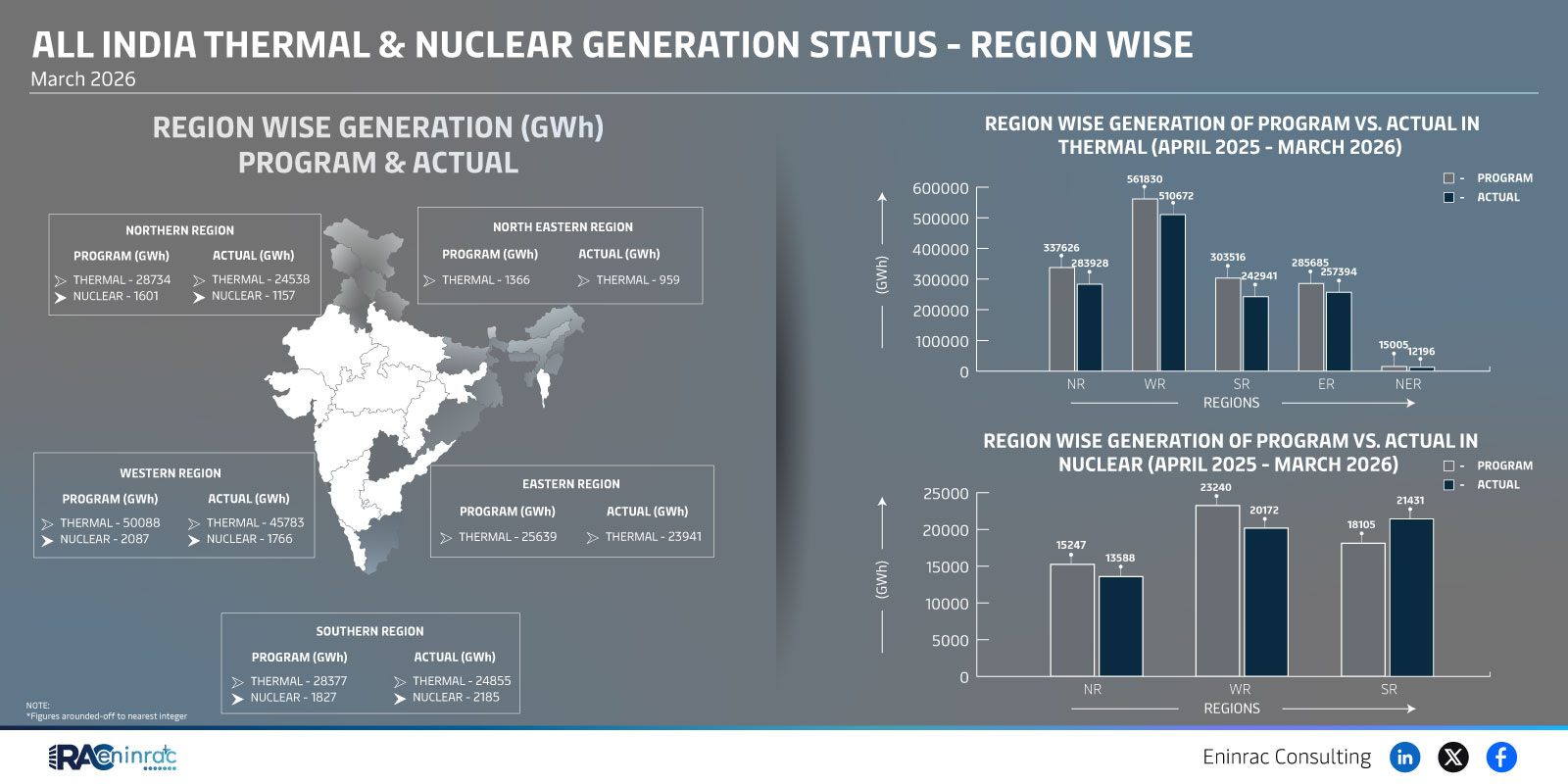
This article examines the All India Thermal & Nuclear Generation Status for the period April 2025 to March 2026, broken down by region. Understanding regional generation patterns is crucial for policymakers, investors, and energy analysts who track India's power mix and capacity utilization.
What Does the Data Reveal About This Topic?
The data shows that thermal generation remains dominant across most regions, with the Eastern region reporting approximately 150,000 GWh of thermal output, while nuclear generation contributes a modest 15,000 GWh. The contrast highlights the continued reliance on coal and gas plants despite growing renewable capacity.
Regional Comparison of Thermal and Nuclear Output
When comparing regions, the Eastern zone leads in thermal generation, followed by the Western and Southern zones, each delivering over 100,000 GWh. Nuclear generation is concentrated in a few states, accounting for roughly 10% of total generation in the Eastern region. The data also indicates a slight increase in nuclear output compared with the previous fiscal year, suggesting gradual diversification.
Impact on Sectors and Industries
High thermal generation supports heavy‑industry demand, steel production, and cement manufacturing, while limited nuclear capacity influences long‑term grid stability and low‑carbon goals. Investors monitor these trends to assess risk and opportunity in conventional energy assets, and policymakers use the figures to shape capacity addition plans and emissions targets.
Key Takeaways
- Thermal generation accounts for the majority of India's electricity, exceeding 300,000 GWh across all regions.
- The Eastern region is the largest thermal producer, delivering around 150,000 GWh.
- Nuclear generation remains modest at 15,000 GWh but shows incremental growth.
- Regional disparities highlight where new capacity investments may be needed.
- High thermal output sustains industrial activity but raises carbon intensity concerns.
- Policymakers must balance thermal reliance with renewable expansion to meet climate commitments.
FAQs
Which region generates the most thermal power?
The Eastern region leads with approximately 150,000 GWh of thermal generation for the fiscal year.
How much nuclear power was generated in India during April 2025‑March 2026?
Nuclear generation totaled about 15,000 GWh, primarily from plants in the Eastern region.
Is India reducing its dependence on thermal power?
Thermal power remains dominant; however, modest increases in nuclear output and ongoing renewable projects indicate a gradual shift.
What implications does high thermal generation have for investors?
Investors see stable cash flows from thermal assets but must consider regulatory risk related to carbon pricing and environmental policies.
How can policymakers use this data?
The data helps identify regions needing capacity upgrades, informs emissions reduction strategies, and guides allocation of funds toward nuclear and renewable projects.