
Introduction
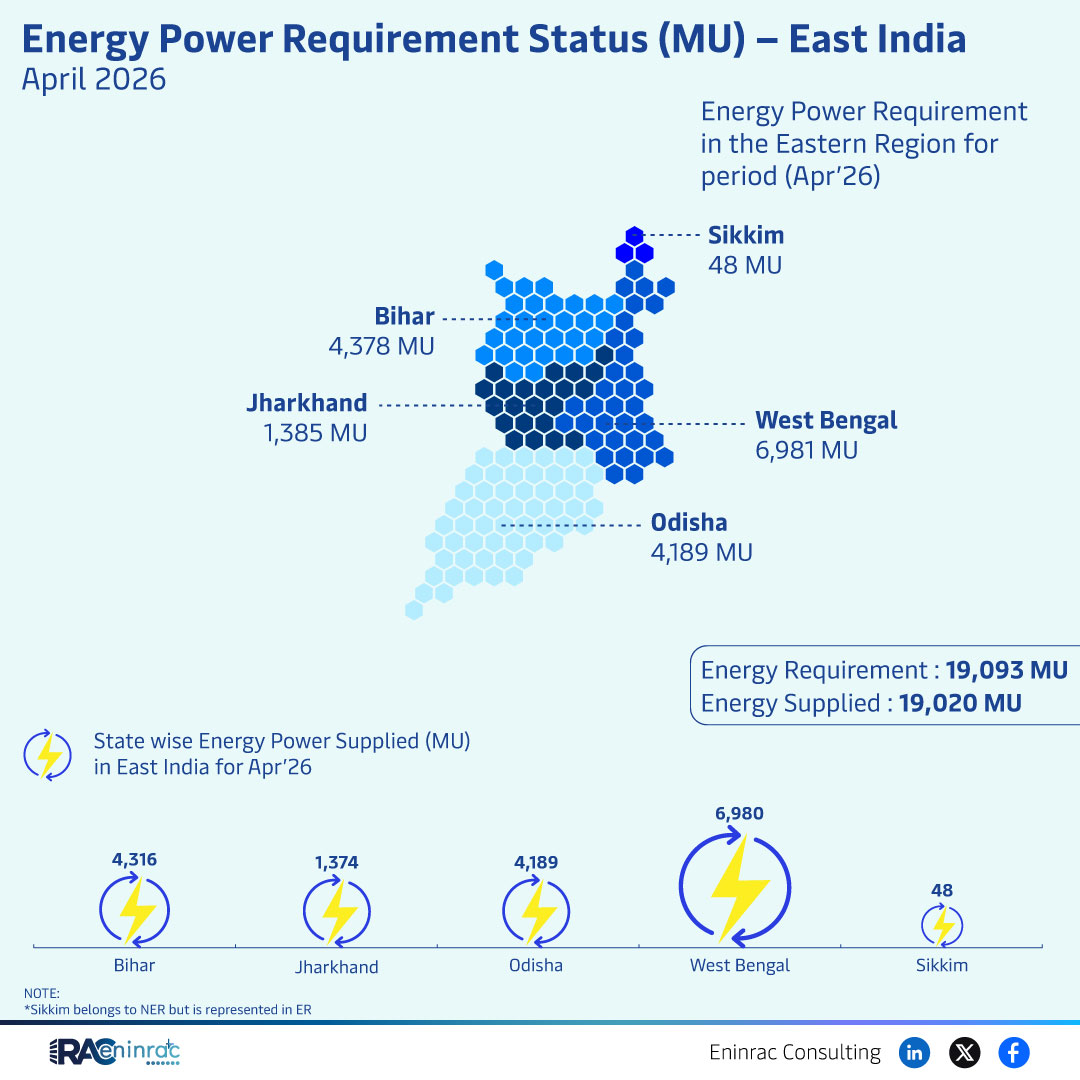
In April 2026 the Eastern region of India reported detailed figures for energy power requirement and supply across six states. Understanding these numbers is crucial for policymakers, investors, and industry stakeholders who track regional energy balance, infrastructure needs, and market opportunities. This article breaks down the data, highlights key trends, and explains the implications for the energy sector.
What Does the Data Reveal About This Topic?
The data shows that the total energy requirement for the Eastern region was 19,093 MU while the supplied amount was 19,020 MU, leaving a shortfall of 73 MU. The shortfall indicates a slight mismatch between demand and generation, prompting questions about capacity planning and grid reliability.
State‑wise Energy Requirement and Supply Overview
West Bengal leads with the highest requirement at 6,981 MU, closely matched by its supply of 6,980 MU, showing near‑perfect balance. Odisha follows with 4,189 MU required and a comparable supply. Bihar’s requirement is 4,378 MU but the supply figure is not listed, suggesting a potential gap. Jharkhand required 1,385 MU, while Sikkim, though part of the North‑Eastern region, is reported here with a modest 48 MU requirement and supply. These variations illustrate differing regional demand patterns and infrastructure readiness.
Impact on Sectors and Industries
The slight regional deficit influences several sectors. Power generation companies must consider expanding capacity or improving efficiency in high‑demand states like West Bengal and Bihar. Investors in renewable and conventional projects can target gaps to secure returns. Policymakers need to address the shortfall through grid upgrades, demand‑side management, and encouraging renewable integration to ensure reliable supply for industrial growth and consumer needs.
Key Takeaways
- Eastern India’s total power requirement in April 2026 was 19,093 MU.
- Supplied power reached 19,020 MU, leaving a 73 MU shortfall.
- West Bengal had the highest demand and almost exact supply, indicating strong grid performance.
- Odisha also showed a close match between demand and supply.
- Bihar’s supply data is missing, highlighting a potential reporting or supply gap.
- Sikkim’s small demand underscores regional diversity within the Eastern reporting framework.
FAQs
What was the total power shortfall in Eastern India for April 2026?
The region experienced a shortfall of 73 MU, where demand exceeded supply.
Which state had the highest power requirement?
West Bengal required the most power at 6,981 MU.
Did any state achieve a perfect balance between demand and supply?
West Bengal almost achieved perfect balance with 6,980 MU supplied against 6,981 MU required.
Why is Bihar's supply figure missing?
The raw data did not include Bihar's supply, indicating a possible reporting omission or data collection issue.
How can investors use this data?
Investors can identify states with supply gaps, such as Bihar, to target new generation projects or grid improvements for better returns.