
Introduction
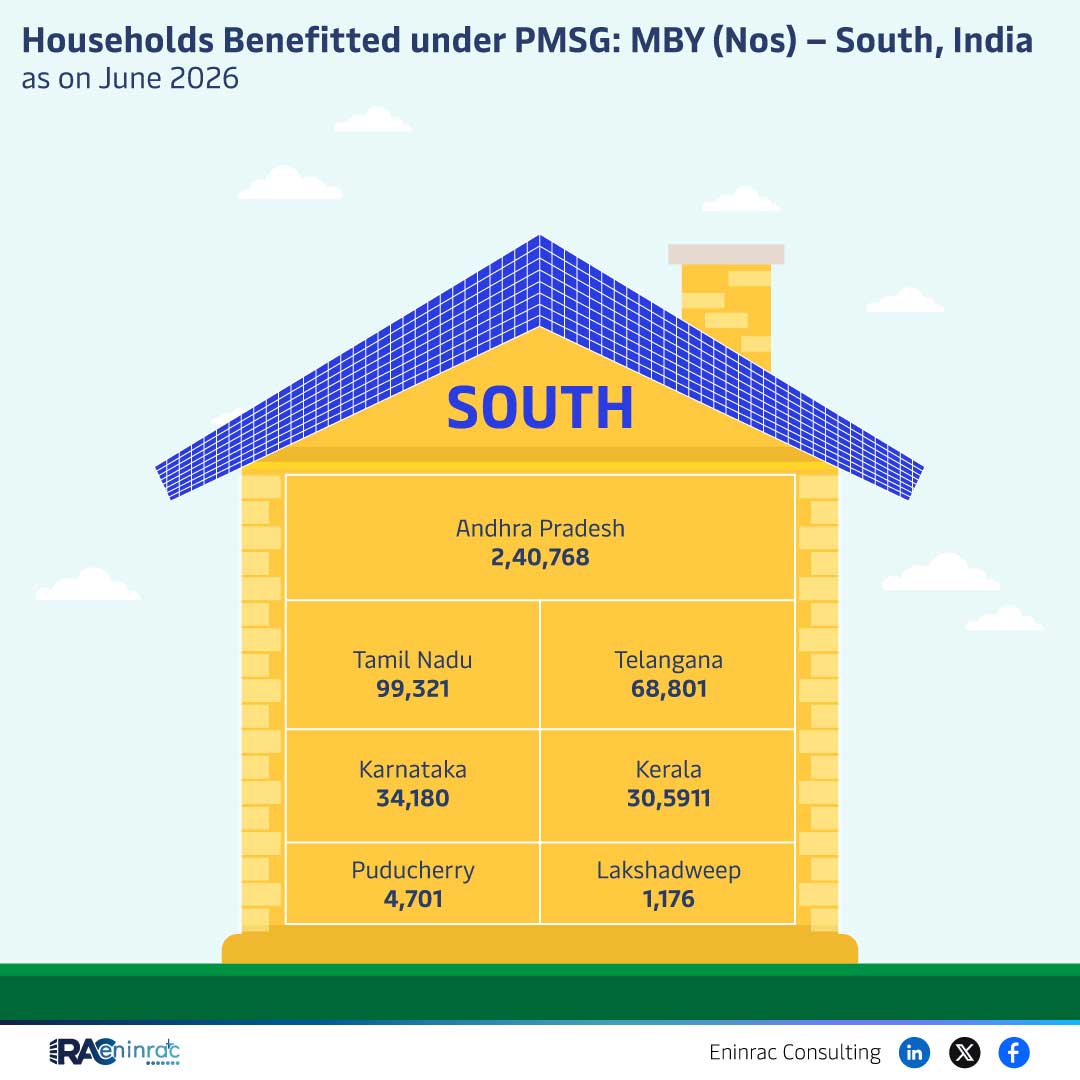
South India has seen a substantial expansion of the Pradhan Mantri Saubhagya (PMSG) scheme, aiming to connect every household to electricity. As of June 2026, the latest data shows that 240,768 households in Andhra Pradesh, 99,321 in Tamil Nadu, 68,801 in Telangana, 34,180 in Karnataka, 30,591 in Kerala, 4,701 in Puducherry, and 1,176 in Lakshadweep have benefitted. These figures represent the households benefitted under PMSG South India, totaling more than half a million connections and highlighting the government’s commitment to universal electrification. Readers will learn which states lead the rollout, how the numbers compare, and what implications this growth holds for energy markets, policy makers, and investors.
What Does the Data Reveal About This Topic?
Do the numbers suggest that some states are outpacing others in the PMSG drive? The answer is clear: Andhra Pradesh dominates with over 240 thousand benefitted households, far exceeding the next highest figure in Tamil Nadu. Telangana and Karnataka hold mid‑range totals, while Kerala, Puducherry and Lakshadweep show modest but meaningful contributions. This distribution reflects varying population sizes, implementation timelines, and state‑level policy emphasis. By breaking down the data state by state, stakeholders can identify where the scheme has achieved saturation and where additional outreach may be required to reach the remaining unserved families.
Regional Comparison of PMSG Household Reach in South India
Comparing the raw figures reveals a clear hierarchy of electrification progress. Andhra Pradesh’s 240 k households represent roughly 42 % of the total South Indian beneficiaries, a testament to its large rural base and aggressive rollout schedule. Tamil Nadu follows with 99 k, accounting for about 17 % of the regional total, while Telangana’s 68 k adds another 12 %. Karnataka and Kerala together contribute just over 10 % each, highlighting slightly slower penetration in their more mountainous or dispersed settlements. The Union Territory of Puducherry, despite its small population, recorded 4.7 k connections, reflecting targeted outreach. Lakshadweep’s 1.2 k households underscore the challenges of delivering infrastructure to remote islands but also the government’s commitment to leave no community behind.
Impact on Sectors and Industries
The expansion of electricity access under PMSG reshapes several sectors. Renewable energy developers gain new demand points for solar home systems and mini‑grid integrations, while traditional utility companies can upgrade distribution networks to accommodate higher load. Agricultural productivity improves as reliable power enables mechanized irrigation and cold‑storage solutions. Financial institutions see increased creditworthiness among households with stable electricity, spurring micro‑finance growth. Policy makers receive granular data to fine‑tune subsidy allocations, and investors use the state‑wise breakdown to assess risk‑adjusted returns on energy infrastructure projects. Overall, the data signals a healthier energy ecosystem that encourages private participation and accelerates the transition toward sustainable power.
Key Takeaways
- Andhra Pradesh leads with the highest number of benefitted households.
- South India’s total PMSG coverage exceeds half a million homes.
- State‑wise variation reflects demographic and policy differences.
- Renewable energy opportunities grow with expanded grid access.
- Improved electricity access boosts agriculture and finance sectors.
- Policymakers can target remaining gaps using detailed state data.
FAQs
Which state has the most households benefitted under PMSG?
Andhra Pradesh, with 240,768 households connected.
How many households were reached in Tamil Nadu?
99,321 households benefitted from the scheme in Tamil Nadu.
What is the total number of households covered in South India?
More than 500,000 households have been connected across the seven regions.
How does PMSG impact renewable energy developers?
Expanded grid access creates demand for solar home systems and mini‑grid projects, encouraging investment.
Why are the numbers lower in Lakshadweep?
The island’s remote geography makes infrastructure deployment challenging, resulting in fewer connections.