
Introduction
The June 2026 data release on households benefitted under the Power Management Service Group (PMSG) provides a clear picture of how energy‑related interventions are reaching families across North India. Understanding where the programme delivers the most impact helps policymakers, investors and NGOs allocate resources effectively. Readers will learn which states lead in household coverage, the scale of penetration relative to population, and how the distribution shapes future energy planning in the region.
What Does the Data Reveal About This Topic?
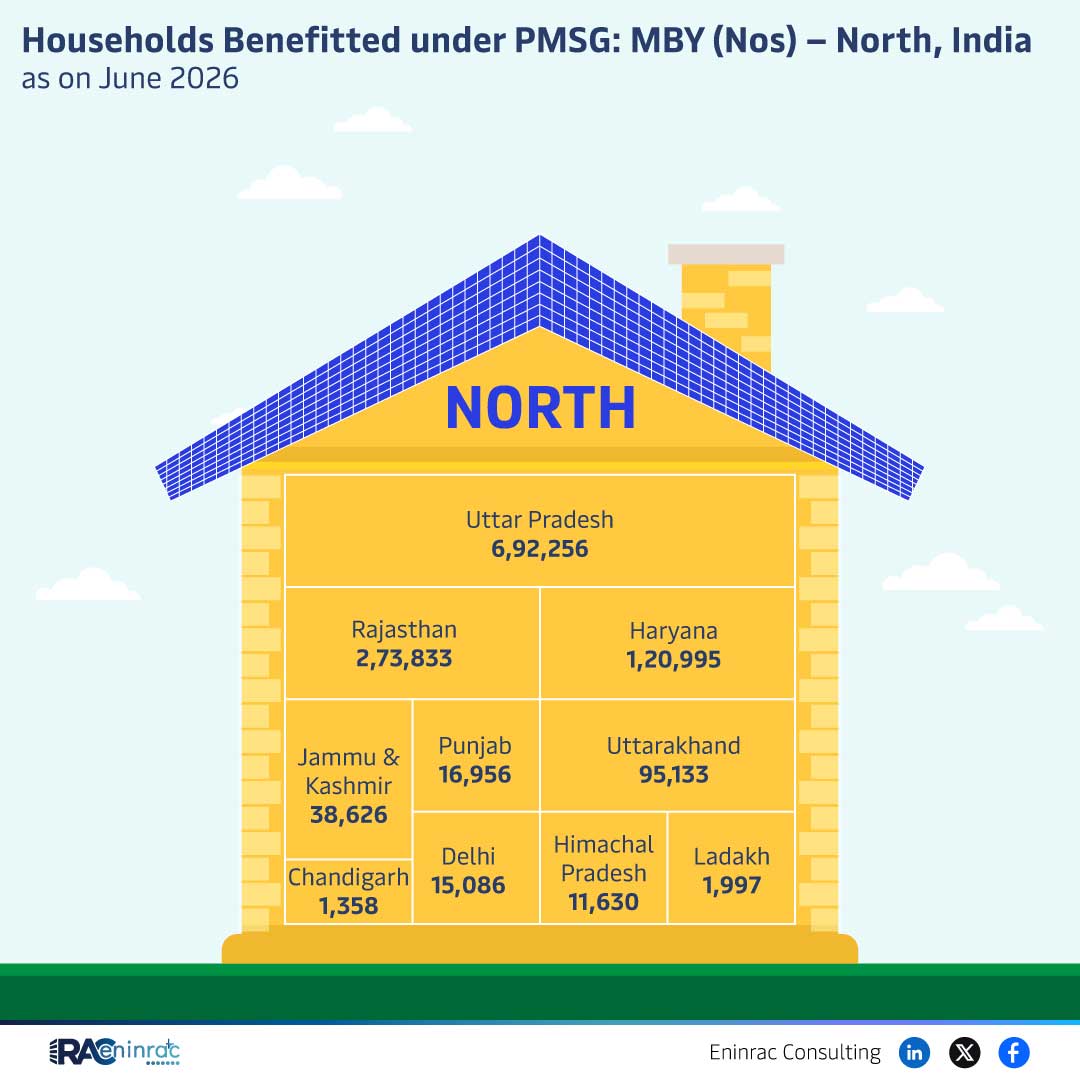
The data shows that Uttar Pradesh tops the list with more than 692,000 households connected, followed by Rajasthan with roughly 274,000 and Haryana with about 121,000. Smaller numbers are recorded for Jammu & Kashmir, Punjab, Uttarakhand, Delhi, Himachal Pradesh, Chandigarh and the Union Territory of Jammu & Kashmir. The clear insight is that the bulk of PMSG outreach is concentrated in the larger, more populous states, indicating a strategic focus on regions where demand and potential impact are highest.
State‑wise Distribution of PMSG Households in North India
A comparative view of the numbers highlights a steep drop‑off after the top three states. While Uttar Pradesh accounts for nearly 63 % of all reported households, Rajasthan contributes about 25 % of the remaining share and Haryana roughly 11 %. The rest of the region collectively adds less than 1 % each, suggesting that the programme’s rollout may still be in early stages in those areas or that logistical constraints limit rapid expansion. This pattern underscores the importance of targeted interventions in less‑served states to achieve balanced regional development.
Impact on Sectors and Industries
Broad household connectivity under PMSG influences several key sectors. The renewable‑energy market benefits from increased demand for solar home systems and battery storage, while local construction firms see growth in infrastructure projects related to grid extension. Financial services experience heightened activity as micro‑finance institutions provide loans for clean‑energy appliances. Moreover, policymakers gain data‑driven insights to refine subsidy schemes, and businesses can tailor product portfolios to meet the specific needs of newly electrified households.
Key Takeaways
- Uttar Pradesh leads with over 692,000 households benefitted.
- Rajasthan and Haryana together account for more than 30 % of total coverage.
- Smaller states show single‑digit household counts, indicating growth potential.
- High concentration in populous states drives demand for renewable‑energy products.
- Data supports targeted policy adjustments for under‑served regions.
- Investor interest is likely to rise as household penetration expands.
FAQs
Which state has the highest number of PMSG households?
Uttar Pradesh, with approximately 692,000 households, tops the list.
What is the total number of households covered in North India?
The combined count across all listed states exceeds 1.1 million households.
Why are Rajasthan and Haryana significant in the data?
They together represent a substantial share of the programme’s impact beyond Uttar Pradesh, highlighting effective rollout in those regions.
How does PMSG data help investors?
It reveals market size, regional demand trends and growth opportunities for clean‑energy technologies.
What steps can be taken to improve coverage in smaller states?
Targeted subsidies, infrastructure investments and partnership with local NGOs can accelerate household connectivity.