
Introduction
The Power Management Services Grant (PMSG) program has reached millions of households across western India as of June 2026. Understanding how many families have benefited, and where the concentration is highest, helps policymakers, investors and community leaders gauge the program’s reach and plan future interventions. This article breaks down the latest beneficiary numbers, compares state‑wise performance, and examines the broader impact on energy access and economic development.
What Does the Data Reveal About This Topic?
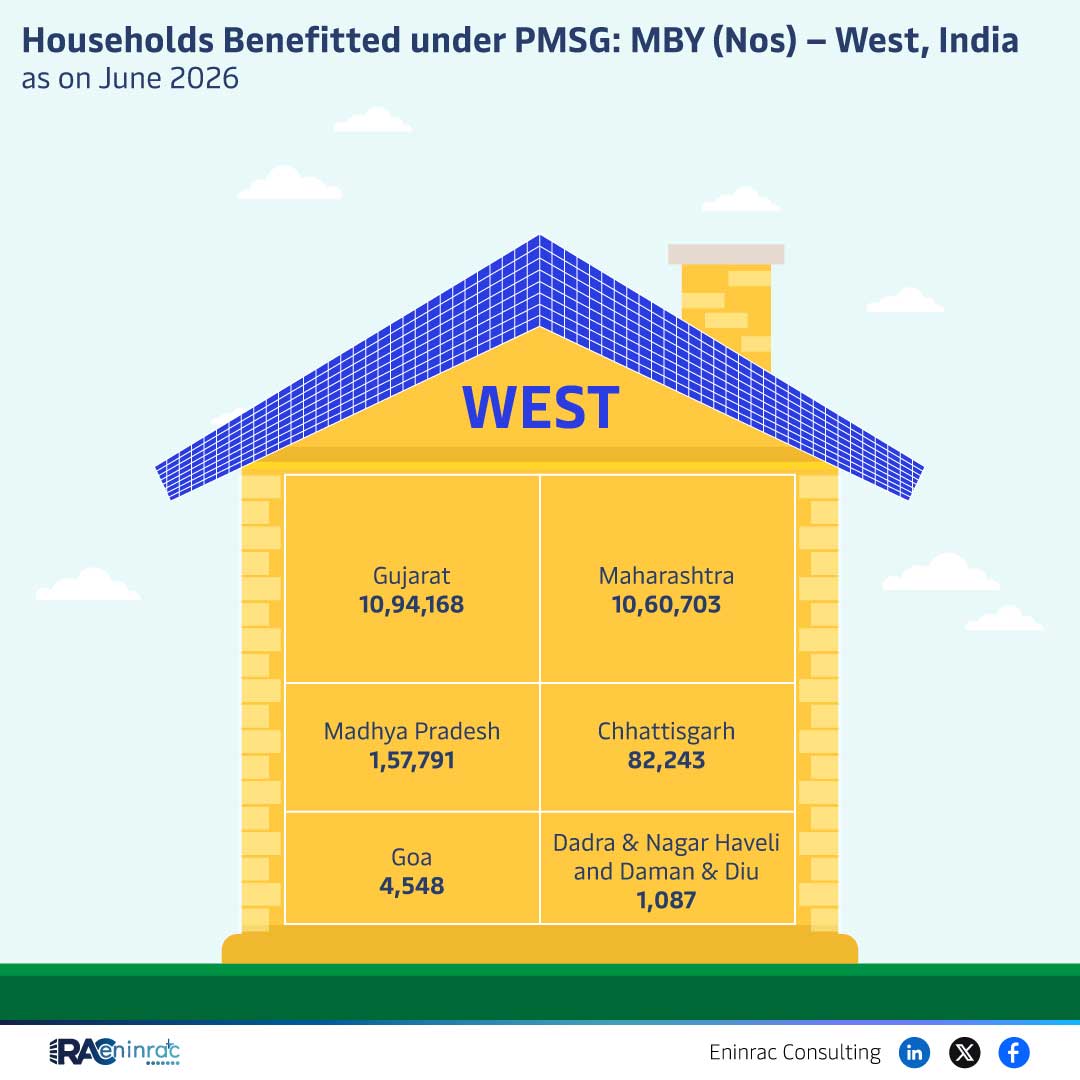
Which states have the largest number of households benefitted under PMSG, and what does that indicate about regional energy priorities? The data shows Gujarat and Maharashtra each exceed one million beneficiaries, while smaller territories such as Goa and the union territories collectively account for less than ten thousand. This disparity points to differing levels of program rollout, infrastructure readiness and local demand for energy improvement initiatives.
State‑wise Distribution of PMSG Benefited Households in 2026
Gujarat leads with 1,094,168 households, closely followed by Maharashtra at 1,060,703. Madhya Pradesh records 157,791 beneficiaries, and Chhattisgarh 82,243. Goa’s contribution is modest at 1,087 households, and the combined figure for Dadra & Nagar Haveli and Daman & Diu stands at 4,548. The sizable gap between the two western powerhouses and the smaller states highlights where PMSG resources have been most aggressively deployed, likely reflecting higher population density, stronger state‑level partnerships and greater renewable integration in Gujarat and Maharashtra.
Impact on Sectors and Industries
The distribution of PMSG beneficiaries influences several key sectors. In electricity distribution, higher enrolment drives demand for upgraded grid infrastructure and smart metering. Renewable energy firms see expanded markets as more households adopt clean‑energy solutions, such as solar home systems or efficient appliances. Financial institutions benefit from increased credit demand for energy‑linked loans, while policymakers gain concrete evidence to refine subsidy allocation and target underserved regions. Consumers enjoy lower energy costs, improved reliability and enhanced quality of life, which in turn stimulates local economies.
Key Takeaways
- Gujarat and Maharashtra together account for over two million of the total 2.4 million benefitted households.
- Madhya Pradesh and Chhattisgarh together provide nearly a quarter of the total, indicating growing outreach beyond the coastal states.
- Union territories and Goa contribute less than 0.5 % of beneficiaries, suggesting opportunities for program expansion.
- The concentration of beneficiaries aligns with regions that have stronger renewable energy policies and infrastructure.
- Higher household enrollment drives demand for grid upgrades, smart meters and renewable technology suppliers.
- Policymakers can use these figures to reallocate resources, target low‑coverage areas and measure program effectiveness.
FAQs
What is the PMSG program?
PMSG stands for Power Management Services Grant, a government‑backed initiative that subsidizes energy‑efficient technologies and improves electricity access for households.
Why do Gujarat and Maharashtra have the highest numbers?
Both states have large populations, strong state‑level partnerships, and proactive renewable‑energy policies that facilitate rapid program rollout.
How does the data impact investors?
Investors can identify regions with high adoption rates as fertile markets for renewable products, smart‑grid solutions and energy‑finance services.
What challenges exist for low‑beneficiary regions?
Limited infrastructure, lower awareness of the program and fewer local implementation partners can hinder enrollment in states like Goa and the union territories.
Can the PMSG program be expanded to other Indian states?
Yes, the program framework is scalable, and the current data helps guide where additional resources and outreach may be most effective.