
Introduction
The Power Management Scheme (PMSG) has become a cornerstone of rural electrification across North East India. As of June 2026, the scheme has directly impacted a sizable number of households, reflecting both progress and persistent gaps in energy access. This article examines the latest household figures, explains why these numbers matter for regional development, and outlines the broader implications for policymakers, investors, and communities seeking reliable electricity services.
What Does the Data Reveal About This Topic?
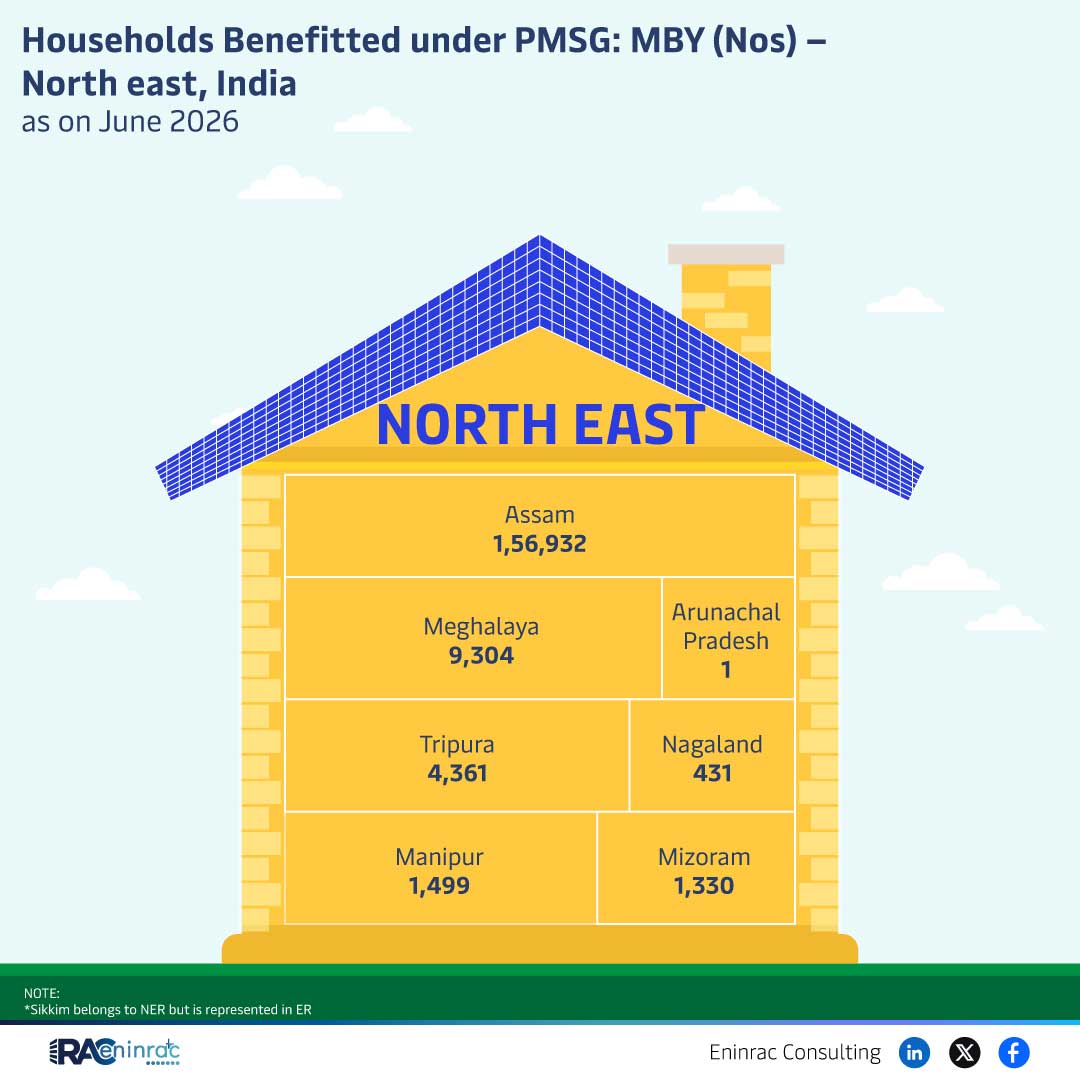
The data shows a striking concentration of PMSG household benefits in Assam, with 156,932 families connected to reliable power. Manipur and Mizoram each report just over 1,400 households benefiting, while Nagaland reaches roughly 5,000. The disparity underscores uneven rollout, raising questions about infrastructure readiness, funding allocation, and local implementation capacity across the seven states.
Regional Disparities and Emerging Trends in North East India
A comparative look at the numbers highlights Assam’s leadership in extending PMSG household benefits, driven by stronger grid infrastructure and targeted state programs. In contrast, the modest figures for Manipur and Mizoram suggest logistical challenges in remote terrains and limited contractor presence. Nagaland’s combined tally, though modest compared with Assam, signals a gradual expansion as new sub‑stations become operational. The trend points to a shifting focus from coastal to interior districts, where the next wave of connectivity is expected to occur over the coming years.
Impact on Sectors and Industries
The extension of PMSG household benefits influences multiple sectors. Renewable energy firms see new market opportunities for mini‑grid installations and solar home systems, while conventional power utilities must adapt to increased load demand and integrate more distributed generation assets. Financial investors are evaluating risk‑adjusted returns on infrastructure bonds tied to electrification targets. For policymakers, the data offers a benchmark to refine subsidy mechanisms and prioritize underserved districts. Consumers gain improved quality of life, better health outcomes, and enhanced economic productivity through reliable electricity.
Key Takeaways
- Assam leads with over 156,000 households benefiting.
- Manipur and Mizoram each have just above 1,400 connected households.
- Nagaland accounts for roughly 5,000 new beneficiaries.
- Significant regional gaps highlight uneven PMSG rollout.
- Infrastructure readiness drives higher household coverage.
- Future growth expected in remote interior districts.
FAQs
What is the PMSG scheme?
PMSG stands for Power Management Scheme, a government‑led program aimed at expanding electricity access to rural households across India.
Why does Assam have the highest number of beneficiaries?
Assam benefits from a more developed transmission network, higher investment levels, and active state‑level electrification initiatives.
How are the numbers for Manipur and Mizoram determined?
Those figures come from state‑reported household connections recorded by the Ministry of Power as of June 2026.
What challenges affect PMSG rollout in remote states?
Geographic isolation, limited road access, and higher construction costs slow down infrastructure deployment in places like Manipur and Mizoram.
What can investors expect from the PMSG market?
Investors can anticipate growing opportunities in grid‑extension projects, renewable mini‑grids, and financing mechanisms linked to rural electrification targets.