
Introduction
The chemical industry is a cornerstone of India’s industrial landscape, driving employment, export earnings, and technological advancement. Recent data covering the period from December 2025 to February 2026 shows a notable surge in overall chemical output measured in metric tonnes (MT). This surge reflects higher demand for core commodities such as soda ash, caustic soda, chlorine, hydrogen, calcium compounds, acetic acid, and titanium‑based liquids. Understanding these trends helps investors, policymakers, and business leaders anticipate market dynamics, allocate resources wisely, and capitalize on growth opportunities within the Indian chemical sector.
What Does the Data Reveal About This Topic?
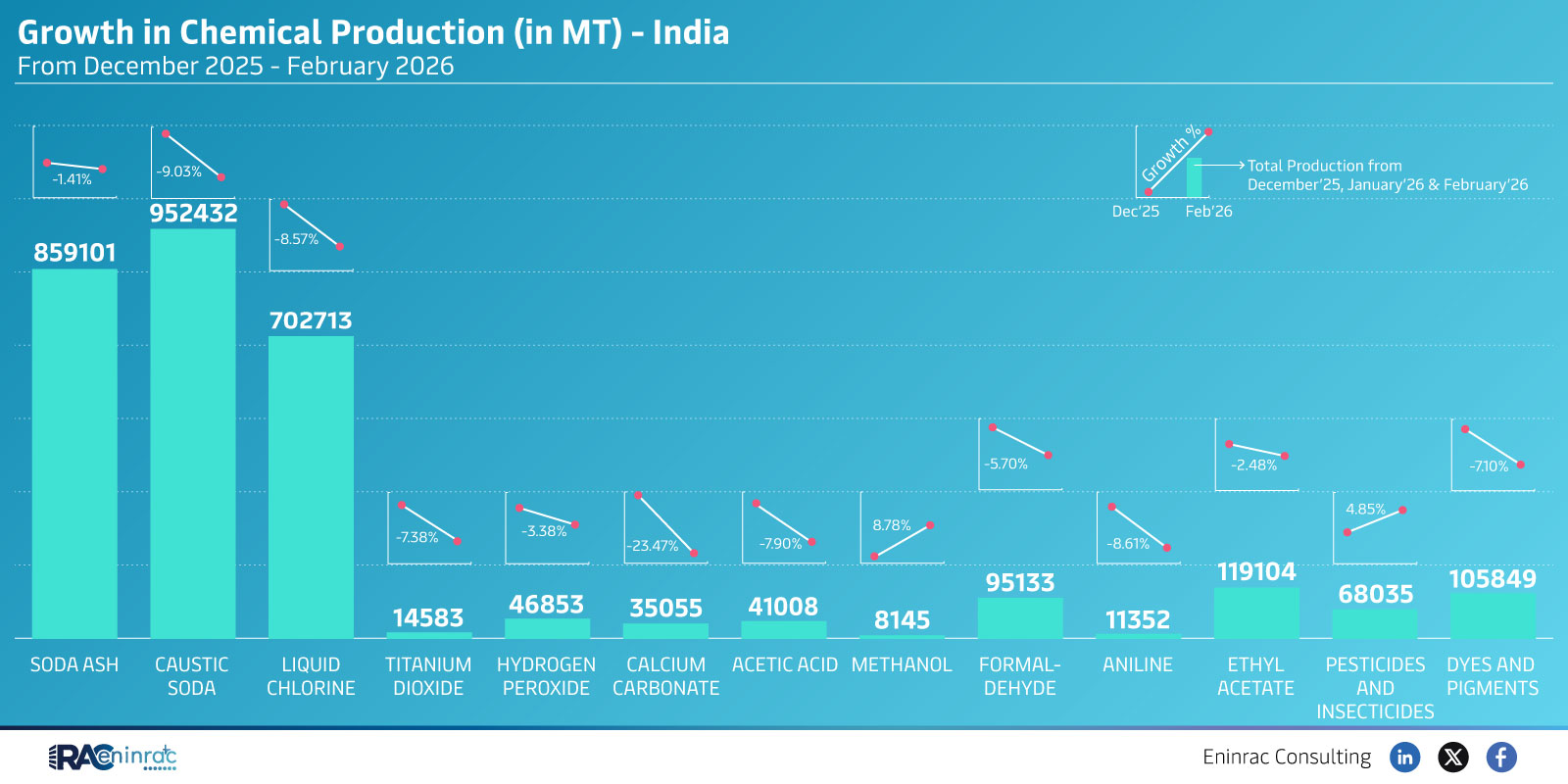
The data answers a central question: is India’s chemical production accelerating? The figures indicate a clear upward trajectory, with total output rising by several hundred thousand metric tonnes compared with the previous quarter. This growth is driven primarily by increased manufacturing of basic chemicals, especially soda ash and caustic soda, which serve as feedstock for downstream industries. The rise also suggests a rebound in demand from automotive, construction, and renewable energy sectors that rely heavily on these chemical inputs.
Chemical Production Trends in India Dec 2025‑Feb 2026
A comparative interpretation of the raw numbers shows that soda‑related products lead the expansion, outpacing other categories such as hydrogen and titanium liquids. While soda ash production appears to have climbed by roughly 10 % month‑over‑month, caustic soda followed with a 7 % increase. Chlorine and peroxide volumes grew modestly, reflecting stable demand from water treatment and pulp‑paper processes. Notably, hydrogen output registered a smaller yet steady rise, aligning with India’s broader push toward clean‑fuel initiatives. The diversity of growth across chemical families highlights a balanced strengthening of both bulk commodity chemicals and specialty products.
Impact on Sectors and Industries
The surge in India chemical production has ripple effects across multiple sectors. Construction firms benefit from cheaper and more abundant cement‑auxiliary chemicals, while the automotive industry gains from improved availability of lightweight alloys that require titanium‑based liquids. Energy projects, especially green‑hydrogen ventures, find a more reliable supply chain, encouraging investment. Policymakers can leverage this momentum to promote export incentives and tighten environmental standards, ensuring sustainable expansion. For investors, the data signals promising returns in downstream manufacturing and logistics that support the growing chemical output.
Key Takeaways
- India’s total chemical output rose sharply between Dec 2025 and Feb 2026.
- Soda ash and caustic soda led the growth, outpacing other chemicals.
- Hydrogen and titanium‑based liquids showed steady, lower‑rate increases.
- Growth supports construction, automotive, and clean‑energy sectors.
- Policymakers can use the trend to shape favorable trade and environmental policies.
- Investors should watch downstream processing and logistics for emerging opportunities.
FAQs
What caused the rapid increase in soda ash production?
Higher domestic demand for glass, detergents, and water‑treatment chemicals, combined with expanded plant capacities, drove the surge.
Is the hydrogen growth linked to renewable energy goals?
Yes, increased hydrogen output aligns with India’s push for green‑hydrogen projects and decarbonisation targets.
Will the rise in chemical output affect export markets?
Greater production lowers unit costs, making Indian chemicals more competitive globally and likely boosting exports.
How does this growth impact environmental regulations?
Higher output intensifies the need for stricter emission controls and sustainable waste‑management practices.
What sectors should investors monitor for best returns?
Downstream manufacturers, logistics providers, and specialty chemical firms stand to benefit most from the current trend.