
Introduction
The FAME-II Scheme continues to shape electric mobility across India by providing financial incentives to promote the adoption of electric vehicles (EVs). As of 26 March 2024, the western region of the country reports a diverse set of support numbers that reflect each state’s commitment to greener transport. This article analyses the latest FAME‑II EV support numbers West India, explains why these figures matter for policymakers, investors and consumers, and outlines the key trends that emerge from the data. Understanding these state‑wise figures helps stakeholders gauge market potential and align strategies with government priorities.
What Does the Data Reveal About This Topic?
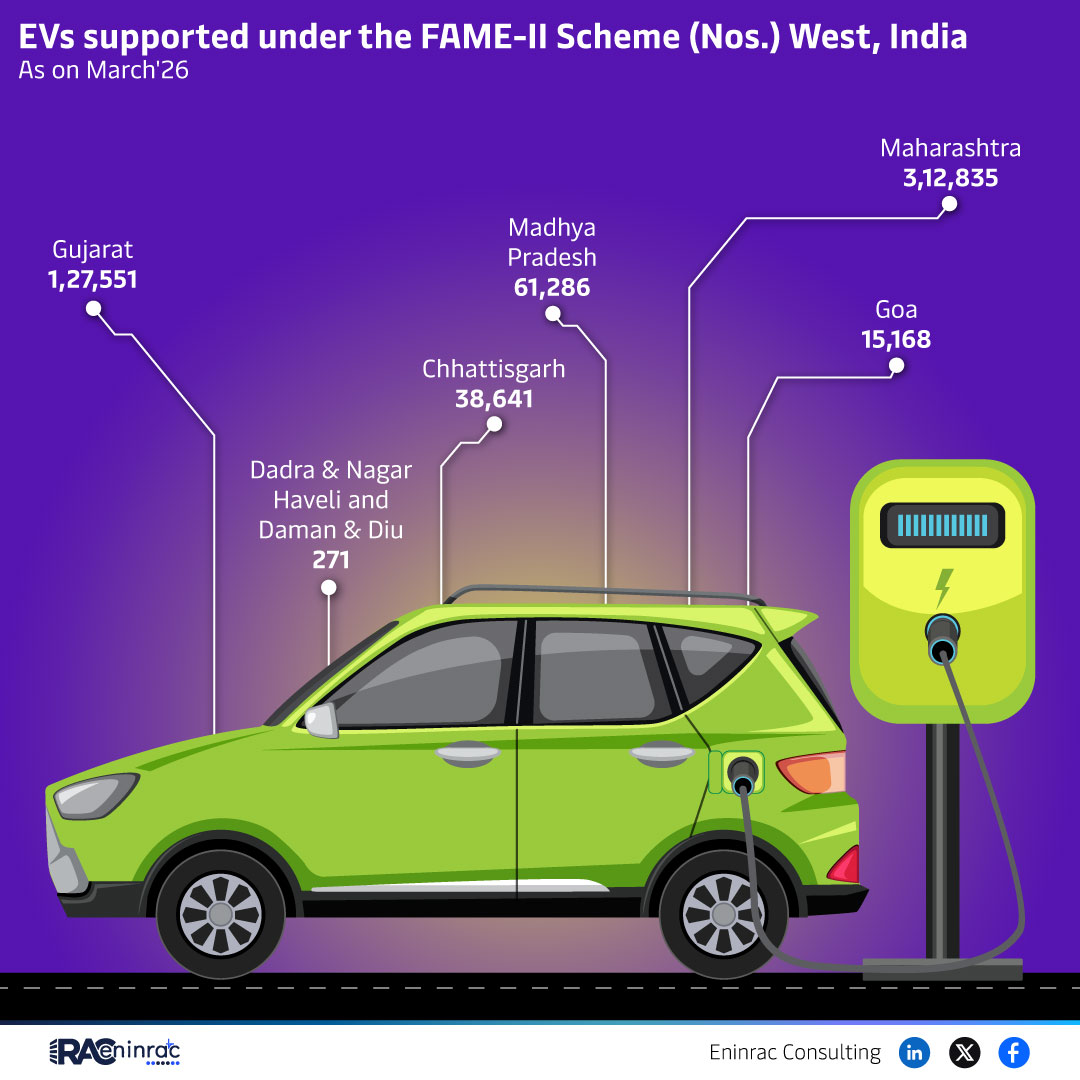
Which states in western India receive the highest FAME‑II EV support numbers and what does that indicate about regional priorities? The data shows that Maharashtra leads with more than three hundred thousand vehicles supported, while Gujarat follows with over one hundred thousand. Smaller Union Territories such as Dadra & Nagar Haveli and Daman & Diu together account for less than three hundred vehicles, highlighting a stark contrast between large states and peripheral regions.
Regional Comparison of FAME‑II Support in Western India
A closer look at the numbers uncovers distinct patterns. Maharashtra’s figure of 312,835 surpasses the combined total of Gujarat (127,551) and Goa (61,286), suggesting a robust manufacturing base and extensive charging infrastructure. Gujarat’s strong performance reflects its aggressive EV policy and growing industrial fleet. Goa, Chhattisgarh, and Madhya Pradesh each display modest yet rising numbers, while the Union Territories of Dadra & Nagar Haveli and Daman & Diu together contribute only 271 vehicles, indicating limited programme reach or reporting gaps in those jurisdictions.
Impact on Sectors and Industries
The distribution of FAME‑II EV support numbers influences several sectors. Automotive manufacturers in Maharashtra can leverage the large incentive pool to accelerate EV production and launch new models. Renewable energy firms benefit from increased demand for charging stations, especially in high‑support states. Investors seek opportunities in states with higher numbers as signals of policy stability. Meanwhile, policymakers can use the data to identify lagging regions, such as Dadra & Nagar Haveli, and design targeted outreach or additional funding to balance adoption across western India. The ripple effect also extends to logistics providers, fleet operators, and the emerging battery‑manufacturing ecosystem that relies on scaled EV deployment.
Key Takeaways
- Maharashtra dominates western EV incentives with over 300 k supported vehicles.
- Gujarat ranks second, reflecting strong state‑level EV policies.
- Goa, Chhattisgarh and Madhya Pradesh show modest but growing participation.
- Union territories collectively account for less than 300 supported EVs.
- High‑support states attract automotive and renewable‑energy investment.
- Policymakers can use low‑support data to target future incentive expansion.
FAQs
What is the FAME‑II Scheme?
FAME‑II is a government initiative that offers financial incentives to accelerate the adoption of electric vehicles across India.
Why does Maharashtra have the highest support numbers?
The state’s large automotive industry, extensive charging network, and proactive policy environment drive higher incentive uptake.
How are the numbers for Union Territories determined?
Support figures for Dadra & Nagar Haveli and Daman & Diu are compiled from state‑reported claims under the scheme.
Can businesses claim incentives for EVs in low‑support states?
Yes, businesses in any participating state can apply for FAME‑II incentives provided they meet eligibility criteria.
Will the government increase incentives for lagging regions?
Future policy revisions may allocate additional funds to under‑served areas to encourage balanced EV growth.