
Introduction
The FAME‑II scheme, launched by the Government of India, provides financial incentives to accelerate electric vehicle (EV) adoption. Understanding how many EVs are supported under this programme in South India helps policymakers, investors, and industry players gauge market traction and plan future strategies. This article examines the latest counts for each South Indian state as of March 2024, highlights major differences, and discusses the broader impact on the clean‑transport ecosystem.
What Does the Data Reveal About This Topic?
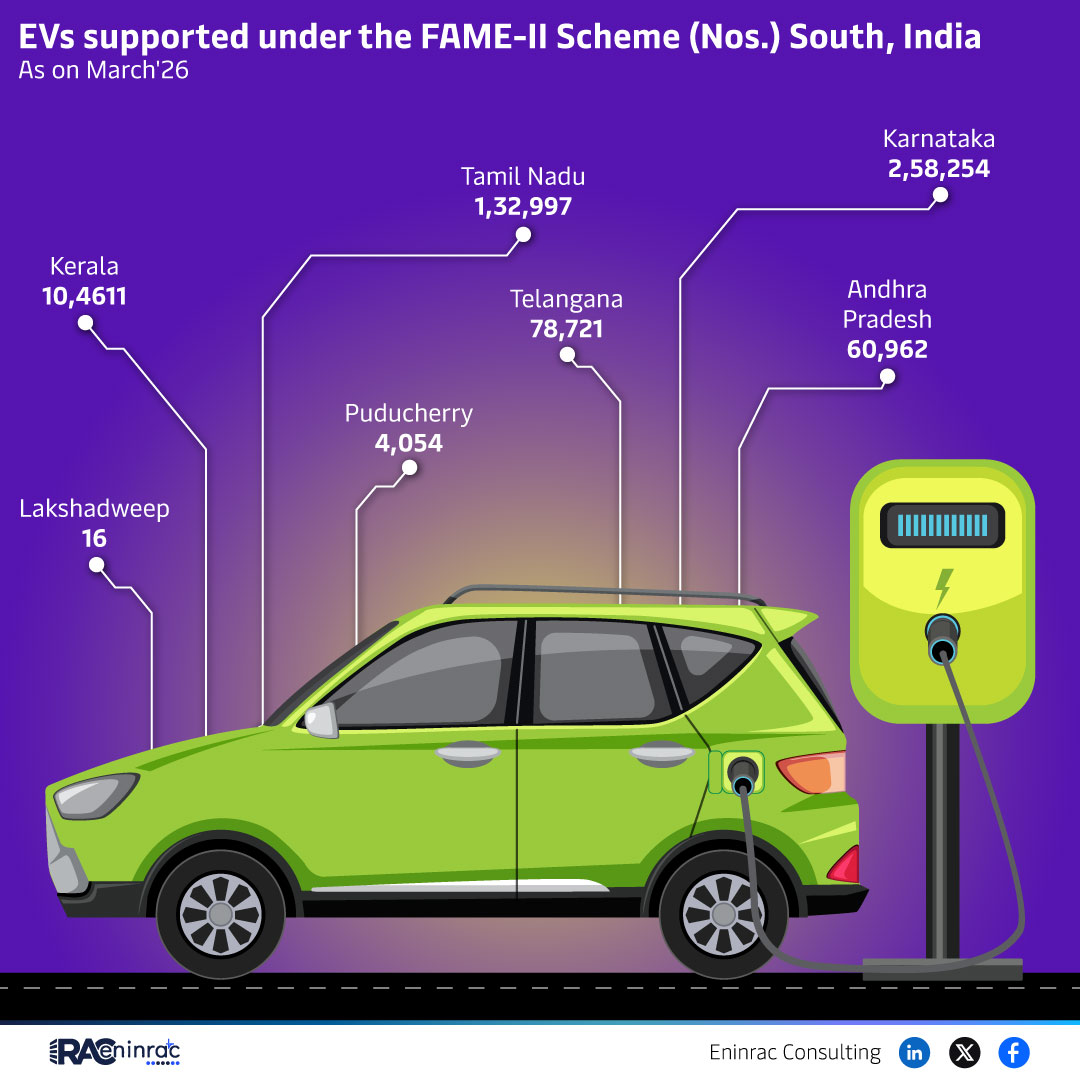
Which states lead the FAME‑II EV rollout and what does that imply for regional growth? The data shows Karnataka and Tamil Nadu dominate with 258,254 and 132,997 supported EVs respectively, while Kerala, Andhra Pradesh, Telangana and Puducherry record modest figures. The stark contrast underscores the role of state‑level policies, charging infrastructure, and manufacturing hubs in shaping EV adoption across the South.
State‑wise Distribution of FAME‑II Supported EVs in South India
Karnataka tops the list with 258,254 EVs, reflecting its strong manufacturing base, early adoption incentives, and extensive charging network. Tamil Nadu follows with 132,997 vehicles, driven by aggressive state subsidies and a large urban population. Kerala records about 10,461 EVs, indicating slower but steady growth. Andhra Pradesh and Telangana report 78,721 and 60,962 EVs respectively, showing emerging markets with expanding infrastructure. Puducherry’s 4,054 EVs illustrate how smaller union territories are also participating, while Lakshadweep currently shows no reported support, likely due to logistical challenges. These figures collectively map the uneven yet promising spread of FAME‑II EVs South India.
Impact on Sectors and Industries
The distribution of FAME‑II supported EVs influences multiple sectors. Automotive manufacturers can target high‑demand states for new electric models, while battery producers align capacity with Karnataka’s and Tamil Nadu’s needs. Infrastructure firms see opportunities in building charging stations, especially in regions with rapid growth. Investors gain insight into where policy support translates into market volume, guiding fund allocation. Policymakers can benchmark successful approaches from leading states and replicate incentives in lagging regions to balance adoption rates across the South.
Key Takeaways
- Karnataka leads South India with over 258 k supported EVs.
- Tamil Nadu follows closely, hosting more than 132 k EVs.
- Andhra Pradesh and Telangana show emerging markets with 78 k and 61 k EVs.
- Kerala and Puducherry have modest but growing EV numbers.
- Lakshadweep reports no supported EVs, highlighting geographic constraints.
- State‑level incentives and infrastructure are critical drivers of EV adoption.
FAQs
What is the FAME‑II scheme?
FAME‑II (Faster Adoption and Manufacturing of Hybrid and Electric Vehicles) is a government programme that offers subsidies to reduce the cost of electric vehicles and develop charging infrastructure.
Why does Karnataka have the highest EV count?
Karnataka benefits from a strong automotive manufacturing ecosystem, early state subsidies, and a dense network of public and private charging stations.
How can investors use this data?
Investors can target high‑growth states for funding EV startups, battery projects, and charging infrastructure, while also identifying underserved regions for future opportunities.
What challenges does Lakshadweep face?
Being an island union territory, Lakshadweep faces logistical hurdles in importing EVs and establishing charging infrastructure, resulting in zero reported FAME‑II support.
Will the EV numbers increase in the next year?
Given continued policy support, expanding charging networks, and decreasing battery costs, the supported EV counts in South India are expected to rise significantly in the coming year.