
Introduction
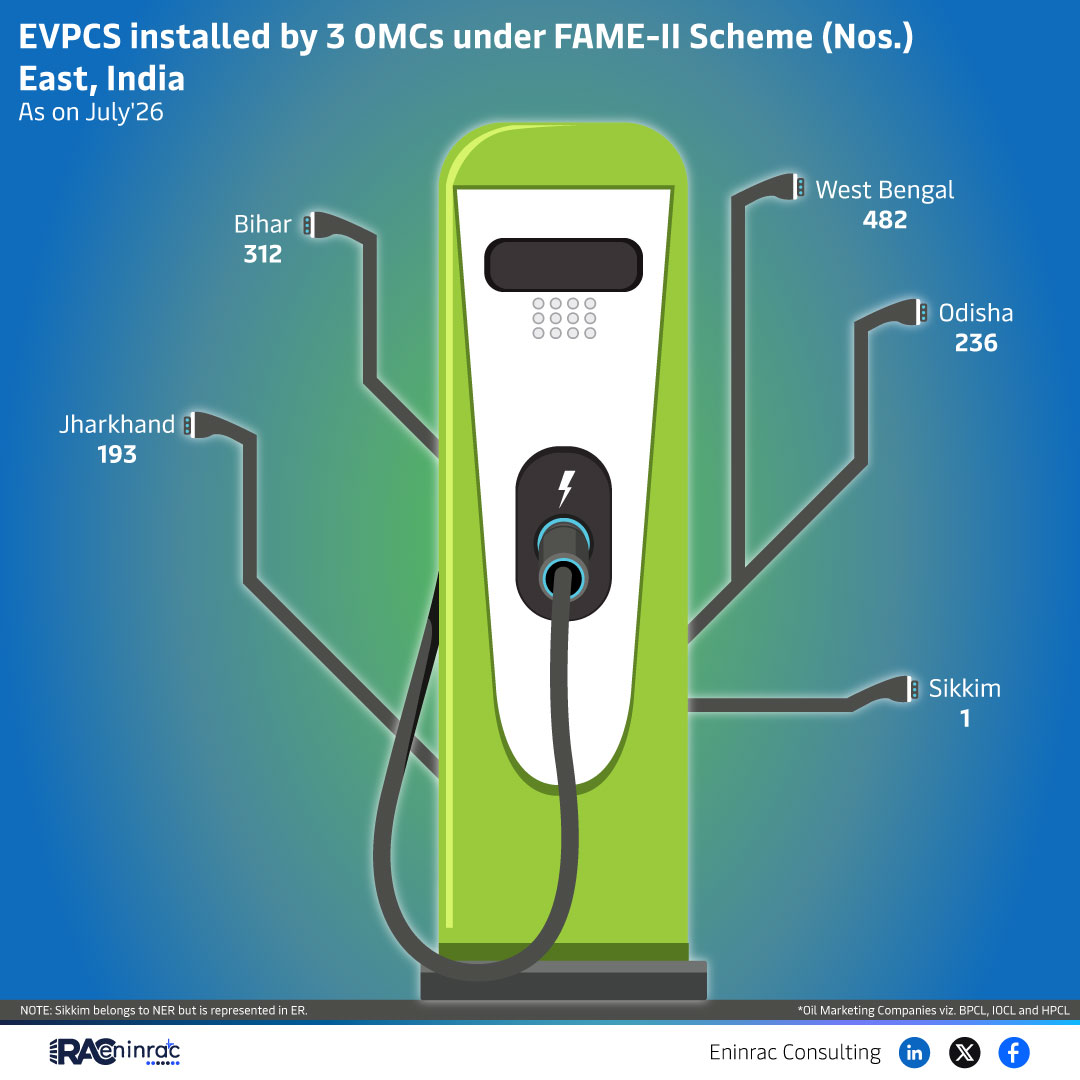
Electric Vehicle Charging Stations (EVPCS) installed by three Operating and Maintenance Companies (OMCs) under the FAME‑II scheme illustrate the rapid expansion of charging infrastructure across eastern India. The data, recorded as of 26 July, shows installations in West Bengal, Odisha, Jharkhand and Sikkim with numbers ranging from 193 to 482. Understanding this distribution helps policymakers, investors and industry stakeholders assess progress, identify gaps and plan future deployments to support India’s electric mobility goals.
What Does the Data Reveal About This Topic?
The data reveals that West Bengal leads the region with 482 EVPCS, followed by Odisha with 236 units and Jharkhand with 193 units, while Sikkim reports the smallest figure. This concentration indicates that more densely populated states with higher vehicle ownership are receiving greater infrastructure investment. It also suggests that the FAME‑II funding allocation is responsive to regional demand patterns, prioritizing areas where electric vehicle adoption is already underway. The stark differences among states highlight where additional incentives may be needed to accelerate network growth.
Regional Distribution of EVPCS Installations under FAME‑II
Comparing the four states shows a clear north‑eastward gradient in EVPCS deployment. West Bengal’s 482 stations represent roughly 48 % of the total reported installations, reflecting its extensive road network and early adoption of electric buses. Odisha’s 236 stations account for about 24 % and benefit from state‑level renewable energy initiatives that reduce electricity costs for charging operators. Jharkhand’s 193 installations, or 20 % of the sum, are driven by mining and industrial activities that require reliable power sources. Sikkim’s modest count signals both geographic challenges and a nascent market that could expand with targeted subsidies.
Impact on Sectors and Industries
The expansion of EVPCS under FAME‑II directly influences the electric vehicle market, renewable energy integration, and local economies. Charging stations create new revenue streams for OMCs, generate employment in installation and maintenance, and stimulate demand for grid upgrades and solar‑powered chargers. Automobile manufacturers benefit from a broader charging network, which reduces range anxiety and accelerates sales of electric cars and buses. Policymakers gain concrete evidence of program effectiveness, enabling them to adjust incentives, allocate budget more efficiently, and align infrastructure growth with national emissions targets.
Key Takeaways
- West Bengal leads with 482 EVPCS, representing nearly half of the reported installations.
- Odisha and Jharkhand together contribute over 400 stations, showing strong regional uptake.
- Sikkim’s low count reflects geographic constraints and the need for focused subsidies.
- The distribution aligns with population density and existing electric bus programs.
- FAME‑II funding appears effective in directing resources to high‑demand states.
- Continued investment can close gaps and support India’s broader EV adoption targets.
FAQs
What is the FAME‑II scheme?
FAME‑II (Faster Adoption and Manufacturing of Hybrid & Electric Vehicles) is a central government program that provides financial incentives for electric vehicle purchase and charging infrastructure development across India.
Why are EVPCS numbers important for electric mobility?
The number of charging stations directly influences range confidence, market acceptance, and investment decisions, making it a key indicator of electric vehicle ecosystem health.
How does state population affect EVPCS deployment?
States with larger populations and higher vehicle ownership tend to attract more charging stations because demand and revenue potential are greater.
What challenges does Sikkim face in expanding charging infrastructure?
Sikkim’s mountainous terrain, limited grid capacity, and lower vehicle density create logistical and economic barriers that slow station rollout.
What role do investors play in the growth of EV charging stations?
Investors provide capital for site acquisition, technology deployment and operations, enabling faster scaling and service quality improvements across regions.