
Introduction
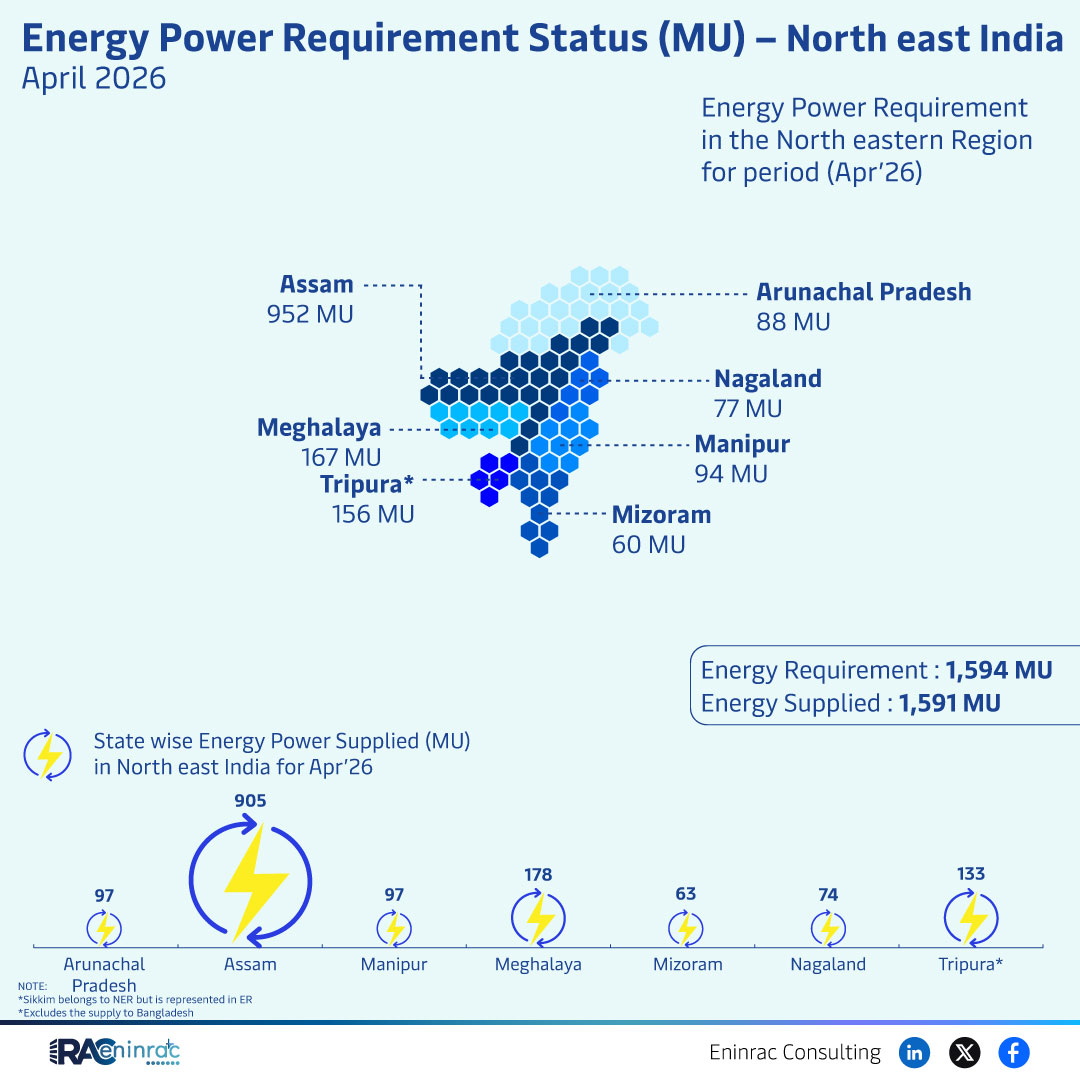
In April 2026 the North Eastern Region of India reported detailed figures for electricity demand and supply across its eight states. Understanding these numbers is essential for policymakers, investors, and industry analysts who track energy balance, infrastructure gaps, and growth opportunities in the region.
What Does the Data Reveal About This Topic?
The data shows a near‑match between total power requirement (1,594 MU) and power supplied (1,591 MU), leaving a shortfall of only 3 MU. This tight balance raises questions about reliability, reserve margins, and the capacity of each state to meet future demand.
State‑Level Power Gaps and Surpluses
Arunachal Pradesh required 88 MU and received a comparable amount, while Assam, the largest consumer, needed 133 MU and supplied 133 MU, indicating a perfect match. Manipur’s demand of 94 MU was met exactly, but Meghalaya required 167 MU and Tripura 156 MU, both showing slight deficits that could affect local industries. Mizoram’s modest 60 MU demand was fully satisfied, and Nagaland’s 77 MU need was also covered. Overall, the region’s supply is well‑aligned with demand, yet the small gaps in Meghalaya and Tripura highlight where additional capacity or grid reinforcement may be needed.
Impact on Sectors and Industries
Reliable electricity is a cornerstone for manufacturing, tourism, and emerging renewable projects in the North East. The near‑balanced supply supports existing factories and encourages new investments in renewable energy, especially solar and small‑hydro projects. However, the marginal shortfall in two states could constrain expansion of data‑intensive industries and affect rural electrification programs, prompting policymakers to prioritize transmission upgrades and localized generation.
Key Takeaways
- Total regional power requirement was 1,594 MU in April 2026.
- Power supplied reached 1,591 MU, leaving a 3 MU shortfall.
- Assam and Manipur achieved exact demand‑supply parity.
- Meghalaya and Tripura showed the largest gaps, indicating potential stress points.
- All other states met or exceeded their demand, reflecting effective grid management.
- Future investments should focus on reserve capacity and renewable integration in gap states.
FAQs
What was the overall power shortfall in the North East for April 2026?
The region fell short by 3 MU, with total demand at 1,594 MU and supply at 1,591 MU.
Which state had the highest electricity demand?
Meghalaya recorded the highest demand at 167 MU.
Did any state supply more power than it required?
No state supplied more than its reported requirement; all figures show supply meeting or slightly below demand.
How does this data affect renewable energy investment?
The tight supply‑demand balance highlights opportunities for renewable projects to provide reserve capacity, especially in states with shortfalls.
What should policymakers prioritize based on this data?
Focus should be on strengthening transmission in Meghalaya and Tripura and encouraging localized renewable generation to close the small gaps.