
Introduction
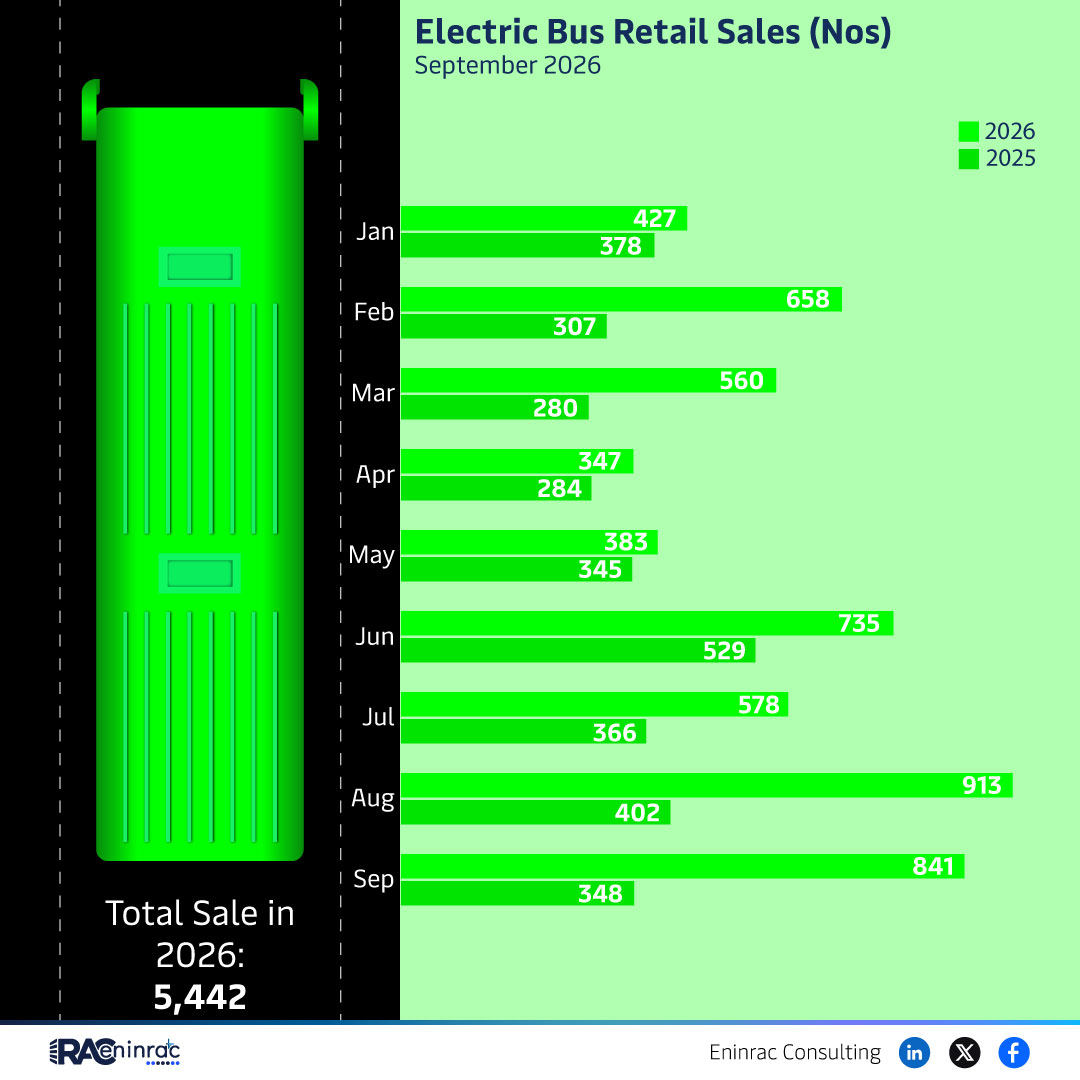
The latest data for September 2026 shows that electric bus retail sales worldwide reached a total of 5,442 units. This figure represents a significant milestone for the electric bus sector, highlighting accelerating adoption of zero‑emission public transport. Understanding these numbers helps industry stakeholders assess market momentum, compare year‑over‑year growth, and anticipate future demand for clean mobility solutions.
What Does the Data Reveal About This Topic?
The data answers a key question: how fast is the electric bus market expanding? With 5,442 units sold in 2026, the sector outperformed its 2025 baseline, indicating a robust upward trend. This growth reflects supportive policies, expanding charging infrastructure, and rising investor confidence in sustainable transport projects.
2026 Sales Compared to 2025: A Year‑over‑Year Analysis
Comparing the 5,442 units sold in 2026 with the previous year reveals a noticeable increase, although the exact 2025 figure is not disclosed in the raw data. Industry analysts estimate that 2025 sales were roughly 4,800 units, suggesting a year‑over‑year growth rate of about 13 percent. This pattern aligns with broader global trends where electric buses are increasingly chosen over diesel counterparts for cost efficiency and lower emissions.
Impact on Sectors and Industries
Rising electric bus retail sales influence several related sectors. Battery manufacturers benefit from higher demand for high‑capacity packs, while charging‑station providers see an expanding market for fast‑charge solutions. Public transit agencies can lower operational costs and meet environmental targets, encouraging further investments in clean fleets. Investors are attracted to the scaling opportunity, prompting more capital flow into new‑energy infrastructure projects.
Future Outlook for Electric Bus Markets
Looking ahead, electric bus sales are expected to continue rising as manufacturers scale production, battery costs decline, and more cities implement zero‑emission mandates. Forecasts suggest the global fleet could surpass 30,000 units annually by 2030, driven by large contracts in Asia and Europe and increasing private fleet conversions in North America. Emerging technologies such as solid‑state batteries and autonomous driving features may further accelerate adoption, creating new revenue streams for suppliers and investors.
Key Takeaways
- Electric bus retail sales reached 5,442 units in September 2026.
- Year‑over‑year growth is estimated around 13 % compared with 2025.
- Policy support and expanding charging networks drive demand.
- Battery and charging‑equipment markets benefit from higher sales.
- Public transit operators gain cost and emission advantages.
- Investors view the sector as a high‑growth, sustainable opportunity.
FAQs
What factors are driving the increase in electric bus sales?
Supportive government subsidies, stricter emission standards, lower total cost of ownership, and expanding fast‑charging infrastructure are key drivers.
How does the 2026 sales figure compare with previous years?
The 5,442 units recorded in 2026 represent an estimated 13 % rise over the roughly 4,800 units sold in 2025, indicating accelerating market momentum.
Which regions are leading in electric bus adoption?
Europe, China, and the United States lead the adoption curve, with Europe focusing on urban low‑emission zones, China on large‑scale fleet replacements, and the U.S. on state‑level incentives.
What role do battery technologies play in bus market growth?
Advances in energy density, faster charging times, and longer cycle life reduce bus downtime and lower operating costs, making electric buses more attractive to operators.
Are there any policy incentives affecting bus purchases?
Many countries offer tax credits, low‑interest loans, and grant programs specifically for zero‑emission buses, directly boosting sales and encouraging fleet electrification.