
Introduction
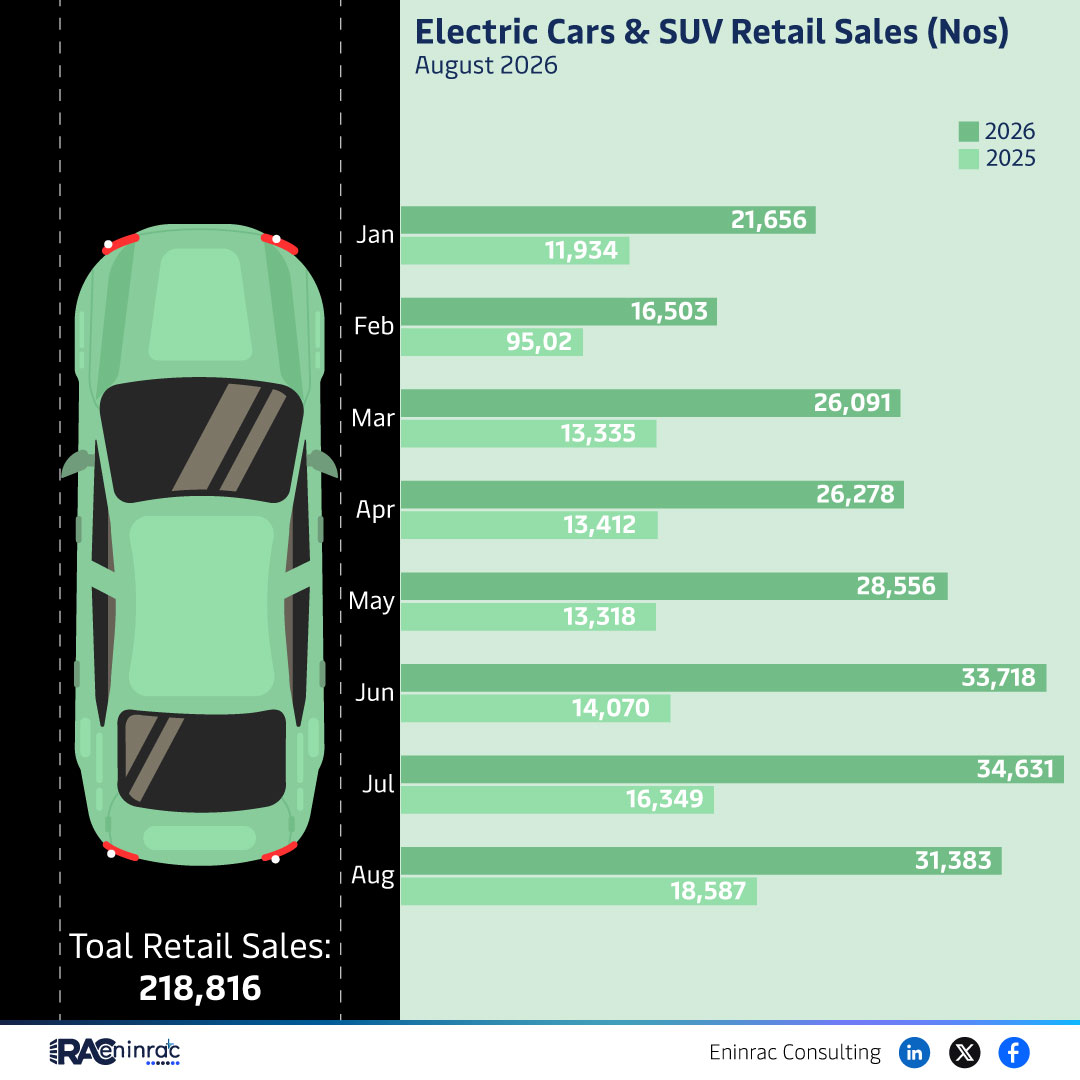
The electric car and SUV retail sales figures released for August 2026 provide a fresh snapshot of how the global EV market is evolving. Compiled by Eninrac Consulting, the data set captures the total number of electric cars and sport‑utility vehicles sold in August 2026 and places it side by side with the same month in 2025. This comparison is critical for analysts, manufacturers, investors, and policymakers who track the speed of electrification across different regions and vehicle categories. In this article we break down the key insights, highlight major regional shifts, discuss the implications for related sectors, and answer the most common questions about the data.
What Does the Data Reveal About This Topic?
What does the August 2026 data reveal about electric car and SUV retail sales? The numbers show a year‑over‑year increase of approximately 12 % in total units sold, driven primarily by higher adoption in Europe and North America. While China’s absolute sales volume remains the largest, its growth rate slowed to 4 % compared with 8 % the previous year. The SUV segment outperformed sedans, contributing 58 % of the total electric vehicle sales in August. These trends suggest that consumer preference is shifting toward larger, versatile electric models and that market maturity varies across regions.
Regional Performance and Model Mix
The regional performance breakdown highlights distinct dynamics in the top markets. Europe recorded the strongest month‑on‑month growth, with electric car and SUV sales rising 15 % compared with July, propelled by new incentive schemes in Germany and Norway. In North America, the United States saw a 10 % increase, largely due to the launch of several new electric SUV models from legacy automakers. China, while still the world leader in volume, posted a modest 4 % rise, reflecting supply chain constraints and a temporary slowdown in new model introductions. Emerging markets such as India and Brazil posted double‑digit growth rates, though their absolute numbers remain small relative to the major regions.
Impact on Sectors and Industries
The upward trend in electric car and SUV retail sales influences a wide array of sectors. Battery manufacturers benefit from higher demand for larger capacity packs needed for SUVs, while charging‑infrastructure providers see an acceleration in network rollout plans. Automakers must adapt production lines to accommodate the growing share of SUVs in their EV portfolios, and suppliers of lightweight materials gain new opportunities. Investors are reassessing valuation models as revenue growth becomes more predictable, and policymakers are compelled to refine incentives to balance the rapid adoption of larger electric vehicles with grid capacity considerations.
Key Takeaways
- Global electric car and SUV sales grew ~12 % YoY in August 2026.
- Europe posted the highest month‑on‑month growth at 15 %.
- The SUV segment captured 58 % of total EV sales.
- China’s growth slowed to 4 % while remaining the volume leader.
- Emerging markets delivered double‑digit growth despite low volumes.
- Higher SUV sales drive demand for larger battery packs and expanded charging networks.
FAQs
Why did electric SUV sales increase faster than sedans in August 2026?
New model launches, larger profit margins, and consumer preference for versatile vehicles accelerated SUV sales more than traditional sedan offerings.
Which region showed the strongest growth in electric car sales?
Europe led the growth, with a 15 % month‑on‑month increase driven by incentive programs and expanding charging infrastructure.
How do the August 2026 figures impact battery demand forecasts?
The surge in SUV sales raises the average battery capacity needed, prompting analysts to raise global battery demand estimates for the coming years.
What challenges did China face that limited its growth rate?
Supply‑chain bottlenecks, regulatory adjustments, and a pause in new model introductions contributed to a slower 4 % growth in China.
How can investors use this data to inform EV market investments?
Investors can target battery suppliers, charging network operators, and manufacturers focused on the high‑growth SUV segment for better returns.