
Introduction
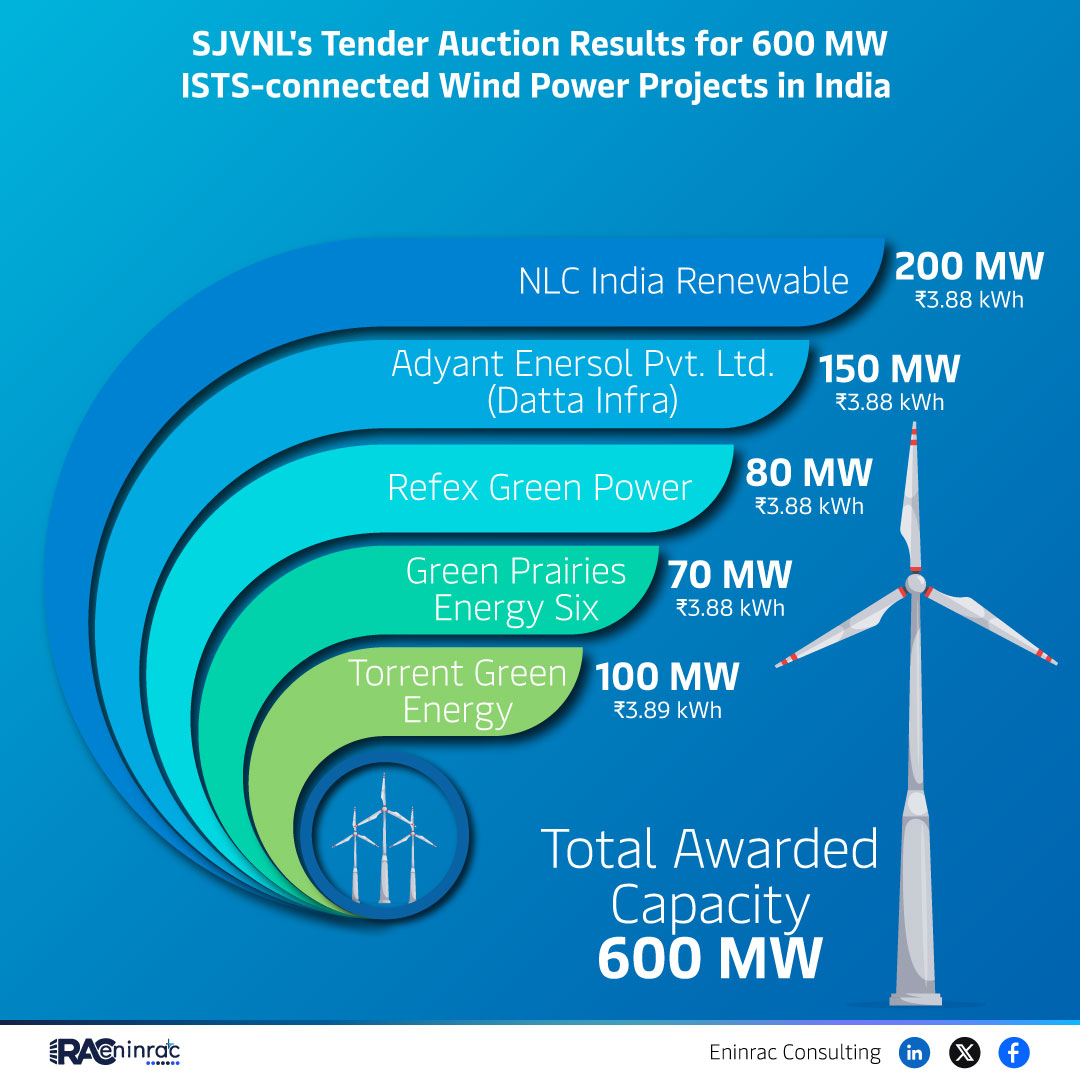
The 2024 SJVNL wind power tender auction in India resulted in a total awarded capacity of 600 MW, marking a significant milestone for the country's renewable energy roadmap. Participants such as NLC India Renewable, Adyant Enersol Pvt. Ltd., Datta Infra, and OoOmMw secured project allocations ranging from 80 MW to 200 MW. The auction demonstrates growing confidence among developers and investors in wind power as a reliable source of clean electricity. This article breaks down the auction results, compares project sizes, and explores the broader impact on India’s energy landscape.
What Does the Data Reveal About This Topic?
The data shows that the wind power tender auction 600 MW India attracted a mix of mid‑size projects, with a 200 MW block leading the pack followed by allocations of 150 MW, 100 MW and 80 MW. This distribution indicates a strategic emphasis on diversified capacity that balances larger economies of scale with smaller, quicker‑to‑deploy projects. It also reveals strong participation from both established renewable firms and newer entrants, suggesting a healthy competitive environment.
Project Size Distribution and Regional Participation
Analyzing the awarded capacity reveals that the 200 MW project, attributed to ISTS‑connected wind power initiatives, represents the largest single award, highlighting the market’s appetite for substantial wind farms. The 150 MW allocation to Adyant Enersol Pvt. Ltd. and the 100 MW award to OoOmMw illustrate that mid‑scale developers are also securing significant slots. The 80 MW award, linked to Datta Infra, rounds out the portfolio, underscoring that smaller developers can still obtain meaningful capacity. Collectively, these projects span key wind‑rich states, reinforcing India's regional strategy to tap diverse wind corridors.
Impact on Sectors and Industries
The tender outcome influences multiple sectors. For renewable energy investors, the clear allocation of 600 MW signals a stable pipeline and encourages further capital inflow. Policymakers can reference the auction as evidence of successful market‑based mechanisms for expanding clean power. Equipment manufacturers, especially turbine suppliers, stand to gain from increased orders tied to the awarded projects. Meanwhile, local supply chains benefit from construction, operation and maintenance activities, fostering job creation and technology transfer across the wind ecosystem.
Key Takeaways
- 600 MW total capacity awarded in a single wind tender.
- Project sizes range from 80 MW to 200 MW, showing diversity.
- Both established firms and new entrants secured capacity.
- Geographic spread aligns with India’s high‑wind zones.
- Positive signal for renewable investment and policy support.
- Boosts demand for wind turbine manufacturing and services.
FAQs
What total capacity was awarded in the 2024 SJVNL wind tender?
A total of 600 MW of wind capacity was awarded across four projects.
Which company received the largest single award?
The 200 MW block was awarded to the ISTS‑connected wind power initiative.
How does the auction support renewable energy goals?
By allocating 600 MW of wind power, the auction advances India’s target for clean electricity and reduces reliance on fossil fuels.
What are the benefits for smaller developers?
The 80 MW award to Datta Infra shows that smaller developers can still secure meaningful project sizes.
Will this auction affect turbine manufacturers?
Yes, the announced capacity creates a pipeline of orders for turbine suppliers, stimulating the domestic manufacturing sector.