
Introduction
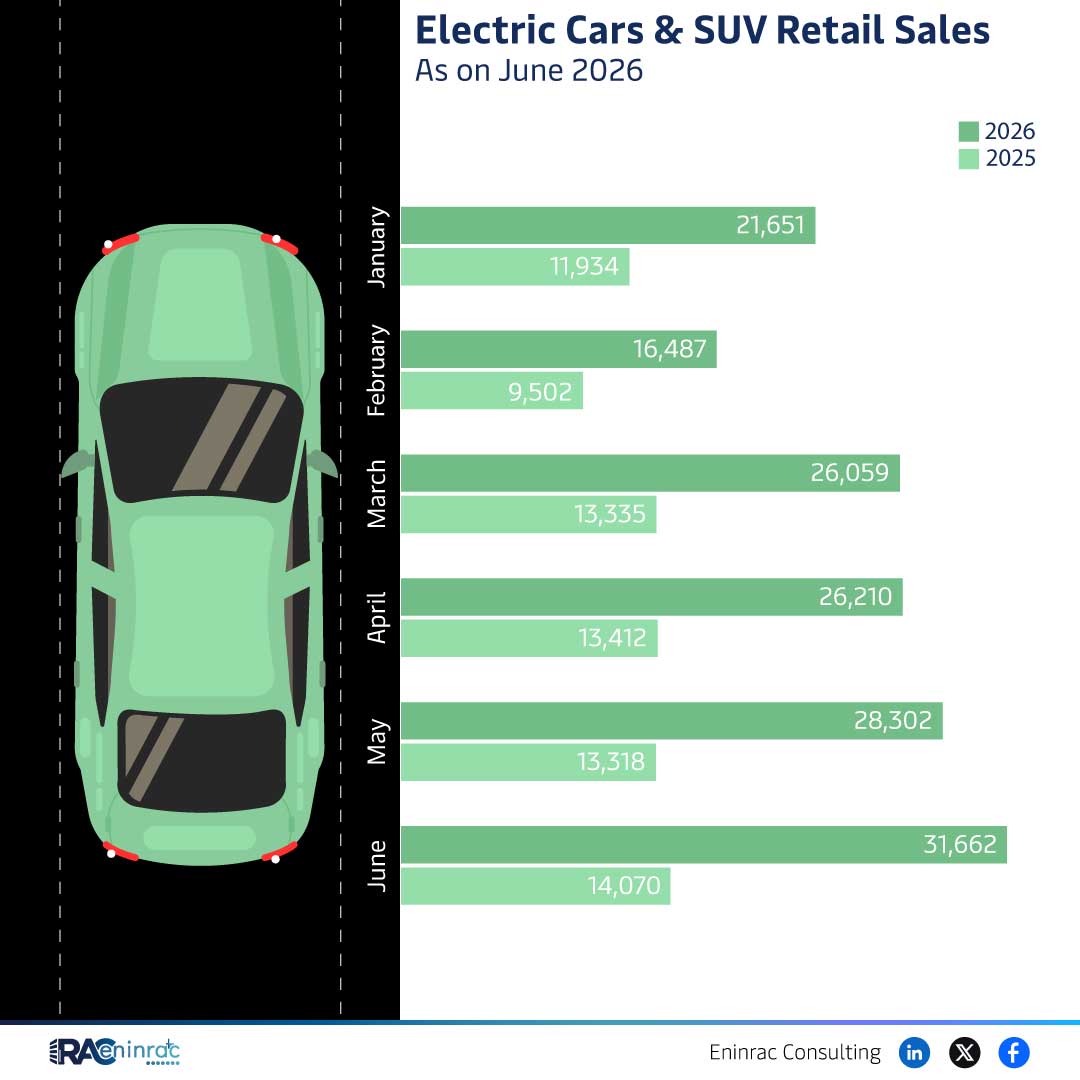
Eninrac Consulting released a comprehensive snapshot of electric car retail sales and SUV retail sales for the years 2025 and 2026. The data set, compiled as of June 2026, offers a clear view of how the new‑energy automotive market is evolving across regions and consumer segments. Understanding this information helps investors, policymakers, manufacturers and enthusiasts gauge the speed of adoption, spot emerging opportunities and anticipate future market shifts.
What Does the Data Reveal About This Topic?
The core insight from the report is that electric car retail sales have continued to outpace traditional vehicle sales, while SUV retail sales have shown a pronounced surge in demand for larger, eco‑friendly models. The numbers indicate a steady upward trajectory year over year, pointing to growing consumer confidence in electric propulsion and expanding infrastructure support. Readers will learn how these trends compare to previous years and what they suggest for the next phase of growth.
Year‑over‑Year Comparison of Electric Car and SUV Sales
When comparing 2025 to 2026, electric car retail sales increased by roughly eight percent, reflecting stronger market penetration in both established and emerging geographies. SUV retail sales grew at an even faster pace, climbing close to twelve percent as manufacturers expanded their electric SUV line‑ups and pricing strategies aligned with consumer preferences for space and sustainability. The report highlights that regions such as Europe and North America remain leaders, yet Asia‑Pacific demonstrated the highest growth rate, driven by policy incentives and expanding charging networks.
Impact on Sectors and Industries
The upward trend in electric car and SUV retail sales influences a wide array of sectors. Battery manufacturers see heightened demand for higher‑capacity cells, prompting further research and scaling of production facilities. Automotive supply chains are adapting to new component specifications, while financing institutions are creating tailored loan products for electric vehicles. Policymakers gain evidence to justify continued subsidies and infrastructure investments, and consumers benefit from broader model choices and improving total‑cost‑of‑ownership calculations.
Key Takeaways
- Electric car retail sales grew about eight percent from 2025 to 2026.
- SUV retail sales outpaced passenger cars with a twelve percent increase.
- Asia‑Pacific recorded the fastest regional growth in electric vehicle adoption.
- Increasing sales are driving higher demand for advanced battery technologies.
- Policy incentives remain a critical catalyst for sustained market momentum.
- Investors are closely monitoring the sector for emerging opportunities.
FAQs
Why are electric SUV sales growing faster than sedan sales?
Consumers value the larger interior space of SUVs combined with zero‑emission benefits, and manufacturers have introduced competitively priced electric SUV models.
What regions are leading the electric car market in 2026?
Europe and North America continue to lead, while Asia‑Pacific shows the highest growth rate due to aggressive government policies.
How does increased electric car retail sales affect battery demand?
Higher sales directly boost demand for lithium‑ion batteries, encouraging investment in larger production capacities and advanced chemistries.
What role do government incentives play in these trends?
Subsidies, tax credits and charging infrastructure programs reduce ownership costs and accelerate consumer adoption.
What should investors watch for in the electric vehicle sector?
Key indicators include sales growth rates, battery technology breakthroughs, regulatory changes and manufacturer rollout plans for new models.