
Introduction
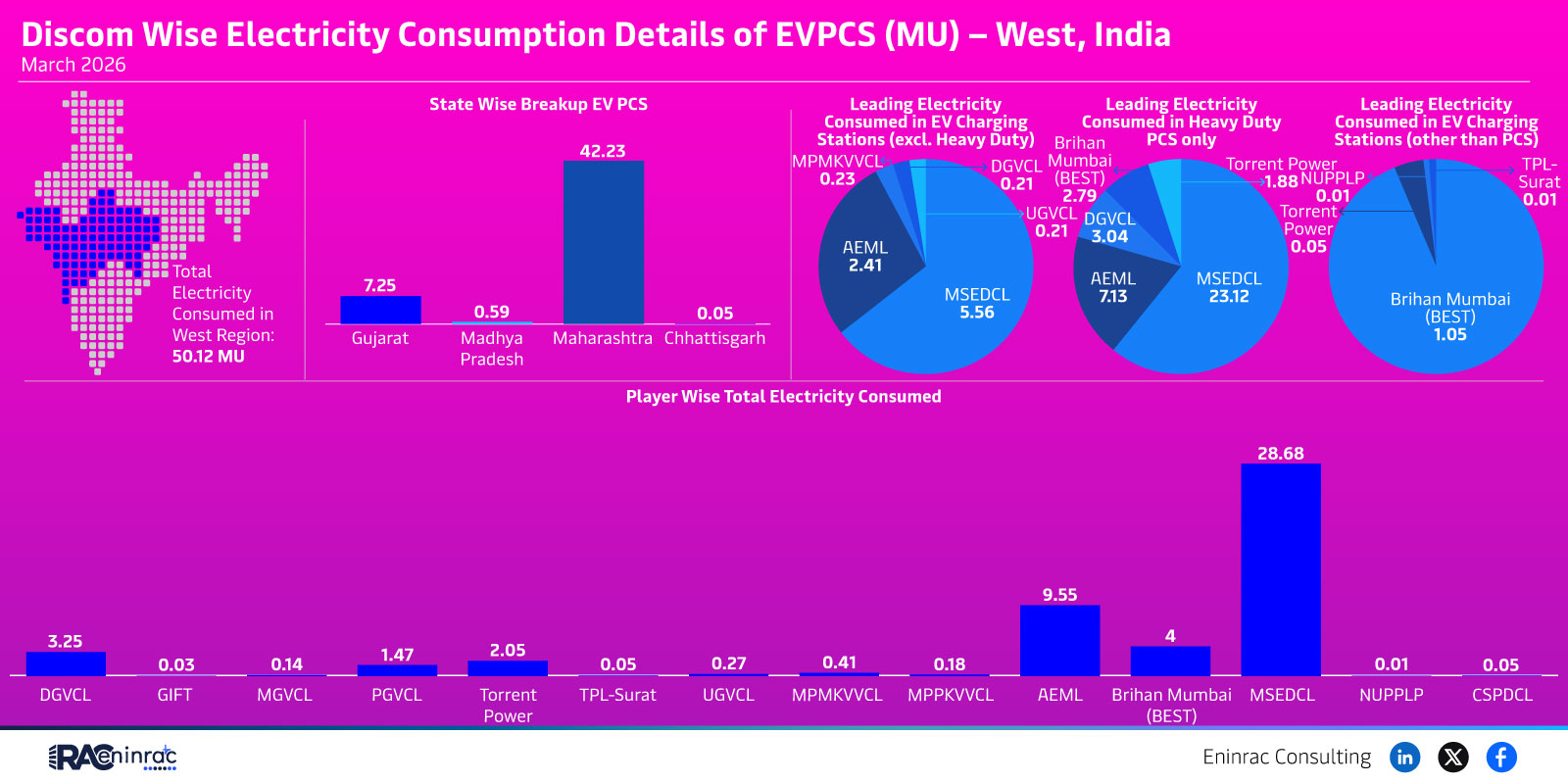
In March 2026 the West Indian electricity distribution companies reported detailed figures on how much electricity was drawn by electric vehicle (EV) charging stations. The data captures consumption across major discoms such as DGVCL, MGVCL, PGVCL, and others, separating regular EV charging from heavy‑duty usage. Understanding these numbers is essential for planners, investors, and policymakers who want to gauge the growth of EV infrastructure, anticipate load‑management needs, and align future grid upgrades with sustainable mobility goals. The dataset also separates electricity drawn by dedicated heavy‑duty EV fleets, allowing analysts to isolate passenger‑car charging trends from commercial usage. By converting the megawatt‑hour (MU) values into average daily kilowatt demand, stakeholders can better estimate grid impact on a day‑to‑day basis.
What Does the Data Reveal About This Topic?
The raw figures show that EV charging electricity consumption varies widely among discoms, with some utilities reporting consumption above 40 MU while others record values below 1 MU. The question many analysts ask is: which regions and companies are driving the highest demand for EV power? The answer points to Gujarat‑based discoms such as DGVCL and MGVCL as the leading consumers, followed by significant usage in Maharashtra, Madhya Pradesh, and Chhattisgarh.
Regional Discom Comparison of EV Power Use
When the numbers are grouped by state, Gujarat emerges as the clear front‑runner, posting the largest aggregate MU for EV charging stations. Maharashtra follows, reflecting its dense network of urban chargers in Mumbai and Pune. Madhya Pradesh and Chhattisgarh display moderate usage, indicating early‑stage adoption of EV infrastructure. Heavy‑duty EV consumption remains marginal across the board, suggesting that most of the recorded electricity is for passenger‑vehicle charging rather than commercial fleets.
Impact on Sectors and Industries
The rising EV charging electricity consumption influences a range of sectors. Power utilities must plan for peak‑load management and may need to invest in smart‑grid solutions to balance demand. Automotive manufacturers see a clearer pathway for market expansion as charging availability improves. Investors in renewable generation view the data as a signal to allocate capacity to regions with high EV power demand, while policymakers can use the insights to craft incentives that target lagging states. Grid operators are also examining time‑of‑use patterns to align renewable generation with peak EV charging windows, reducing reliance on fossil‑fuel peaking plants.
Key Takeaways
- Gujarat discoms recorded the highest EV charging electricity consumption in March 2026.
- Maharashtra showed strong usage, reflecting its urban EV charger density.
- Heavy‑duty EV electricity demand remains a small fraction of total consumption.
- Discoms such as DGVCL and MGVCL dominate the EV power landscape.
- Regional disparities suggest opportunities for targeted infrastructure investment.
- Policymakers can leverage the data to support balanced grid upgrades and incentives.
FAQs
Which discom consumed the most electricity for EV charging?
DGVCL in Gujarat reported the highest consumption measured in MU.
How does heavy‑duty EV electricity consumption compare?
Heavy‑duty usage is minimal, representing only a small share of total EV power demand.
What states show the fastest growth in EV charging electricity use?
Gujarat and Maharashtra are leading, with noticeable increases over previous months.
Why is EV charging electricity consumption important for utilities?
It helps utilities plan capacity, manage peak loads, and invest in smart‑grid technologies.
Can this data guide future renewable energy investments?
Yes, regions with high EV power demand are attractive for new renewable generation projects.