
Introduction
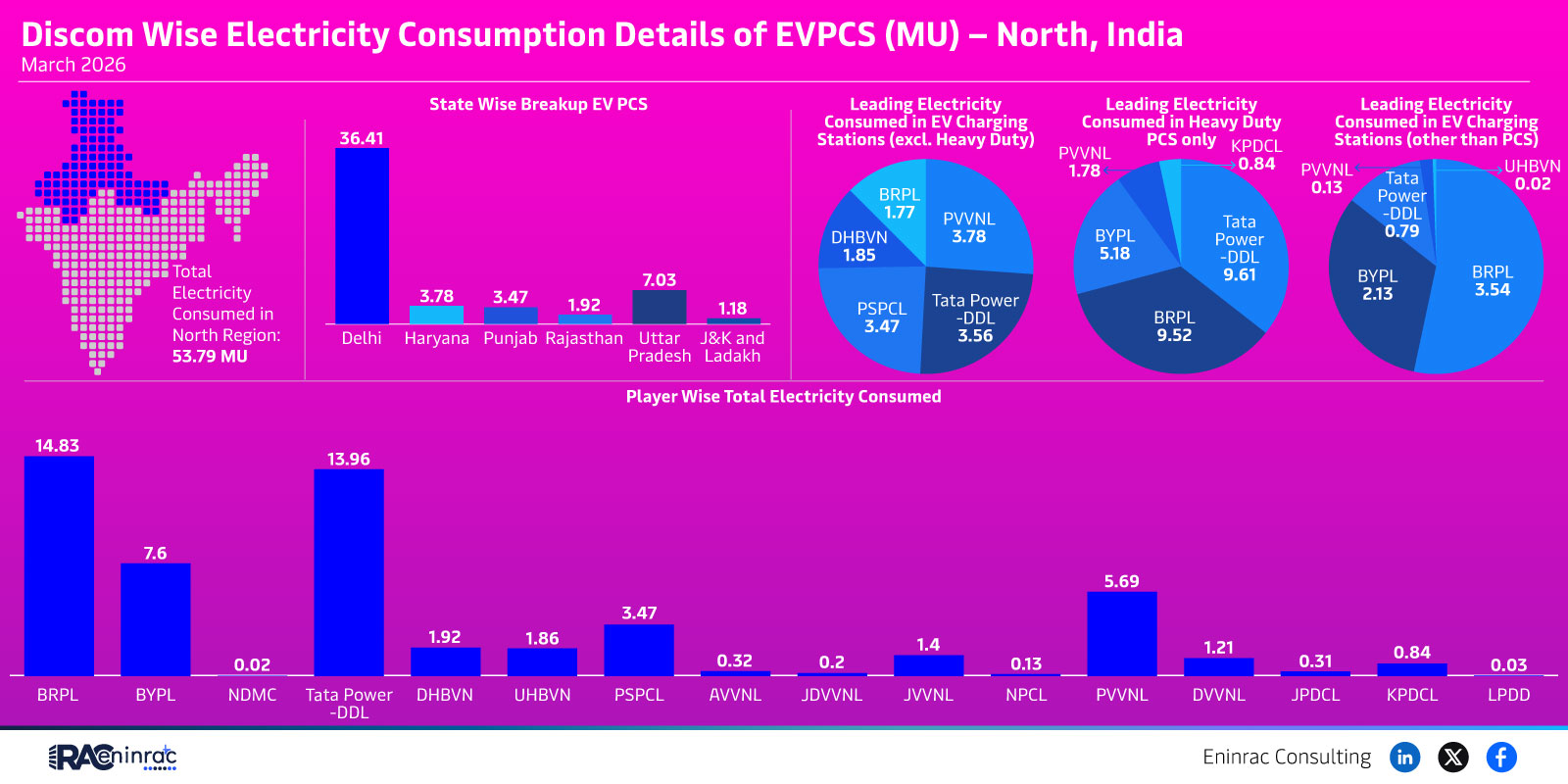
The March 2026 report on electricity consumption for electric vehicle (EV) charging stations in North India provides a clear picture of how power is being used across key states and major utilities. Understanding this data is crucial for policymakers, investors, and industry leaders who are shaping the future of sustainable mobility in the region. The figures reveal where demand is highest, which utilities are delivering the most power, and how the emerging EV charging network is influencing the broader energy landscape.
What Does the Data Reveal About This Topic?
What insights does the March 2026 consumption data give us? It shows that Delhi, Haryana and Punjab together account for more than half of the total megawatt‑hours (MU) consumed by EV charging stations, while utilities such as BRPL, BYPL and Tata Power dominate the supply side. The data also highlights a clear separation between electricity used for light‑duty EV charging and that reserved for heavy‑duty applications, indicating growing diversification in vehicle types.
State‑wise Electricity Consumption for EV Charging
Delhi leads with 14.83 MU, followed closely by Haryana at 13.96 MU and Punjab at 3.47 MU. Rajasthan consumes 1.92 MU, Uttar Pradesh 1.86 MU, Jammu & Kashmir 1.40 MU, and Ladakh 1.21 MU. These figures illustrate a steep gradient from the densely populated Delhi corridor to the more remote northern territories. The concentration of consumption in the Delhi‑Haryana‑Punjab belt reflects higher vehicle density, more charging infrastructure, and supportive state policies encouraging EV adoption.
Impact on Sectors and Industries
The rise in EV charging electricity consumption is reshaping multiple sectors. Power utilities must expand capacity and invest in smart‑grid solutions to manage peak loads. Automotive manufacturers see a stronger business case for electric models as charging becomes reliable. Investors are attracted to utilities like BRPL, BYPL and Tata Power that are already delivering significant electricity to EV chargers, indicating stable revenue streams. Policymakers can use this data to fine‑tune subsidies, grid reinforcement plans, and regional incentives to accelerate the EV transition.
Key Takeaways
- Delhi, Haryana and Punjab together use over 30 MU for EV charging.
- BRPL, BYPL and Tata Power are the top electricity suppliers for EV chargers.
- Heavy‑duty EV charging remains a small fraction of total consumption.
- State policies and vehicle density drive the regional consumption pattern.
- Utilities need grid upgrades to accommodate growing EV charging loads.
- Investors should monitor utility performance as a proxy for EV market health.
FAQs
Which state consumes the most electricity for EV charging?
Delhi leads the region, consuming 14.83 MU of electricity for EV charging in March 2026.
What are the leading utilities supplying power to EV chargers?
BRPL, BYPL and Tata Power together account for the majority of electricity delivered to EV charging stations.
Is heavy‑duty EV charging a significant part of the total consumption?
Heavy‑duty EV charging makes up only a small share of the total, indicating that light‑duty passenger EVs dominate current usage.
How does the data affect investors?
Investors can view utility electricity sales to EV chargers as an emerging revenue stream and gauge market growth potential.
What policy actions can support this growth?
Policymakers can enhance grid capacity, offer targeted subsidies, and promote infrastructure development in high‑consumption states.