
Introduction
This article examines India’s cement import volumes from fiscal year 2022 through the first ten months of FY2026. Understanding these import trends is essential for industry analysts, investors, and policymakers because cement imports reflect construction demand, domestic production capacity, and trade dynamics.
What Does the Data Reveal About This Topic?
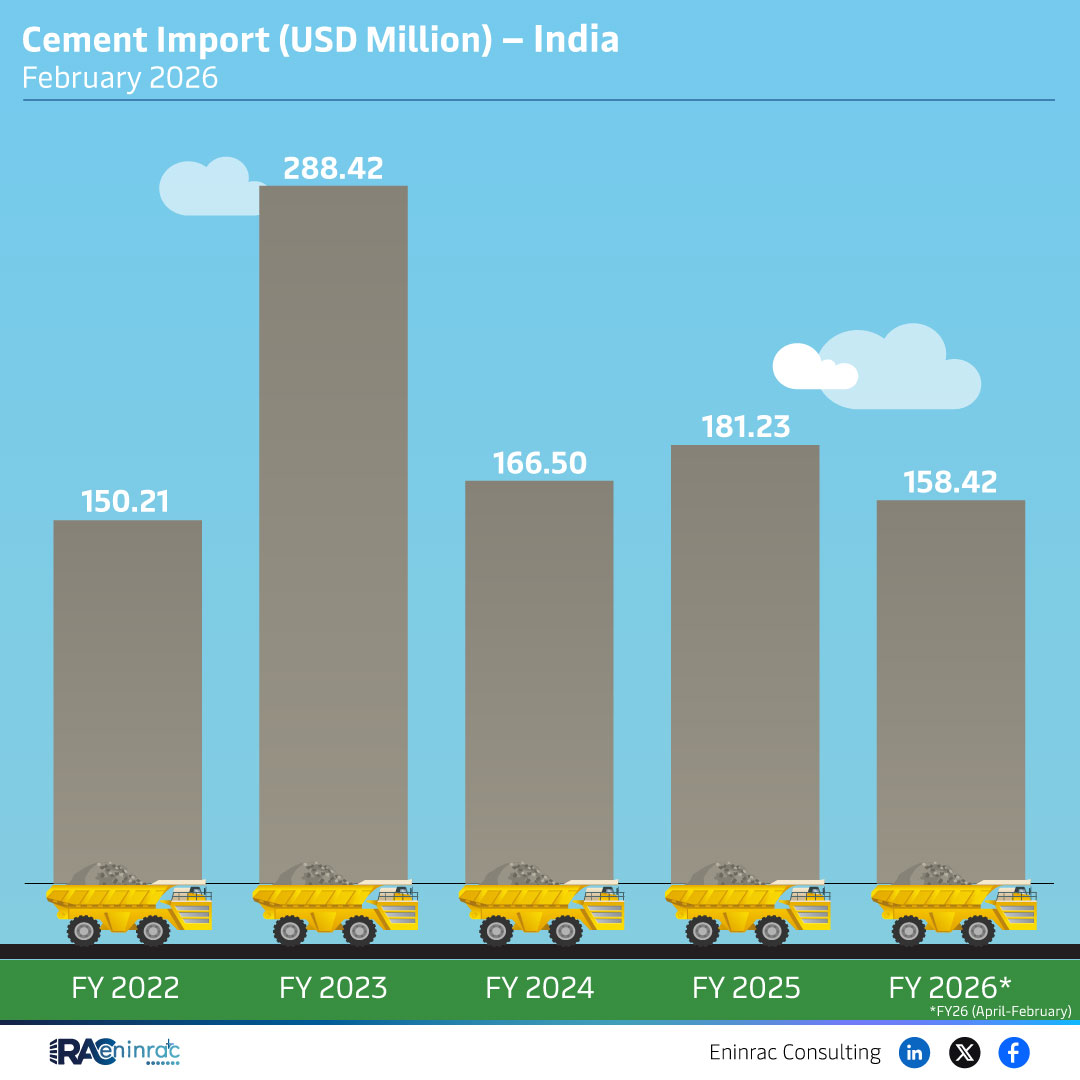
How have India’s cement imports changed over the five‑year period? The data shows a gradual increase from $150.21 million in FY22 to $288.42 million in FY26 (April‑February), indicating rising reliance on foreign cement supplies as domestic output struggles to keep pace with infrastructure growth.
Year‑by‑Year Import Growth Analysis
In FY22 imports were $150.21 million. FY23 rose modestly to $158.42 million, followed by a sharper jump to $166.50 million in FY24. FY25 continued the upward trajectory at $181.23 million, and FY26 (April‑February) reached $288.42 million, a 59% increase over FY25. The acceleration in FY26 suggests either supply constraints domestically, higher construction activity, or strategic stock‑piling ahead of anticipated price changes.
Impact on Sectors and Industries
Higher cement imports affect several sectors. Construction firms may face higher material costs if imported cement is pricier than local alternatives. Domestic cement manufacturers could experience pressure on margins, prompting capacity expansions or efficiency drives. Trade policymakers must balance import duties to protect local producers while ensuring sufficient supply for critical infrastructure projects. Investors watch these trends to gauge the health of the broader building materials market.
Key Takeaways
- India’s cement imports grew from $150 million in FY22 to $288 million in FY26 (April‑February).
- Year‑on‑year growth accelerated sharply in FY26, indicating possible supply gaps.
- Rising imports signal strong construction demand and potential domestic capacity shortfalls.
- Policy decisions on import duties will influence future import volumes.
- Investors should monitor cement import trends as an indicator of infrastructure activity.
- Stakeholders must consider both cost implications and supply security.
FAQs
Why did cement imports increase so sharply in FY26?
Higher construction demand, limited domestic capacity, and strategic stock‑piling likely drove the sharp rise.
How do import duties affect cement prices in India?
Duties raise the landed cost of imported cement, influencing overall market pricing and competitiveness.
Which regions supply most of India’s imported cement?
Major suppliers include neighboring countries with surplus production, such as Vietnam, Thailand, and the Middle East.
What impact does cement import growth have on domestic manufacturers?
Increased imports can pressure local producers to improve efficiency, expand capacity, or lower prices.
Can cement import trends predict future infrastructure spending?
Yes, rising imports often correlate with heightened infrastructure projects and urban development.